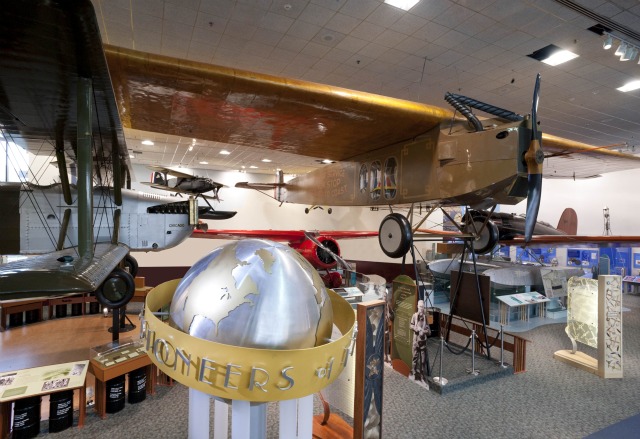
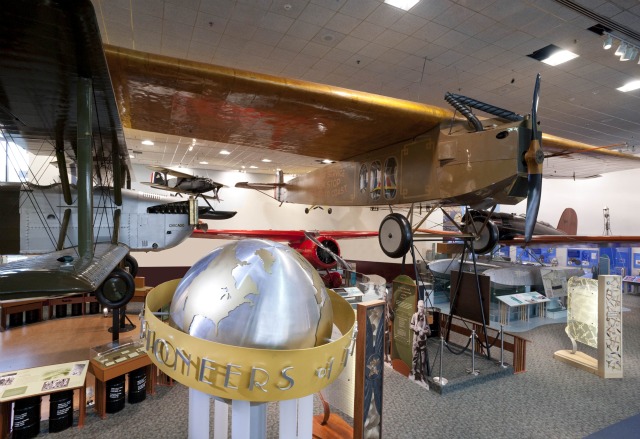
 The new “Barton Hilton Pioneers of Flight Gallery,” image courtesy the National Air & Space Museum.
Fans of space and aviation have a new place to nerd out starting today, as the National Air & Space Museum officially opens the Barron Hilton Pioneers of Flight Gallery on the second floor of its space on the National Mall. An updated version of the old Pioneers gallery, it now holds major artifacts from aviation’s “adolescence” in the 1920s and 30s, when, as the Smithsonian’s Dr. Peter Jakab said during the press opening, we became “a species with wings, which changed how we saw our place in the world.” The gallery displays American innovation at its best, where the artifacts are second to the human stories and struggles from designing never-before-imagined technologies to paving the roads to social equality.
The exhibit is broken up into four main sections, starting with “Black Wings,” a look into the lives of pioneering African-American pilots, including Besse Coleman, Chauncey Spencer, and William J. Powell. “Military Aviation” features not so much impressive displays of artillery, as much as daredevil racing and aerial strategy. The “Civilian Aviation” section holds the most familiar pieces of American flight history, with artifacts from Amelia Earhart’s career, including the Lockheed 5B Vega in which she became the first woman to make a solo transatlantic flight in 1932. Of course, Charles Lindburgh made the trek five years earlier, but Pioneers of Flight has his Lockheed 8 Sirus instead, the plane that took him and wife Anne on the first flight to reach the Far East in 1931. Many of their supplies are on display — radios, specially packed rations and more.