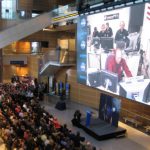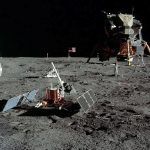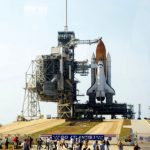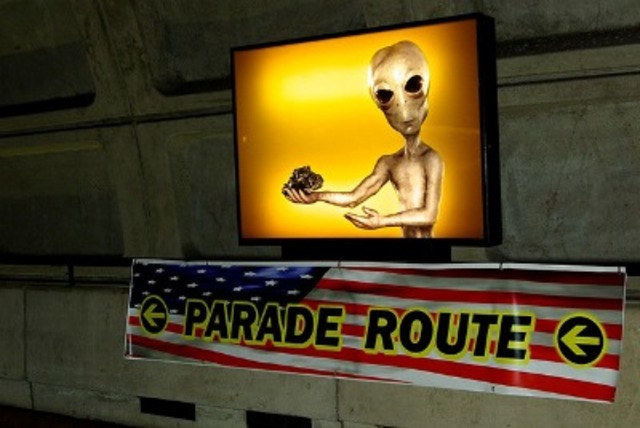
 The alien parade is this way. Photo by philliefan_99.
I don’t know about you, but I’m having flashbacks to October 2009, when the media went nuts about NASA “bombing” the moon. This week, it’s all about an innocent little press release they sent out announcing a press conference — they probably have one or two press conferences a week. Now, NASA sends out a press release when someone in Huntsville coughs in their cleansuit, so that everyone stopped fast when reading this one little line in our inboxes says something in itself — I admit it made me double-take, and I’m among those who delete most of these releases after glancing at the subject heading. That line?
NASA will hold a news conference at 2 p.m. EST on Thursday, Dec. 2, to discuss an astrobiology finding that will impact the search for evidence of extraterrestrial life.
And a resounding, “Oh shit, y’all, we found aliens!” went up among media desperate for news and/or anything the general public might find interesting coming from the space program. The actual news has been embargoed by Science magazine, but The Atlantic‘s Alexis Madrigal, who has read the paper, assures us we have not found E.T. And what’s worse, much like the LCROSS debacle last year, the disappointment following the announcement that no, we haven’t discovered intelligent life elsewhere in the universe (as if that news could have stayed under wraps for this long, please), will totally overshadow whatever probably pretty fascinating information they’ve actually discovered. Tune into NASA TV online at 2 p.m. to see what the astrobiologists actually have to say.
Update: Scientists found arsenic-based lifeforms in California. That is indeed, huge news. Carl Sagan would be eating this up.
>> This is the week to take a look up at Venus. On Saturday, it will appear at its brightest, early in the morning sky. Although not at its furthest elongation yet, it’s far enough away from the sun in the sky for us to actually be able to see it, and its angle means that “it is now more brightly illuminated by the sun from the side. This makes more of Venus’ cloud tops visible and gives the planet a brilliant shine,” according to Space.com. Venus will continue to be visible until next June; stop by the Public Observatory at the National Air and Space Museum to view it through a telescope.