Martin Austermuhle
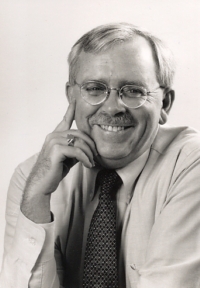 Ten years ago today, Robert Randall died.
Had it not been for the Metropolitan Police Department, Randall could well have lived the rest of his life in complete anonymity. But a chance raid of his Capitol Hill apartment in 1975 made Randall — then slowly going blind because of severe glaucoma — the unwitting father of the fight for medical marijuana. That fight has so far produced legal programs in 16 states and the District, the same jurisdiction that originally prosecuted him for trying to save his own eyesight.
Randall came to the District in 1971 for much the same reason many do — to become active in politics. It was but a year later that a doctor told the 24-year-old that he had anywhere from two to five years of eyesight left, the product of a case of advanced open-angle glaucoma. In 1973, he realized that marijuana relieved the intense ocular pressure that was blinding him; from that point on, Randall’s life was defined by how and when he could procure the only drug that seemed to work.
On August 24, 1975, police raided his apartment at 709 Eighth Street SE after spotting a marijuana plant growing on the back deck. Randall had taken to growing marijuana to avoid the periodic droughts that would leave him without the drug and without much eyesight. Charged with possessing the plants, Randall opted not only to fight the charges, but claim that he was using marijuana to manage his medical condition, one which at the time had no other proven cure.
Over a year later, D.C. Superior Court Judge James A. Washington not only dismissed all charges against him, but also laid out a legal rationale that is still used today by patients who believe that only marijuana can lessen the pain they feel. “Penalizing one who acted rationally to avoid greater harm will serve neither to rehabilitate the offender nor deter others from acting similarly when presented with similar circumstances,” wrote Washington.
“The evil he sought to prevent, blindness, is greater than that he performed to accomplish it, growing marijuana in his residence in violation of D.C. code,” stated Washington’s opinion, which added that medical evidence seemed to indicate that there was little foundation for a prohibition on the use of marijuana.
That wasn’t all. Randall also sued the federal government to gain access to marijuana that was being used in a federal research program. After winning, he formally became America’s first legal pot smoker, his medication provided by a doctor at Howard University Hospital. When his access to the marijuana was later limited, he sued again — and started helping others in his same position file similar lawsuits.
Randall’s experience pushed him into the world of advocacy, giving a much-needed human face to a nascent movement to legalize marijuana for medicinal purposes. He remained in the District until the mid-1990s, at which point he and his wife Alice O’Leary moved to Florida, where he died from AIDS-related complications on June 2, 2001.
The struggles Randall endured throughout his life were largely reflected in the District’s own haphazard path towards establishing a legal medical marijuana program. Though 69 percent of the District’s voters approved the program in a 1998 referendum, congressional Republicans quickly stepped in and prohibited the city from certifying the results. It wasn’t until 11 years later that the program was allowed to move forward, and it’s likely that the first dispensaries and cultivation centers won’t open until 2012. Even then, many of the programs across the country still operate until threat of federal intervention, and the District’s program was crafted to be so restrictive that it won’t allow the very thing that got Randall arrested in the first place — home cultivation.
Though it’s been a decade since he died, his place in the history of legalized medical marijuana will likely live on — one local group has already said they’d like to name a future dispensary in his honor.