Martin Austermuhle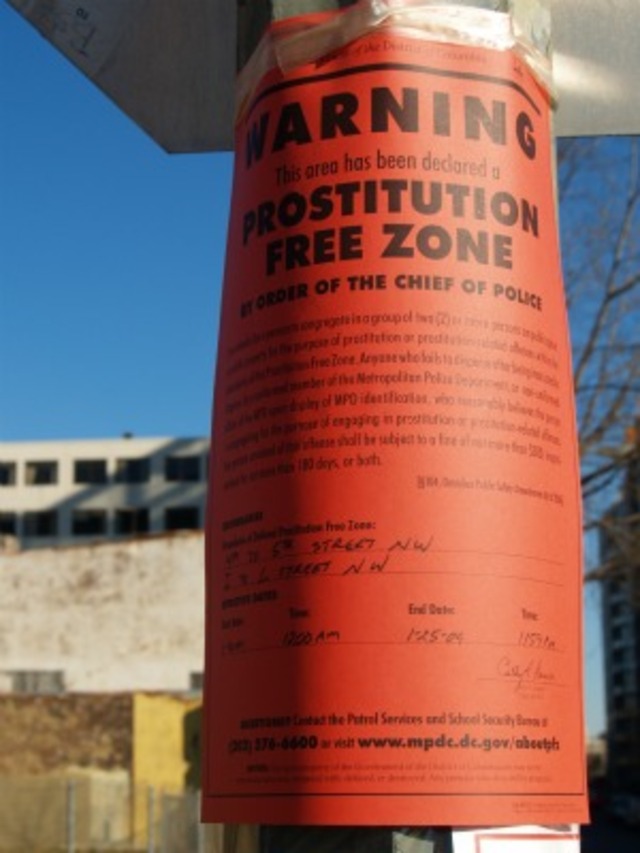
 Photo by Jason Cragg
The balloon effect seems to apply to the District’s efforts to crack down on prostitution, writes WAMU reporter David Schultz in a must-read piece today. Crack down in one place, and it’ll simply appear elsewhere.
Schultz spent time with with workers from Helping Individual Prostitutes Survive (HIPS), who told him that ever since the District started imposing prostitution-free zones — where people gathering for the purposes of selling or buying sex can be asked to disperse by police — the trade has simply moved to places further on the District’s periphery. He writes:
“Since the institution of the free zones, we’re having to travel a much wider circle around the city,” says Clay. “We can’t reach all of the neighborhoods we’re trying to reach in one night. We’re traveling upwards of 50 miles an evening just to reach the populations that we need to reach, and we’re in much more residential neighborhoods.”
Clay says the prostitution-free zone law didn’t get rid of prostitution in the District. The law simply moved it from downtown to the outskirts of the city. The Metropolitan Police Department refused to grant an interview for this story, but based on analysis of the District’s crime data, Clay is right.
According to the data, prostitution-related arrests in D.C.’s Ward 2, the ward that contains most of downtown, has seen a 10 percent drop in the past decade. Meanwhile, in Ward 7, the ward east of the Anacostia River, the number of arrests has more than tripled.
As we reported in November, Councilmember Yvette Alexander (D-Ward 7) has proposed a measure that would allow police to declare prostitution-free zones indefinitely; currently, they can only remain for 10 days. Her proposal, which will be considered in a hearing of a D.C. Council committee on January 24, may well not move far, though — Councilmember Phil Mendelson (D-At Large) has said that he fears that it would be struck down as unconstitutional.
For local health workers that try to reach out to area prostitutes, the existing law is simply making their jobs harder to do. But for Alexander, it seems to be an attempt to clean up the prostitution that has hit her ward since it was chased away from downtown areas.