Martin Austermuhle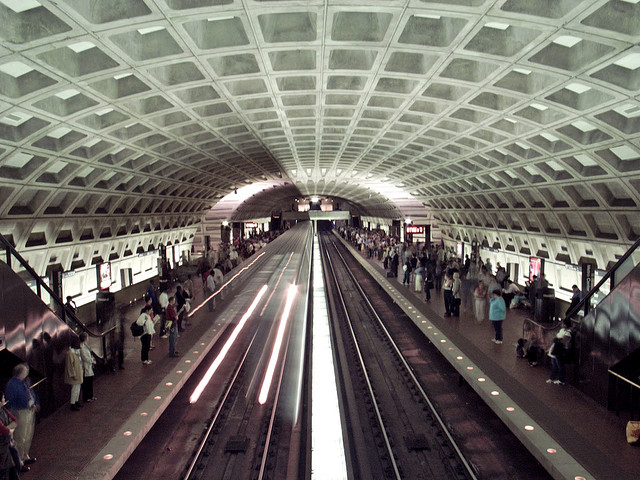
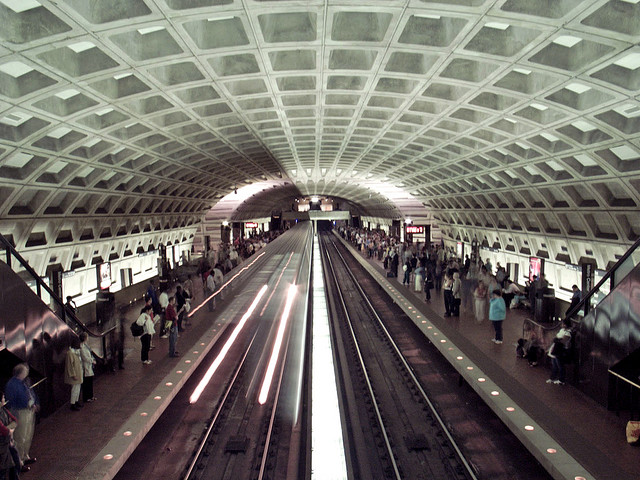 Photo by T.D. Ford
Written by DCist contributor Marc Tomik
You know all of that track work that has been happening in recent weeks and shut down entire stations and segments of various lines? It’s linked to federal recommendations on necessary safety improvements in the region’s transit system, and despite past concerns over a lack of enforcement mechanisms on safety standards, Metro has been improving in its work with federal and local regulators.
A report released today by the Safety and Security Committee of the WMATA Board of Directors has provoked a lot of discussion about safety incidents on Metro. A large part of the report is on the progress Metro is making to fulfill safety recommendations passed down by the Federal Transit Administration and the National Transportation Safety Board. Both agencies have provided numerous reports on what technical changes Metro can undertake to improve safety conditions on its rail service.
But with all these recommendations being handed down out there, is there any federal agency that has the ability to regulate transit and enforce decisions? Not so far.
For air travel, the FAA can fine airlines that don’t follow the rules, and even prevent airplanes from flying if it feels they are unsafe. The National Highway Traffic Safety Administration can similarly mandate recalls and repairs for cars that are found to have safety defects (they also have a way for you to submit complaints about your car if you feel it’s a trait that could be a trend). But very intentionally, both the NTSB and FTA lack this enforcement power for transit.
Starting with the NTSB, its mandate is one of objectivity. It investigates accidents in all modes, and are specifically not given enforcement power to allow them to make their decisions based only on the facts of the accident. When you are forced to consider cost with recommendations — and the difficulty in trying to enforce them — safety is no longer an objective goal. The push and pull of NTSB recommendations versus enforcement goes beyond Metro though. Their recent recommendation of banning all use of cell phones by drivers across the country caused police departments to say it’s unenforceable. Whether those bans should go into effect or not are a policy decision that each state or the federal government should make, but the NTSB is there to tell us that it is what would make roads safer.
The role of the FTA is mainly to administer grants to states to help fund new transit development and help maintain (to a certain degree) transit across the country. When it comes to safety, though, it is limited to recommendations and audits of safety organizations. In one hearing about Metro, FTA Administrator Peter M. Rogoff stated: “I want to emphasize that, under current law, FTA does not have the legal authority to compel WMATA to take specific corrective action to address our recommendations. As I have testified before, FTA is not empowered legally to issue national safety regulations for transit systems.”
There have been calls for this to change, though. Transportation Secretary Ray LaHood sent a bill to Congress in 2009 that would grant the FTA the ability to be able to enforce federal standards across the country. States could choose to train their own personnel and be certified, but if they did not, the feds could come in and enforce newly established federal rules. Given that this bill has not passed yet and the current political climate it faces, I wouldn’t hold my breath on this bill passing anytime soon.
The one agency that is charged with oversight of Metro (but only for rail service) is the Tri-State Oversight Committee. Most transit agencies across the country have their state Departments of Transportation as the oversight body, but since the Metro compact is made up of the three jurisdictions, a new agency was created. The TOC is made up of representatives from the three jurisdictions and their respective transportation departments. Prior to the Fort Totten crash, the TOC was almost completely shut-out of safety issues, and was even prevented at times from being able to complete on site inspections around the Metro system.
In recent years, though, the TOC has been beefed up and is asserting its role, both publicly and with Metro. A message from the committee’s chair states, “For any deficiencies identified by TOC, WMATA is required to propose corrective action plans for TOC’s approval and implement them to TOC’s satisfaction,” which comes a long way from earlier reports of being ignored.
So after reading all that, what’s happening on Metro’s end?
We see in the latest Metro report that they have been responsive to all the parties involved, which is remarkable difference from their past practice of shutting out TOC inspectors. The report details that all recommendations by the FTA have been implemented, and that Metro is working to close out about half of the NTSB recommendations with work continuing on the other half. Part of that work we see each weekend with track circuits being replaced to bring back the Automatic Train Control.
There is still a lot of work to go, but Metro is providing consistent updates that they are working to fulfill the recommendations from outside agencies.