Martin Austermuhle
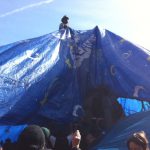
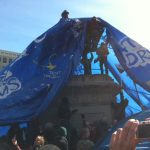
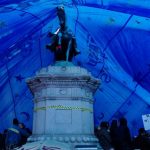
Early this morning U.S. Park Police moved into the Occupy D.C. encampment in McPherson Square and removed the “Tent of Dreams,” a tarp that had hung from the statue of Gen. James McPherson since Monday. They also set up barricades and told protesters that they would be searching tents for any evidence of camping, such as bedding.
Late last week Park Police announced that they would start enforcing no-camping rules as of Monday, but nothing of consequence happened during the week. (Unless you consider the “sleep strike” consequential.) On Thursday a federal judge in D.C. ruled that while police would still have to give notice of a full eviction, they could still enforce the no-camping rules.
In a phone calls with WUSA9, Park Police spokesperson David Schlosser said that police moved in at 6 a.m. for “nuisance abatement,” and that they would ensure that protesters could remain in the park as part of a 24-hour vigil. He said that protesters have been cooperative; on one of the livestreams, protesters have debated whether to risk arrest or not. At the time of this writing, a few protesters are sitting at the base of the McPherson statue and have been warned that if they do not move they will be arrested. (It looks like four protesters have chosen to be arrested.)
Compared to other such police actions against Occupy Wall Street-related encampments in other cities, this morning’s enforcement has been free of conflict. Park Police even allowed protesters who were filming to remain within an inner barricade in the park. The Park Police seem to be masterfully balancing enforcing the rules and not creating a scene. Of course, this doesn’t benefit Occupy D.C., as the City Paper’s Lydia DePillis tweeted, “If police use force, occupiers complain about tyranny. If they don’t, occupiers complain they’re avoiding a national news story.”
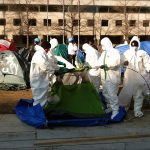
Park Police have said that they will be keeping a permanent presence in the park from now on. A group of police dressed in Hazmat suits have been spotted; they will be cleaning the McPherson statue and emptying out camping material from tents.