Martin Austermuhle
In the arc of a city’s cultural and culinary renaissance, there comes a time when someone starts pickling things. The New York Times recently referred to the sorts of people who get into pickling as the “guides to the future of the American economy,” while Portlandia more humorously portrayed would-be artisinal picklers as the sort of self-righteous know-it-alls that will pickle just about anything.
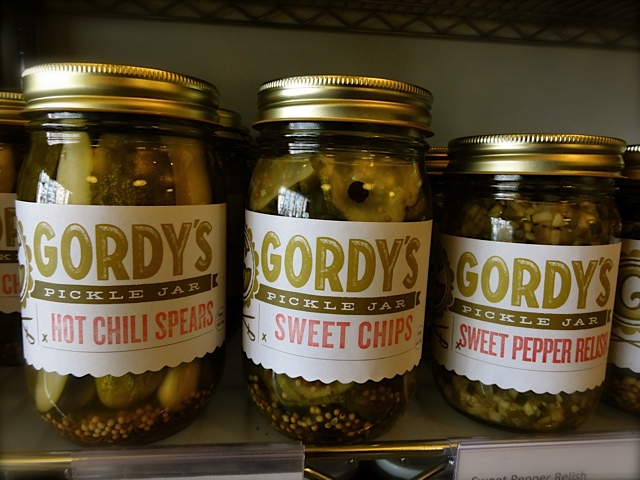
The District is in its pickling infancy, but a project started by two partners late last year shows that there is plenty of potential for pickles in D.C. Sarah Gordon and Sheila Fain launched Gordy’s Pickle Jar last October, and in just six months have turned what started as favors at the best friend’s wedding into a booming pickle trade in local bars, restaurants and stores.
“We both really love pickles. The time seemed ripe—there are tons of indie pickling companies—it’s kind of a rebirth of an old craft. It’s great to see so many small-batch pickling companies,” said Gordon, a 30-year-old Chicago native who came to D.C. just over seven years ago.
“The beauty of it is that you can have something year-round, a seasonal vegetable that you preserve and enjoy in the winter. We also love that it’s a global culinary art; every country that you go to you find some sort of pickled good, whether it’s kimchi or chutney or pickles or preserves,” she added.
For Fain, who grew up in Columbia and attended the University of Maryland, the chance to pickle was both an opportunity to expand upon her work with Dolci Gelati and invest in the city’s growing community of foodies, brewers and craft artisans. “It’s great to see this community of artisans. It’s something that was really lacking,” she said.
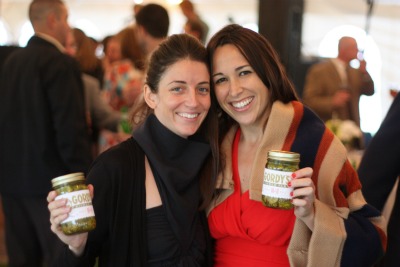 Sheila Fain and Sarah Gordon of Gordy’s Pickle Jar at their launch party in late 2011.
The two work out of the Montserrat House near the 9:30 Club, which offers them a larger kitchen than what their nearby apartment could provide. They cut and clean the vegetables, sterilize the jars, start the brining process, age the vegetables for two to three weeks, and package and deliver them. When they’re not making the pickles, they’re promoting them.
Fain admits that one of the benefits of pickling is the flexibility of flavors. “The possibilities are endless,” she said, pointing out that the two went on a “recipe-tweaking whirlwind” before settling on the various spices that go into their different brines. While they won’t admit to much, their sweet pickle chips are infused with ginger, coriander and mustard seeds; their relish benefits from a little pepper bite that most store-bought alternatives lack.
From the taste of it, the pickles are being well-received. Gordon and Fain produce 100 jars of pickles, relish and Thai basil jalapeños a day. They’ve got contracts with stores big and small—from Smucker Farms of Lancaster Co. on 14th Street to Whole Foods in Friendship Heights—and have partnered with other luminaries of the local food and drink scene like DC Brau and 13th Street Meats to ply their pickles.
Beyond the aggressive sales in D.C., their sweet chips took second place at the 2011 International Pickle Festival. Even their brine is getting rave reviews, starring in a signature shooter at Blackbyrd Warehouse on 14th Street—Gordy’s Banger, a mix of gin, lime and brine. (In February, Peregrine Expresso used the brine for a—gulp—coffee drink.) An unnamed 14th Street restaurateur is even pondering using the brine for donuts, and fried pickles have been floated as bar fare at various locales.
The pent up demand for craft goods may have been a blessing for their ambitions to eventually grow Gordy’s, but it’s also a fast challenge for what remains nothing more than a two-person operation. “It’s a day and night thing,” says Fain, who pickles during the day and tends bar three nights a week. “My day starts and end with pickles, for the most part,” she said. Gordon still works a day job as a consultant, but also does double duty when it comes to pickling and promoting Gordy’s.
They’re self-financed, and know all too well that as much as being based in D.C. is a huge source of their appeal, it also comes at a cost. “To be able to produce in the city is a big challenge because of the cost of rent and space,” said Gordon, who adds that the pair has been lucky to work in Montserrat House’s kitchen. Others they know aren’t as fortunate, exposing a glaring need for rentable commercial kitchens in the city.
Still, they keep positive about pickling in D.C., despite the intense commitment that it has required of them. “You can no longer pack up and move to Paris if you want to. You’re making pickles for the long haul, which we plan on doing,” said Gordon.