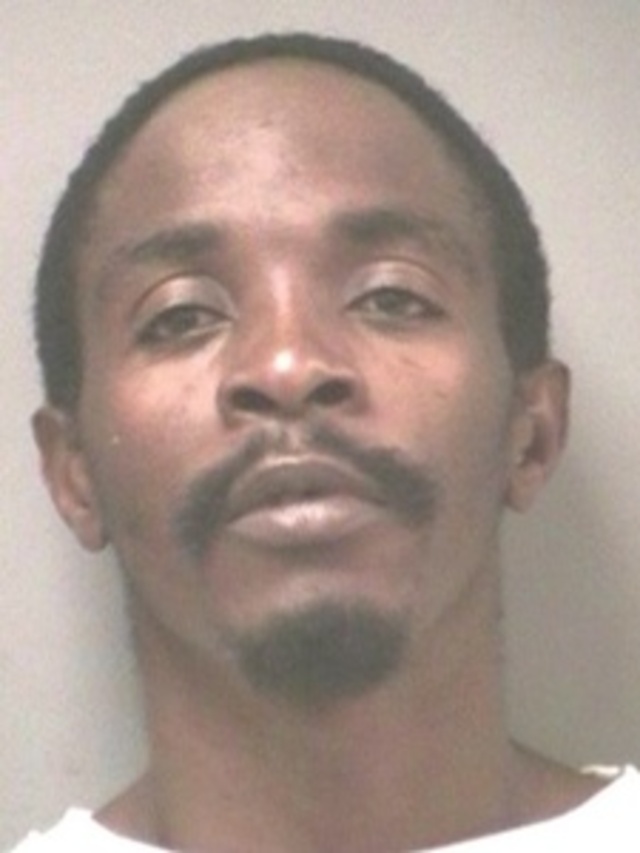
 Jones (Via Homicide Watch)
Last night, Homicide Watch’s Laura Amico posted audio of a 911 call that is almost sure to leave anyone who listens wondering if it might have been possible to prevent the 2010 shooting of Angelo Jones.
Jones was killed early in the morning of October 2, 2010 while at a neighborhood craps game in a parking lot on Clay Terrace NE. Ricky Pharr, who was found guilty of first-degree murder last month, approached the game with a gun.
Another person at the game dialed 911 and requested police be dispatched to the location, and from there things got confused. The caller knew he was around Clay Terrace, according to Amico’s transcript, but none of the addresses he provided registered with the dispatcher’s information. The caller seemed to know he was in front of a building marked “5339,” but not that it was on Clay Terrace, a U-shaped side street that juts out from 53rd Street NE.
The call goes on like this for more than five minutes until a series of gunshots is heard.
“It’s impossible to know what could have been different that night, what set of circumstances then could have meant Jones being alive now,” Amico writes, but there’s plenty to suggest that the dispatcher probably could have sent police units toward Clay Terrace. For one, the caller also mentioned being near H.D. Woodson High School, a well-known neighborhood landmark. And then there’s the system in place at the District’s Office of Unified Communications:
Jennifer Greene, director of the Office of Unified Communications, the intake center for the District’s 911 calls, said that system upgrades put in place since Oct. 2010 could have helped in the Clay Terrace shooting. Those upgrades, she said, allow 911 operators to enter dispatch locations by searching landmarks. When the caller mentioned that he could see H.D. Woodson High School, the 911 operator could enter that location as a landmark, Greene said. But those upgrades weren’t in place in 2010.
But even with the system OUC used in 2010, the 911 operator could have done more to find out where the young man was calling from, Greene said.
“She was trying to put in 5339 53rd street, which is not a good address in the system,” Greene said of the operator. “In her efforts to try to find a good location she kept trying to use that address with 53rd or 54th street; she probably should have asked for a cross street.”
The tape was crucial evidence in convicting Pharr, Amico reports, but Jones’ family also sees it as evidence his death could have been avoided entirely.
Listen: