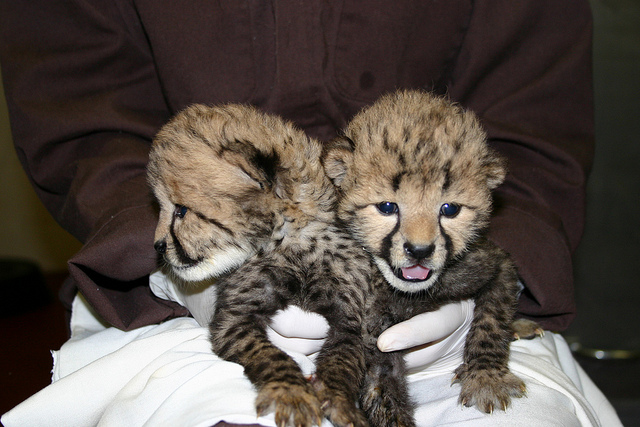
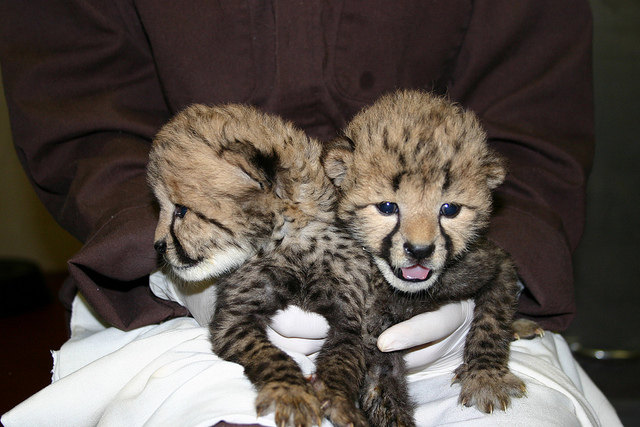
 Photo by Adrienne Crosier/Smithsonian Conservation Biology Institute
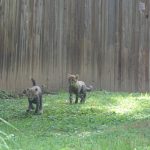
When the Smithsonian’s National Zoo announced earlier this year that a pair of cheetah cubs had been born at its research facility in Front Royal, Va., there was no shortage of squeeing. Tomorrow, there will be even more when they make their official public debut at the zoo’s Cheetah Conservation Station.
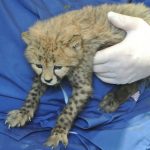
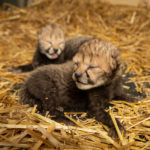
The two cubs were born April 23 in trying circumstances when after the first was born naturally, their mother’s labor ceased, forcing doctors to perform an emergency cesarean section procedure that rescued the second cub. (Two others died.)
As a result of the tricky birthing process, it was deemed that the cubs be raised by human hands. Moving into the National Zoo, the cheetahs will continue to receive direct care from the staff, but they will also finally be able to be gazed upon by the cheetah-loving masses. More importantly, perhaps, the zoo will also announce plans to name the cubs, one female and one male.
The cubs will be let into the cheetah yard tomorrow morning, but, as a zoo press release notes, “it is up to the cubs whether and for how long they come out into the yard to explore.”