 Photo by colleeneliza
You know how we’re always hearing how expensive is to live in D.C.? (Seriously, we wrote one of those posts just a month ago.) Well, apparently we’ve been had. Turns out, D.C. isn’t that pricey at all. Turns out it’s pretty affordable!
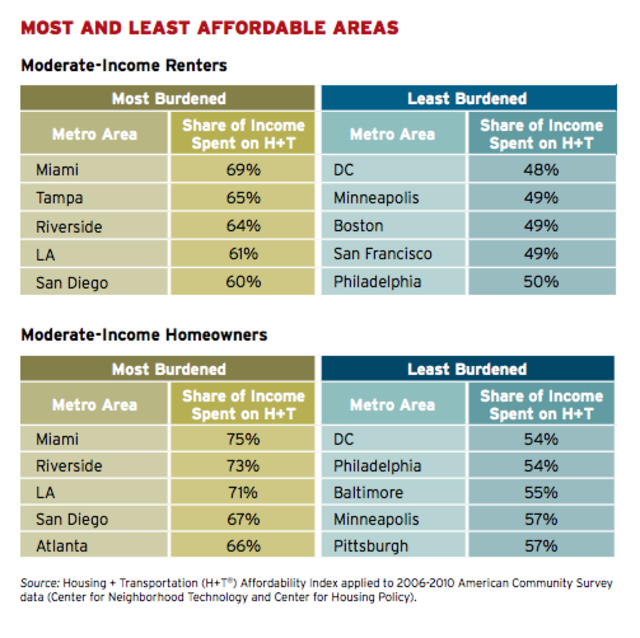
OK, here’s the giant asterisk. “Affordable” does not necessarily mean inexpensive. But a study conducted by the Center for Housing Policy and the Center for Neighborhood Technology found that when factoring in elements like average household income and transportation costs, D.C. rises to the top of the list of affordable metropolitan areas.
In more specific terms, it’s easier to get by in D.C., where the median household income is $89,063, instead of Miami, where that figure is just $50,888. Miami, in fact, rated as the least affordable place to live, with moderate-income renters spending their 69 percent of their earnings on housing and transportation, and moderate-income homeowners spending 75 percent on those necessities. After all, it’s not cheap to live on the beach.

Los Angeles, San Diego, Atlanta and Riverside, Calif. rounded out the five most unaffordable places. Joining D.C. near the list of affordable cities were Boston, San Francisco, Minneapolis and Philadelphia. Those last two aren’t terribly costly, but Boston and San Francisco can be prohibitively expensive; then again, those areas are also teeming with high-income industries like technology, education and medicine.
And that’s kind of the problem with this analysis. It ranks costs of living solely by median household incomes, which can obscure the real affordability of certain cities and metropolitan areas. D.C.’s median household income might be pushing $90,000, but there are plenty of people in this city for whom an average monthly rent of $1,600 is a major burden.
Streetsblog notes that the study’s authors don’t have much to say about how to reduce the relative price of housing. Instead they seem to be focused more on making transportation more affordable:
The study itself doesn’t get terribly specific in prescribing policy solutions, but it does suggest that metro areas need to tweak their zoning and regulations—and get creative with financing solutions – to center housing around transit investments. In these “location-efficient” spots, policy makers should work to preserve existing affordable housing and encourage more of it, and to reduce the costs and barriers to land acquisitions and new housing developments. Meanwhile, areas where housing is already affordable need to get more transit-accessible and pedestrian-friendly
Over at Housing Complex, Aaron Weiner has a theory: The unaffordable places—Southern California, Miami and Atlanta—all have pretty nice weather, while D.C., Boston and the rest of the “affordable” cities have horrible climates.