Martin Austermuhle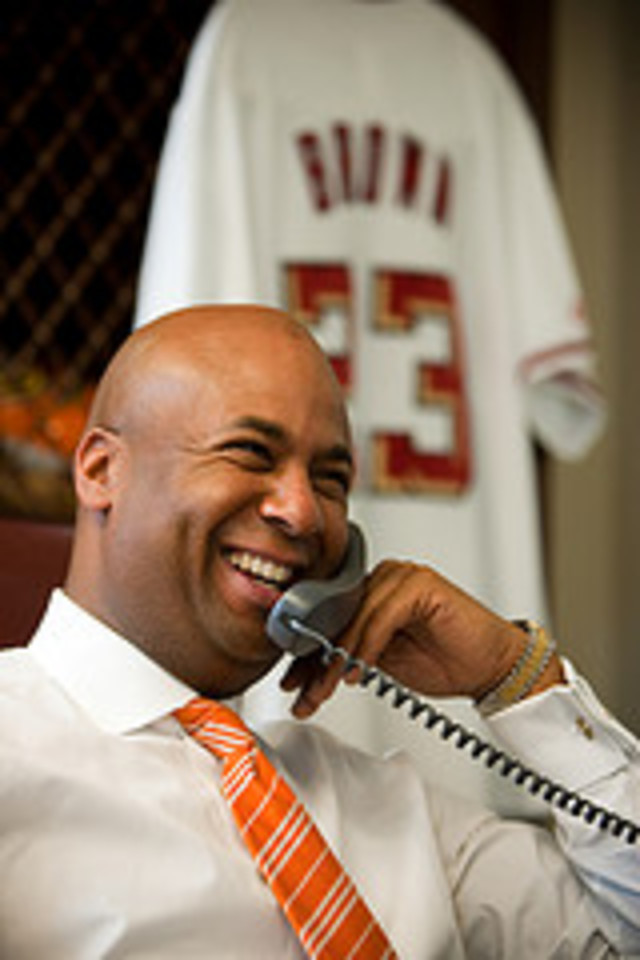
Four of the candidates vying for two At-Large seats on the D.C. Council gathered on Saturday at Catholic University for a debate—the full audio is here—on issues ranging from education to ethics. Incumbents Michael Brown (I-At Large) and Vincent Orange (D-At Large) squared off against independent David Grosso and Republican Mary Brooks Beatty and, at times, the moderators themselves. Here are some highlights:
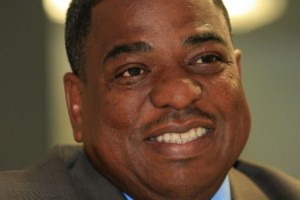
 Brown. Photo by michael starghill
>> In their opening statements, Brown, Grosso and Orange focused on making sure that the economic and demographic changes sweeping the District don’t force longtime residents out of the city. They all stressed the need for more affordable housing, job creation and continuing education reform. Beatty said that problem was deeper than that: until the city rids itself of corrupt elected officials, no number of other policy debates will truly solve the city’s problems.
>> On D.C.’s red top parking meters—those set aside for the disabled—all the candidates seemed unhappy with a plan to set aside 10 percent of the city’s on-street spots for the meters and charge disabled drivers to park there. Only Grosso sided with making parking for disabled drivers free, while the other candidates seemed hesitant to go that far.
>> Questioned on speed cameras, all four generally said that fines were too high. Brown proposed that more cameras be placed along the city’s borders with Maryland and Virginia to get more revenue out of out-of-state drivers—they’re already responsible for 75 percent of all traffic camera tickets—while Beatty simply called the cameras “outrageous and ridiculous” and said that there is little evidence that they have led to a decrease in traffic-related fatalities over the years. Grosso also said he’d want the fines lowered, but he was also the only candidate to say that maybe drivers should just slow down.
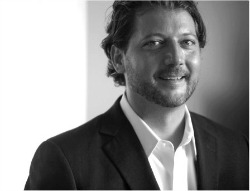 Grosso
>> The four differed on what to do with the city’s budget surplus—$240 million last year, $140 million this year. Orange and Brown said that they’d like to see some of the money go towards spending on social services, while Beatty said she’d like the money set aside in the city’s rainy day fund. Grosso somewhat split the difference, saying that the surplus should not be spent lightly, given how such a move could impact the city’s bond rating.
>> Two questions focused on education—one on the IMPACT teacher evaluation system, the other on future school closures. On IMPACT, the four said that the evaluation of the city’s teachers is working, but not working as well as it could. For Brown, the system unfairly targets older teachers, while Grosso said that it’s unfair to evaluate teachers without schools providing wrap-around services that many students need. Beatty said that she didn’t think current teachers evaluations were working, while Orange said the education reform as a whole was moving ahead more quickly because former D.C. Schools Chancellor Michelle Rhee and former Washington Teachers’ Union President George Parker are gone.
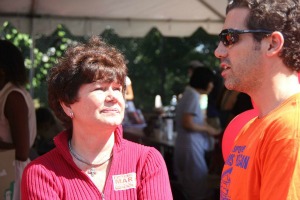 Beatty
>> On school closures—another round is expected in the next few months—Grosso said that the public hadn’t been properly engaged in the discussions, while Beatty objected to closing neighborhood schools. Orange and Brown said that some schools may have to close, and such decisions have to be made based on enrollment and cost concerns.
>> All four candidates said they supported Uber, mostly because the high-end livery service did what many normal taxicab drivers won’t—take residents to wherever they want to go in town. Both Brown and Orange said they also support taxicab drivers, but noted that a large majority are Maryland residents. Beatty delved into the issue more deeply, saying that the playing field should be leveled for all comers—D.C. taxicabs should be deregulated, she opined.
>> Brown and Grosso differed on how to best get D.C. residents back to work. While Brown touted his role in strengthening a law that requires 50 percent of jobs on D.C.-funded projects to go to residents, Grosso said that the city shouldn’t impose such requirements on employers but rather do a better job preparing and connecting residents for the jobs that are out there. (Grosso noted that the city’s First Source law is already in court over complaints that it puts unrealistic demands on contractors and employers.)
>> None of the candidates would support another city-funded stadium, and all opposed building a training facility for the ‘Skins on Reservation 13. Grosso, Orange and Brown said they supported a plan for a D.C. United stadium at Buzzard Point, where the team would pay for the facility while the city would pay for the infrastructure upgrades. Surprisingly, both Brown and Orange expressed frustration with Nationals Park: Brown said that its construction has placed pressure on the city’s debt cap, while Orange said that a $450 million community benefits fund that should have come with its construction never materialized.
 >> The two incumbents opposed a plan that would remove the D.C. Council’s authority to review and vote on contracts worth over $1 million, while the challengers supported it.
>> In a series of rapid-fire questions, Grosso was the only candidate to support ticketing residents and businesses that don’t shovel their walks after snow storms, while Beatty was the only candidate that said that the five-cent bag fee should be repealed and that D.C. should not impose a New York-style ban on sugary sodas.
>> Both Brown and Orange aggressively attacked the media—the Post in particular—for reporting on their various scandals. Brown pushed back on the claim that he hadn’t paid his taxes; he’d only paid them late he said. As for Orange, he denied any shady connections between him and Jeffrey Thompson, the D.C. businessman that’s at the center of the $653,000 shadow campaign that supported Mayor Vince Gray during his 2010 run.
>> If you’re wondering why only four of the seven At-Large candidates on the ballot participated in this debate, it was because participants were chosen based on fundraising and polling. Independents Leon Swain and A.J. Cooper and Statehood Green candidate Ann Wilcox did not participate. Supporters of Swain and Cooper protested outside the debate, yelling “Let them speak!” as attendees filed in.