Martin Austermuhle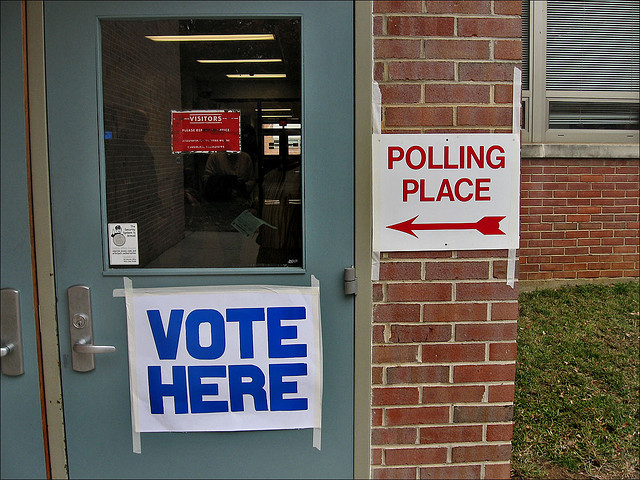
 Photo by Burnt Pixel
It’s that time of year again—voting time! Whether you choose to cast a ballot early—which you can do at these locations through Saturday—or take part in the democratic festivities on November 6, there are a number of candidates, both local and federal, and ballot measures that you’ll have to consider. We’d like to help demystify the choices a little bit, so we’ll be publishing a number of Voter Guides over the next few days on the races that will appear on the D.C. ballot.
We’re certainly not the only ones that are doing so, of course—the Current publishes an excellent voter guide, , D.C. for Democracy has handy candidate questionnaires and the League of Women voters has its own guide—so read up as much as possible before you go vote.
THE AT-LARGE RACE
Two At-Large seats on the D.C. Council are up for grabs—the seat held by Vincent Orange (D-At Large) and the one held by Michael A. Brown (I-At Large). There are five challengers: independents David Grosso, A.J. Cooper and Leon Swain; Republican Mary Brooks Beatty; and Statehood Green Ann Wilcox. While one seat is set aside for a non-Democrat, voters can choose any combination of two to fill the seats. Like Orange and Wilcox? Vote for the two of them. Grosso and Swain? Feel free. The point is that this is one of the few contests in D.C. elections where you don’t have to hold your nose and choose the lesser of two evils—heck, you can vote for evil twice. Just remember: YOU CAN VOTE FOR TWO PEOPLE!
This is probably one of the most meaningful races of the year both because it’s competitive and because of the political context it lands in. The D.C. Council remains mired in scandal—even after the resignation of two of its members for ethical and legal transgressions, questions still surround a number of other legislators for misdeeds big and small, including Brown and Orange.
Orange’s 2011 At-Large bid benefitted from campaign contributions from Jeffrey Thompson, the now-toxic businessman who financed Mayor Vince Gray’s 2010 shadow campaign. (Orange denies that any of the contributions to his campaign were illicit.) As for Brown, his problems are mostly personal: he has been dinged for not paying his taxes on time, campaign finance violations, having had his driver’s license suspended multiple times, and mismanaging non-profit funds. He also had $113,000 in campaign funds stolen from him, leading critics to wonder how closely Brown can account for money—whether his or the city’s.
Of course, none of what Brown and Orange are accused of rises to the level of stealing city funds, like their former colleague, Harry Thomas Jr., did—but that’s a pretty low bar, even for local pols. And, as Kwame Brown proved, sometimes personal problems are enough to sink a promising politician: the former council chairman was forced to resign after admitting to lying on application forms for personal bank loans.
Polls have shown that many D.C. voters are sick of the stink of scandal that seems to follow so many of the city’s elected officials. But unlike many other electoral contests, this year’s election could well be the first time that an incumbent councilmember is knocked off since, well—it’s been awhile. According to a recent City Paper/WAMU poll, Brown and Grosso are effectively tied in the race (26 to 21 percent, within the margin of error), followed by Beatty is at nine percent, Cooper at seven, Wilcox at five percent, and Swain at one percent.
If you want to hear the candidates make the case for themselves, listen to this WAMU debate between Cooper, Swain, Orange, and Wilcox or this WTOP debate between Orange, Brown, Beatty, and Grosso. Tomorrow The Kojo Nnamdi Show will host Brown, Beatty and Grosso, so tune in. (Update, 5 p.m.: Brown just said that he won’t be attending the debate.)
THE CANDIDATES
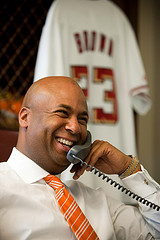 Photo by michael starghill
Michael A. Brown: Brown was first elected to the At-Large seat in 2008, having switched from Democrat to independent and handily defeating Republican Pat Mara. Before that, Brown ran for mayor in 2006.
Money Raised: Over $230,000, though $113,000 was reported stolen.
Strengths: Brown often touts himself as a champion of those that are struggling, and he’s certainly right on that point. He’s fought for affordable housing, pushed for taxes to be nudged up on the city’s highest-earners so that money could go to social services and passed landmark legislation strengthening the D.C. law that places hiring requirements on contractors working on city-funded projects. He is also one of the few elected officials in D.C. that openly promotes statehood. On a personal level, Brown is generally well-liked and charismatic, winning over even his critics with a personal approach that would be the envy of any politician.
Weaknesses: That said, Brown’s troubles—some personal, some not—weigh him down. His ongoing problems with his taxes, the mysterious theft of campaign funds that has yet to result in any charges being filed against the man he’s accused of the crime, the somewhat sneaky way he inserted a provision legalizing online gambling into a budget bill last year—all of these things are enough to give any voter pause, even more so now that even the slightest indiscretion could be but the tip of the iceberg. Moreover, his critics have said that Brown isn’t the strongest on details or follow-through.
Endorsements: Nine labor unions have endorsed Brown.
——
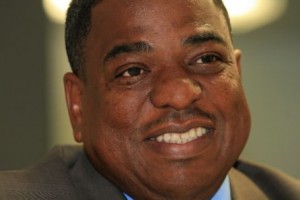 Vincent Orange: The Democratic incumbent is no stranger to D.C. politics: he served two terms on the council as Ward 5’s representative before running for mayor in 2006. After a few years in the private sector—with Pepco—Orange re-emerged to run for council chair, only to lose to Kwame Brown. Not one to quit, Orange threw himself into the running for an At-Large seat last year, taking a win in a closely contested special election. During this April’s Democratic primary, he barely claimed victory over a divided field of challengers.
Money Raised: $264,000
Strengths: Orange is smart and a hard-worker. A lawyer and accountant, he diligently worked for Ward 5 while on the council, helping bring economic development and education opportunities (through McKinley Technology High School) to his constituents. More recently, he has focused on small business promotion and advocated for councilmembers to drop outside jobs. He’s also good at promoting himself. (See below.)
Weaknesses: Orange is the best. No, that’s not a compliment, but rather a means to explain what’s wrong with the At-Large incumbent. During a June meeting where councilmembers gathered to decide who to promote to the council’s top spot, Orange scorched the earth in hopes of getting a ceremonial appointment. Despite is repeated please that “I’m the best!” the feeling was not shared by his colleagues—they chose Michael Brown instead. That’s generally Orange’s problem. While he might be a smart and well-intentioned guy, he also comes off as being concerned with little more than his own self-promotion and political advancement. To boot: Orange rarely likes to answer the question of whether he’d finish his full term if re-elected, fueling speculation that he’s already eyeing higher office. Again.
Endorsements: The Examiner’s editorial board has sided with Orange for re-election, as have a number of labor unions and the D.C. Chamber of Commerce.
——
 Grosso
David Grosso: Grosso is a former council staffer for Councilmember Sharon Ambrose (D-Ward 6) and aide to D.C. Del. Eleanor Holmes Norton; he currently works as a lawyer for CareFirst BlueCross BlueShield. Grosso launched his campaign to unseat Brown last year.
Money Raised: $157,000
Strengths: From the beginning, Grosso knew what it would take to knock off an incumbent. He launched his campaign a year ago, raised over $150,000 for the effort and zeroed in on a message that he’s constantly repeated: ethics. Given his former work on the council, Grosso has shown during debates that he understands the nuts and bolts of passing legislation; that fact along might put voters who are nervous of sending a total newbie to the Wilson Building at ease. He’s also not dogmatically stuck to any one position or policy; he recognizes that economic development, for one, is a give-and-take process that requires working closely with the business community, sees improving education in D.C. as being about making sure that both good public schools and good charter schools excel and knows that raising taxes or spending surpluses shouldn’t be put before making sure that city agencies are spending the dollars they have as efficiently as possible. Moreover, he’s really hammered one point home: no matter how good your ideas are, if you’re mired in scandal there’s not really much you can do well. (He made the case for himself in the Blade this week.)
Weaknesses: Ethics is fine, good and necessary, but ethics doesn’t build houses, provide jobs or modernize schools. (You could argue that the lack of ethics gets in the way of all of those, of course.) While Grosso’s focus on being an ethical councilmember makes sense given the incumbents he trying to knock off, he sometimes left other issues unaddressed during candidate debates. He was recently asked what his first piece of legislation as a councilmember would be, and responded by saying that he’d strengthen an ethics law passed last year. There’s certainly nothing wrong with that, but some fence-sitting residents might have wanted to hear more about his economic development plans or how he would continue promoting education reform.
Endorsements: Post, Examiner, City Paper, Jonetta Rose Barras, the Current Newspapers, D.C. for Democracy, Sierra Club, and more.
——
 Beatty
Mary Brooks Beatty: The sole Republican running in the race, Beatty is a former Ward 6 ANC member and the president of Women in Government, a national organization of female state legislators.
Money Raised: $41,000
Strengths: Like many Republican candidates before her, Beatty has touched upon an issue that the D.C. needs to address: regulatory reform. Whether the hoops that businesses have to jump through or the mountain of rules taxicab drivers have to follow (compared to their relatively free competitors in Uber), Beatty has rightfully stressed that the city’s elected officials need to make it easier to do business in the city. As a former ANC commissioner, she also understand that quality of life issues tend to define how many residents view their city government: if the trash is picked up and the police regularly patrol, many residents will generally be more satisfied with living here. Like Grosso, Beatty has also focused on ethics, saying that the council needs some contrarian voices—read: Republicans—to ensure that legislators stay on the straight and narrow. (Read her make the case for herself in the Washington Blade.)
Weaknesses: Beatty far too often associates good government with having Republicans on the council. She’s criticized Grosso, Brown, Cooper and Swain for being Democrats in disguise, and has said that only a Republican can bring true balance to the council. That’s fair and good, and she’s certainly not the first Republican in D.C. to claim it. But at the end of the day, voters should choose their elected officials based on who they are, not what party they claim membership to. Beatty also didn’t do herself any favors when she urged residents to vote for her and only her. That’s a standard Republican line in D.C., but is encouraging voters to effectively disenfranchise themselves really a winning argument? No.
Endorsements: The InTowner.
——
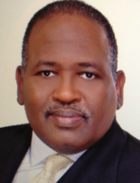 Swain
SwainLeon Swain: A Ward 8 resident, Swain has a quite the résumé: he’s a former police officer (he arrested John Hinckley Jr.!), D.C. Taxicab Commissioner under Mayor Adrian Fenty and a current ANC member. It was in that second capacity that Swain most recently distinguished himself, wearing a wire during an FBI sting of taxicab owners engaged in a corruption scheme.
Money Raised: $28,000
Strengths: Like Grosso and Beatty, Swain has stressed that the council needs someone who is unbendingly clean and will hold his colleagues to account. (He recently said that a cop is needed on the council.) But when Swain says it, it really does carry more weight.
Weaknesses: Given his experience, you’d think Swain is a shoo-in, right? Sure, but he’s raised very little money and doesn’t excel at selling himself to voters. (In a recent City Paper poll, he only registered at one percent support.) Should that matter? In a perfect world, no. But this isn’t a perfect world, and no candidate can expect that what they once did will simply speak for itself now.
Endorsements: The Washington Post’s editorial board.
——
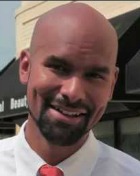 Cooper
A.J. Cooper: Cooper, a D.C. native who works at the D.C. Campaign to End Teenage Pregnancy, is the youngest candidate in the bunch—he’s only 32.
Money Raised: $16,000
Strengths: Cooper is a strong speaker—he was once the host of BET’s “Teen Summit”—regularly zinging the incumbents and effectively giving voice to the frustration that many residents feel with local politics. (It would also be nice to have someone young on the council.) He is also the only candidate to say that as a councilmember he’d focus on teen pregnancy, an issue that underpins a number of other social problems that legislators regularly have to tackle.
Weaknesses: Cooper’s zingers might be good, but they sometimes serve as a substitute for more substantial opinions on issues facing D.C. voters. Fortunately, Cooper’s career in D.C. politics may only be starting, so this may not be the last time he runs for office.
——
 Wilcox
Ann Wilcox: A First Amendment lawyer, Wilcox is a Statehood Green trying to get the small political party its first seat on the council since Julius Hobson.
Money Raised: No reports filed.
Strengths: Wilcox belongs to a party that’s second to none in terms of its advocacy for D.C. voting rights, self-determination and statehood. She’s also a thoughtful candidate, not afraid to say that she agrees with what some the incumbents she’d like to replace have done. He principal focus is affordable housing and jobs for D.C. residents, both pressing issues.
Weaknesses: Wilcox isn’t really able to do much outreach because, well, she didn’t seem to raise any money. No, we’d like to idealistic and say that money shouldn’t take priority over good ideas, but let’s be realistic—without any money, those good ideas aren’t going to be heard by all that many people.