Martin Austermuhle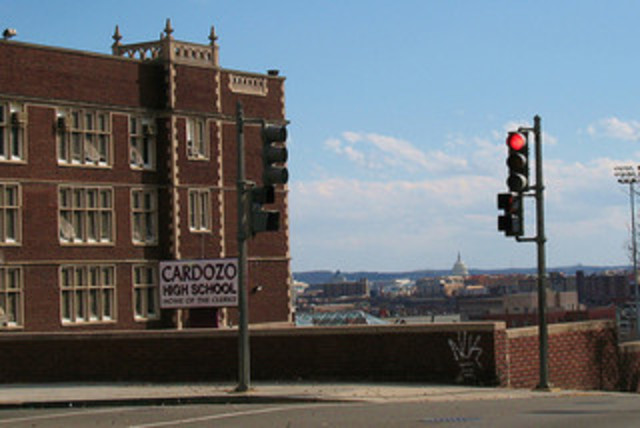
 Photo by Mr. T in DC
Opponents of D.C. Schools Chancellor Kaya Henderson’s plan to shutter 15 public schools say that they will sue to stop her, claiming that the closures disproportionately target minority students. In a press release, Empower D.C., an organization that marshaled opposition to schools closures both on 2008 and late last year, said that Henderson’s plan to close 15 schools was being carried out unequally.
“Under the pretext of improving our schools and saving resources, Chancellor Henderson is in fact blocking the school doors for hundreds of Black and Brown students in a way that dredges up images of that Arkansas Governor, Orval Faubus,” said Johnny Barnes, an attorney representing the group’s members.
“It does not matter that she and the Mayor are individuals of color. The law did not permit that kind of unequal treatment then, and it should not permit it now. We intend to vigorously and zealously pursue those legal avenues available to the parents and children affected, so that all young people in Washington, D.C. have the same access to quality education,” said Barnes.
When Henderson originally drew up a plan to close 20 schools last November, she said she was targeting under-enrolled schools that were located in under-utilized buildings. Of those 20 schools, though, 14 were in wards 5, 7 and 8, serving primarily minority students. (In the whole system, 72 percent of students are black, 14 percent are Hispanic and 10 percent are white.)
In an updated presentation unveiled yesterday, Henderson removed five schools from the list: Johnson Middle School and Malcolm X Elementary School in Ward 8 and Smothers Elementary School in Ward 7 were spared, as were the two Ward 2 schools that made Henderson’s original proposal, Garrison Elementary and Francis-Stevens Educational Campus. Still, wards 5, 7 and 8 will be hit hard.
Barnes’ argument is complicated by a number of factors, though. Building capacity rates and overall enrollment are lowest in the exact wards that were hit hardest by the proposed closures; 54 percent of kids in Ward 5 attend charter schools, while that number hits 51 percent in Ward 7 and 40 percent in Ward 8. With so few students in a large amount of buildings, Henderson has argued, limited resources were going to sustain buildings instead of instruction. (Opponents usually complain that schools in Ward 3 are never closed; those schools are on average over-enrolled.)
Her critics turn that argument on its head, though, saying that limited resources and fewer schools have caused students to flee the public school system, created a deadly downward spiral in poorer neighborhoods. Additionally, they say, charter schools have expanded quickly throughout certain parts of the city, drawing students away from public schools.
At a press conference next week, the group says its plans on unveiling its litigation strategy and a letter to Mayor Vince Gray and members of the D.C. Council demanding that the closures be put on hold. But despite having allies on the council—Councilmember Yvette Alexander (D-Ward 7) was most upset with Henderson’s plan—the levers of pressure they have are few and far between. Gray has said he supports Henderson’s plan, and only he has to sign off on it for it to move forward.