 Photo by absentmindedprof
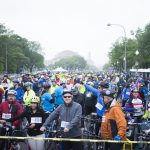
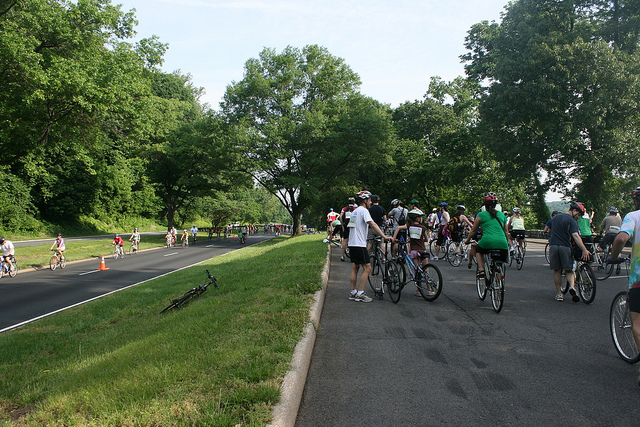
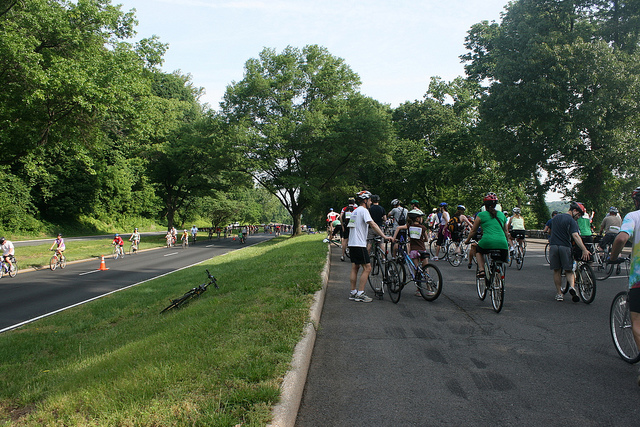
Cyclists anticipating that warm spring day when they can enjoy 24 miles of car-free roads through Arlington and D.C. will have to look elsewhere this year, because the annual Bike DC organized ride has been called off.
Rick Bauman, the ride’s organizer, says in an interview that the permitting process, which was usually headache-inducing but manageable, turned impossible to navigate for this year’s planned event. Because Bike DC’s route begins in on Capitol Hill, winds through the District, crosses the Potomac on a federally controlled road, loops through Arlington, and finishes back on the National Mall, Bauman needed to wrangle permission from five different agencies.
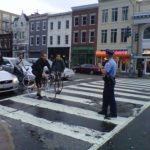
And while the Arlington city government was a cinch, Bauman says he was stymied for months by Mayor Vince Gray’s Special Events Task Group and the National Park Service. Bauman says he submitted his request to for a permit to the special events group last November, but did not get an appointment until January, and it wasn’t until a few weeks after that when he was told to jump through more hoops involving the Metropolitan Police Department’s special operations division, which handles security needs for events around the city.
“It only works if there is a consistent set of policies,” he says. But consistency is difficult to find between five agencies representing three different governments.
As for NPS, Bauman says he was told that Bike DC could not close certain segments of the Spout Run Parkway and U.S. Route 50 at the same time. Though Bike DC’s route travels on the George Washington Parkway, it has used those other roads as access points. The National Park Service did not respond to requests for an explanation of its decision to not issue Bauman a permit this year as it has in the five previous years.
Although there are plenty of organized bike rides around the D.C. area, nearly all are conducted concurrent with car traffic. Bike DC was the rare opportunity for cyclists to enjoy the open road to themselves, if just for a few hours on a Sunday.
But the loss of Bike DC extends well beyond the chance to have a closed-streets group ride. It also represents a major financial blow to the Washington Area Bicyclist Organization, to which Bike DC gives a portion of its proceeds. Last year, Bike DC cost $40 for adults riding the full course and $30 doing the family course.
“It’s our biggest single fundraiser of the year,” WABA Executive Director Shane Farthing writes in an email. He adds that Bike DC previously afforded WABA a great chance to expand its membership.
In a longer post on WABA’s blog, Farthing writes that not having Bike DC this year will set back his organization’s work to promote cycling as a mode of transportation. “It’s critical as an entry point to attracting new people to bike regularly for transportation,” he writes. “Canceling Bike DC is a step in the wrong direction for biking in the region. We know this, and we know that this leaves the D.C. area without a significant, closed-streets community ride or open-streets event.”
As for Bauman, he says he smells a rat. A 24-mile bike route requiring the closure of several major streets is a logistical hassle, and he suggests some stakeholders might have wanted to save themselves the paperwork. “There are certain players who find this event a pain in the rear,” he says.