Martin Austermuhle
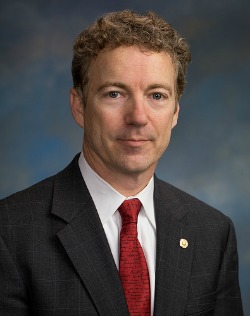 Sen. Rand Paul (R-Ky.)
The Republican Party recently admitted that it will only survive if it can appeal to new constituencies, including minority and urban voters. Well, an unexpected face of the party is going to try and make that case at a local university tomorrow.
According to the National Journal, Sen. Rand Paul (R-Ky.) will speak at Howard University on Wednesday, where he will address “the importance of outreach to younger voters, as well as minority groups” and speak of issues related to schools and civil liberties.
The speech is notable for a few reasons: the last prominent Republican to speak at the historically black university was Colin Powell in 1994, and Paul’s quixotic mix of libertarian principles and conservative positions could be an interesting sell for the audience he’ll be addressing:
But Paul makes for an unusual GOP emissary to black voters. His libertarian, small-government bent is a tough sell in the African-American community, which has long viewed federal government intervention as necessary for securing equal rights. Blacks also make up a disproportionate share of the federal workforce.
While running for Senate in 2010, Paul’s comments that the federal government shouldn’t be involved in forcing private businesses not to racially discriminate created a firestorm. He had to scramble to clarify that he supports the Civil Rights Act and is against segregation in public spaces, and by the next day, he seemed to reverse his position on discrimination by private entities.
Still, Paul isn’t a bad choice: he recently bucked his own party in a speech on immigration reform, and has generally expressed skepticism over the U.S. war on drugs that disproportionately affects young African American men.
That being said, Paul might have to answer some very local questions. It was last year, after all, that he introduced a number of noxious amendments—including one that would allow for concealed carry permits, one codifying the ban on the use of local funds for abortions and one forbidding job discrimination based on union membership—to a Senate bill that would have given D.C. more budget autonomy. The bill died shortly thereafter. The content of the amendments themselves may not be offensive to everyone, but the audience at the city’s premier black university may want to know how the GOP plans to become more urban-centric if it continues to see D.C. as a place that needs to be legislated for.
The speech will take place at 11 a.m. in the School of Business auditorium (2600 Sixth Street NW).