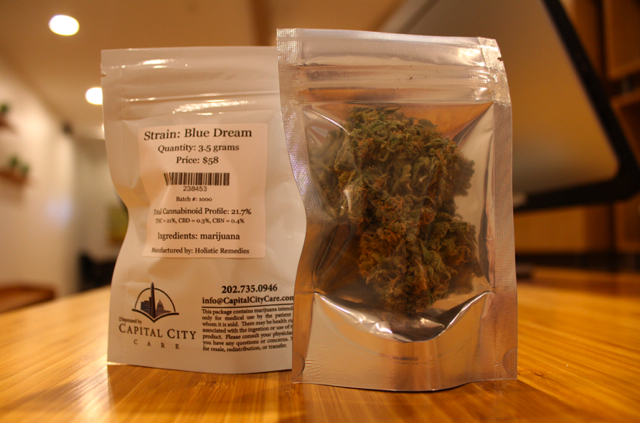
 Photo via Capital City Care
Adam Eidinger—the co-owner of Capital Hemp and leader of DCMJ 2014—who earlier this year proposed an initiative for the decriminalization of marijuana for District voters, has decided that nah, decriminalization isn’t enough, he’d rather just have it all legalized.
WAMU and The Post reports that at a hearing with the Board of Elections this morning, Eidinger officially withdrew his proposed initiative for decriminalization of marijuana laws that would lower “penalties for use and possession of less than two ounces of marijuana.” This comes after Attorney General Irv Nathan raised objections to Eidinger’s decriminalization proposal to the board in a letter on August 27. Instead, Eidinger figured he’d just going to go for the whole nine yards and resubmit the proposed initiative as a legalization bid.
The Department of Justice’s announcement last week that they would not interfere with state marijuana decriminalization and legalization laws could be prove to be another big step forward toward the legalization of marijuana in the District. But we’ll see!
Previously, Eidinger’s proposed initiative was put forth in order to support Tommy Wells’ (D-Ward 6) Marijuana Decriminalization Bill introduced earlier in July. But now that the potential legalization of marijuana is in the State’s hands instead of the federal government, Eidinger will hope that the voters will decide whether or not they want marijuana legalized in the District. At the very least, Eidinger hopes that “the threat of a legalization initiative will help the Wells bill improve,” he said at this morning’s meeting.
Earlier today, a National Survey on Drug Use and Health released by the Office of National Drug Control Policy revealed that the Federal Government’s marijuana prohibition had failed to accomplish its initial goals. According to a press release from The Marijuana Policy Project, “usage rates have remained relatively constant despite hundreds of thousands of arrests for marijuana-related offenses and billions of dollars spent to reduce marijuana supply and demand in the United States.”
Dan Riffle, director of federal policies for the Marijuana Policy Project, said that the survey reveals nothing new about the effectiveness of marijuana prohibition laws:
“The majority of Americans agree that marijuana prohibition has failed.” It is time to replace our broken marijuana laws with a more effective and efficient system of regulating and taxing marijuana for adults. Marijuana is objectively less harmful than alcohol, and it is time to treat it that way.”
Eidinger’s says he’ll submit the new initiative to the elections board by Friday, after that, if the board approves that ballot’s language, he’ll “have 180 days to collect the signatures of more than 25,000 city voters,” according to The Post.