 Photo via Shutterstock
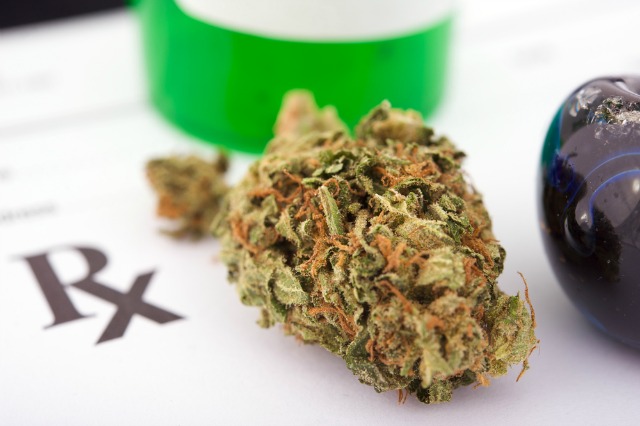
While residents in Colorado are enjoying the ability to legally purchase and consume marijuana, D.C. residents are likely still years away from sharing in that freedom. But before full legalization can become a reality, the city needs to reevaluate its current laws regarding medical marijuana. At least that’s what Councilmember David Grosso (I-At Large) believes.
In a letter, first published by WAMU, addressed to Joxel Garcia, acting director of the Department of Health, Grosso writes that the list of qualifying conditions for medical marijuana needs to be expanded. “The District’s medical marijuana program has experienced low participation rates since the first dispensary opened last July,” Grosso wrote. “The narrow list of qualifying medical conditions is the primary problem that has led to low enrollment.” Currently, only those diagnosed with HIV or AIDS, cancer, glaucoma, or severe muscle spasms are eligible to receive prescriptions for medical marijuana.
But Grosso doesn’t think that’s enough. In the letter, he says that that list should be expanded to include endometriosis, post-traumatic stress disorder, epilepsy, dystonia, and Crohn’s disease.
And Grosso isn’t alone. In October, Councilmember Yvetter Alexander (D-Ward 7)—who head’s the Committee on Health—held a roundtable to discuss the District’s medical marijuana program. Those who testified also complained that D.C.’s medical marijuana laws need to expand to include the conditions Grosso outlined in his letter.
Speaking with DCist then, Ken Archer, a Greater Greater Washington contributor who testified at the hearing, explained how his four-year-old who suffers from epilepsy could benefit from a form of cannabis oil that is only legal under medical marijuana laws. For Archer’s son, who suffers from 75 seizures a week, medical marijuana has been proven to be an effective treatment for epilepsy.
During that month, Mayor Gray established a medical marijuana advisory committee, which can expand the list of qualifying conditions for prescriptions. Garcia, or a subordinate, will serve on its Intergovernmental Operations and Scientific subcommittee. In his letter, Grosso says that he’s going to introduce emergency legislation in February to expand the list if the Department of Health doesn’t provide him with their plans for the advisory committee.
“However, as the director of the Department of Health I hope you will administratively expand the medical marijuana program to include the diseases included in my legislation to prevent further needless pain and suffering for District residents,” he writes.
A spokesperson from the Department of Health had no comment on Grosso’s letter at this time.