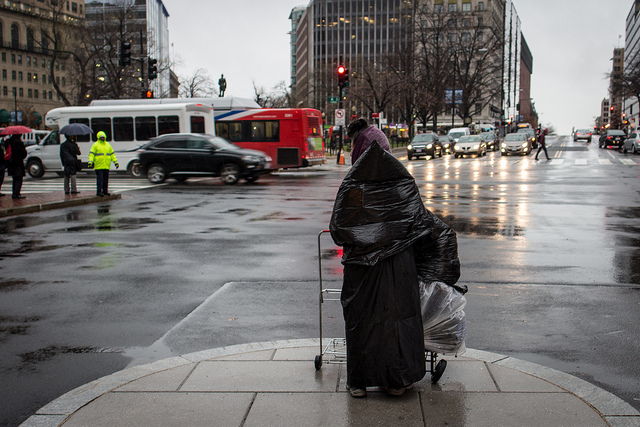
 Photo by Dennis Dimick.
A coalition of local non-profit organizations and community groups praised the millions set aside in Mayor Vincent Gray’s budget for ending veteran homelessness, but would like to see a greater investment for the entire population of chronically homeless people.
In a release, The Way Home Campaign calls on the Council to maintain Gray’s $4.7 million commitment in the fiscal year 2015 budget to ending veteran homelessness by 2015. The Veterans NOW coalition, made up of nine government and non-profit agencies, housed 405 veterans — 199 of whom were chronically homeless — in 200 days, achieving this goal through a high level of cooperation and a well-established strategy.
“We also urge the D.C. Council to revise the 2015 Budget to meet the goals set out in the D.C. Interagency Council on Homelessness’ plan to end all chronic homelessness in the District,” the group says. “Allocating funding to create 609 units of housing will fulfill these goals. The D.C. Council is in a position to truly transform the District by ending chronic homelessness.”
In line with the ICH’s Permanent Supportive Housing Production plan, The Way Home campaign is seeking the following in the 2015 budget:
Gray’s budget calls for an additional $100 million to be spent on affordable housing, including $78.5 million for the Housing Production Trust Fund and $4 million in local rent supplement vouchers. The DHS budget projects that 1,495 formerly homeless households will receive housing and supportive services “through the permanent supportive housing” program in FY15.