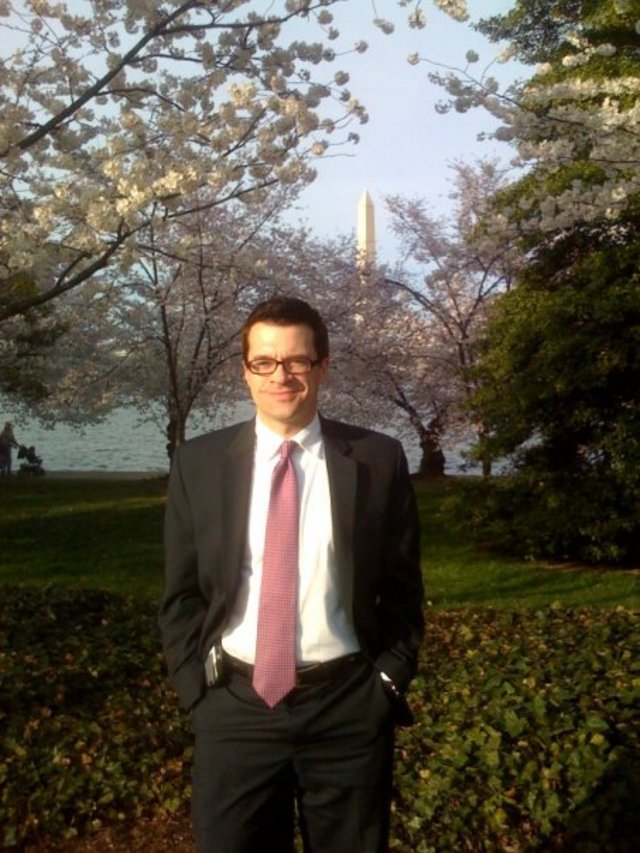
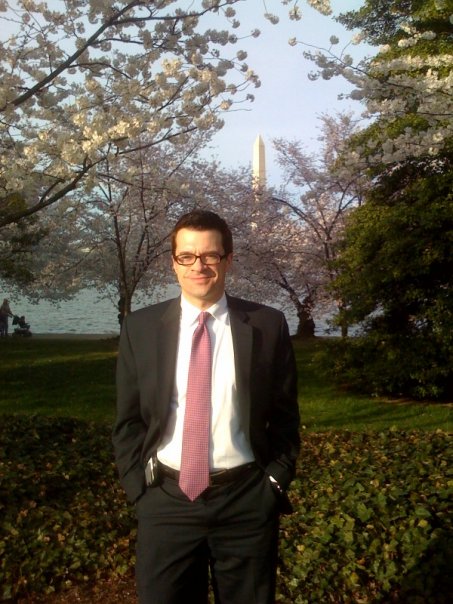
 Jeff Stacey presents two jam sessions and one jazz performance every week, with more to come.
 There are several elements required to create a vibrant jazz scene. Obviously, the most important requirement is a cadre of talented artists. Then you need venues where they can perform. Hopefully, there’s an audience that is willing to patronize these venues, listen to the artists and spend money so the musicians can get paid. Finally, the scene needs presenters who connect all of these interests, which often require a delicate balance. Enter Jeff Stacey, a former diplomat who is now spending a lot of time and energy spreading the jazz gospel around the District.
“I first fell for the music as a grad student at [the University of] Oxford,” Stacey recently told DCist. “It was actually jazz that led me to choose New York over Berkeley when I was deciding on Ph.D. programs. I’d say I got as much education at Smalls and the Vanguard as I did uptown at Columbia.”
Stacey presents three nights of jazz each week. On Thursday, he produces Dukem Jazz, which features the area’s top talent at the popular Ethiopian restaurant from 9 p.m. to midnight with no cover. On Sundays, he organizes the D.C. Jazz Singers Jam at the Black Fox Lounge, which gives area vocalists a chance to sing with support from a first class rhythm section. His U Street Jazz Jam, which has been going for over a year, has found a permanent home at Bohemian Caverns, taking place after the late set is completed on Friday nights. World class artists like Roy Hargrove have sat in on the Friday night session as it switched locations. Now at the historic venue, which Stacey described as “the best club in the country south of New York,” this jam session is no doubt going to become a destination point for both up-and-coming and established musicians. Stacey also hopes to launch a Saturday night jam at some point in the near future so that he’ll have the entire weekend covered.
“D.C. has the richest jam culture in the country. There are more jams in the DMV than one can keep track of, about any night of the week these days,” Stacey said. “In a stuffy political town, people need outlets — in particular outlets in the arts. We also benefit from the numerous university music programs and conservatories in the area.”
Stacey comes from an unlikely background for an up-and-coming jazz producer. Upon completing his doctorate at Columbia, he taught U.S. foreign policy at Tulane University in New Orleans, where he spent his spare time promoting a highly abstract form of improvisational jazz called Broken Beat. A job at the State Department brought him to Washington, and regular travel took him out of the jazz world. After leaving government for work at a think tank, this most “Washington” of people started to familiarize himself with the rest of the District, particularly its music scene.
“Well I certainly didn’t expect that my diplomatic experience would be so valuable in the music world,” Stacey said. “Actually one of the things I like best about the D.C. jazz community is how supportive everyone is of everyone else. But every once in a while, as with any circle in life, one comes across a prima donna.”
In addition to continuing as a jazz promoter, with a focus on bringing jazz to non-traditional venues, Stacey has plans to branch out into the DJ and Neo Soul communities. He also hopes to cross pollinate these events with his work in the jazz world.
“The community could use a larger number of venues, so all these talented musicians could play more regularly for good money,” he said. “And we could use greater experimentation and embracing other forms of this music we love.”