 Rachel Sadon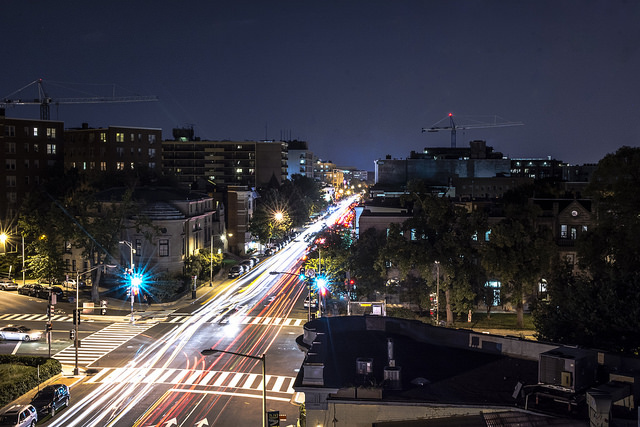
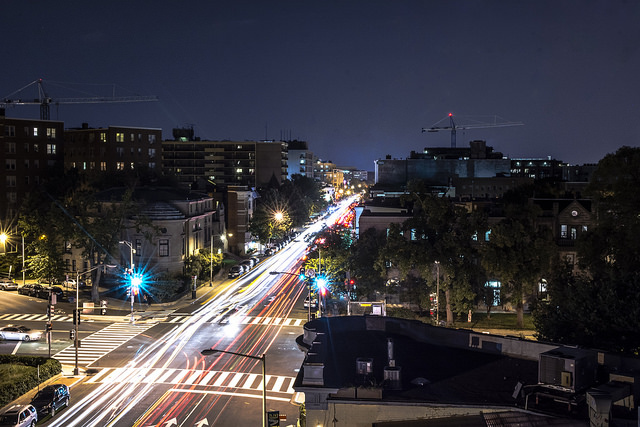 Photo by Darwyn
The misery on 16 Street NW during rush hour is practically palpable. Cars and buses inch their way along the clogged artery, crawling to downtown destinations in the morning and slogging their way back up in the evening. Tens of thousands of people make the trek each day, and a small but dedicated group of them has been clamoring for changes for years. Finally, one of their most sought after demands—a dedicated bus lane—may be in sight, albeit still at least two years away.
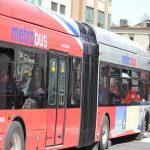
Despite representing less than 5 percent of vehicles along the corridor, the S-buses carry half the people traveling along the corridor each day. And each year, more and more people have been trying to get on them. Since 2008, ridership on the line has grown nearly 30 percent to more than 20,000 riders each day.
WMATA has added the S9 express, put in extra buses, and expanded the use of longer vehicles over the years, which has stanched the problem of multiple packed buses blowing past frustrated, would-be riders. But buses passing by, bus bunching, and crowding remain major issues—along with all that time lost to sitting in traffic. Meanwhile, the District Department of Transportation has been extensively studying the problems, commissioning three studies that date back to 2009 about how to fix them.
“WMATA has pretty much done as much as they can with the corridor by adding more buses and adding the S9 limited,” said DDOT transportation planner Megan Kanagy. “Now we have come together and started to look seriously at what other options are out there.”
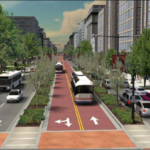
DDOT presented the results of the latest study at a Citizens Advisory Group meeting last week, featuring three different proposals, or draft alternatives, for the street. And two of the three plans include a dedicated bus lane (which a 2013 study determined would be technically feasible).
The draft alternatives were well-received by the group of 50 or so people, though there was some opposition to individual items, said Kishan Putta, a former ANC member who lives along 16th Street and has been among those agitating for changes for years.
“People need to get to work!” he exclaims while noting that riders express the most concern about the morning commute. “Rush hour is an antiquated definition of ending at 930 a.m. There’s still a lot of traffic after 10 a.m.”
Although it has literally taken years of advocacy, Putta said he’s glad that DDOT has listened to bus riders’ concerns—particularly with regard to extending rush hour parking restrictions—and feels optimistic about many of the proposed changes. “The congestion, the slowness of the movement. These buses are really expensive and they’re just being trapped in traffic,” he said. “If they got through their route faster they could be reused to help more people.”
And that is one of the key issues that DDOT’s three proposals attempt to address. Starting tonight, the agency’s employees will be hitting the streets during four different events to solicit feedback on the different plans from the public. Here is where they’ll be:
- Wednesday, October 7, 2015, 5:30 pm – 7:30 pm: 16th Street & Spring Place NW
- Wednesday, October 14, 2015, 4 pm – 6 pm:16th Street & L Street NW
- Thursday, October 15, 2015, 5:30 pm – 7:30 pm: 16th Street & U Street NW
- Saturday, October 17, 2015, 12 pm – 2 pm: 16th Street & Irving Street NW
After they’ve heard from people in person or online, DDOT will refine the three draft alternatives and start digging into the details. “We’re really going to get in the weeds of how much travel time for buses will be saved and what are the impacts for other modes of transportation,” Kanagy said.
Should all go to plan, they will come up with a draft preferred alternative and present it to the Citizens Advisory Group, likely in December, and then have a final public meeting in January to talk through the process and the next steps.
But even if a dedicated bus lane is included in the plan, that doesn’t mean it is going to appear in the next few months. DDOT would need to do engineering studies, solicit a design contract, get funding, and then actually construct the thing. At the very earliest, it would be two years away, according to Kanagy.
Still, the frustrated masses on 16th Street aren’t entirely out of luck. All three of the DDOT’s draft plans short, medium, and long-term improvements.
One of those already in the works for next year is implementing transit signal priority, which allows stoplights to give an early green for a bus or hold a green light just as one is pulling up. In addition to speeding up bus traffic, it also can be used to make the headways, or time between two buses, more evenly spaced.
All three plans would also see several bus stops removed and improved pedestrian crossings at multiple intersections.
Meanwhile, the more complicated and long-term proposals featured in some of the draft plans include reconfiguring the intersection of Harvard and Columbia roads and Mount Pleasant Street NW and implementing an off-board payment scheme for the S-buses (similar to how the streetcar boarding system would operate, should it ever take passengers).
The other proposals likely to draw controversy involve parking. All call for an extension of rush hour restrictions until 10 a.m. and 7 p.m., which lengthens each period by half an hour, and one draft plan would see midday parking eliminated entirely.
The plans and DDOT’s presentation to the Citizen Advisory Group can be read here.