Rachel Kurzius
As we circle the drain on yet another year, what do we have to show for ourselves? The year started off with a changing of the guards at the Mayor’s office and a promise of legal weed. Then what happened? We’re here to remind you, both with our 22 favorite stories of the year, and this cliff notes edition of 2015.
—-
D.C. Government
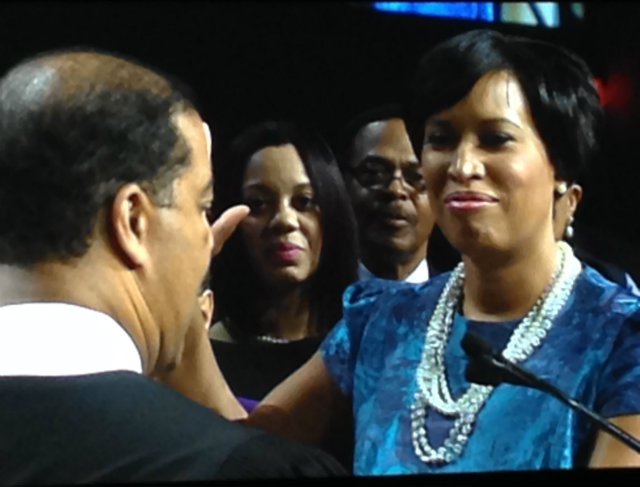 Photo by Matt Cohen.
The year began with an immediate change of administration, as Mayor Muriel Bowser took the reins from Vincent Gray. Two new councilmembers also later found themselves on the dais, largely because of Bowser’s support. But with the elections over, and the pomp and circumstance giving way to everyday governance, there wasn’t much drama for many moons. As promised in her campaign, Bowser focused a lot of her energies on quality-of-life issues (alleys, fitness), major economic development projects (moving forward on the D.C. United stadium, pitching a Wizards practice facility); she generally got what she asked for from the D.C. Council. But as the year waned on, she faced two major PR crisis—her about face on the Pepco-Exelon merger (which faces fierce opposition) and the unseemliness of a PAC (which the mayor’s allies quickly shut down) that could raise unlimited funds because of an off-election year loophole. Then, with the news that Exelon had hired the then-chairman of FreshPAC to lobby on their behalf, those stories collided. Bowser talked about her successes, what she knew about the lobbying, and her plans for next year in a recent interview with DCist. One thing Bowser hasn’t said much about—the future for Gray, who she beat in the Democratic primary, after the attorney general dropped the four-year investigation into his 2010 mayoral campaign. She also declined to say whether she supported a bill that would have D.C. guarantee the most paid leave in the nation.— Rachel Sadon
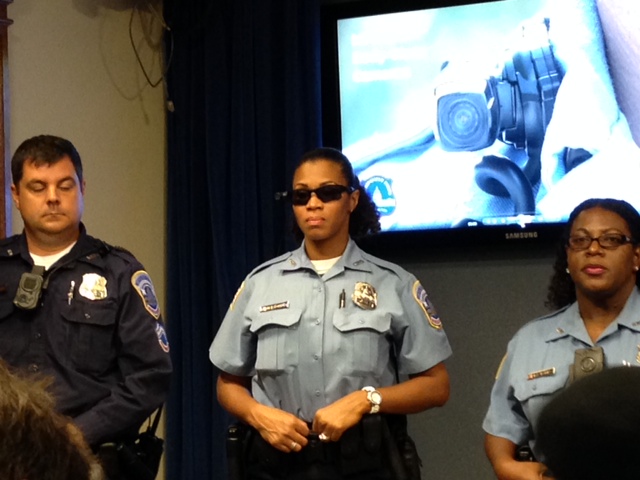 Photo by Matt Cohen.
Police Accountability
2015 saw increased public scrutiny of police, as well as growing concerns about crime. When Mayor Bowser outlined her plan to curb a spike in violent crime over the summer, Black Lives Matter protesters interrupted her press conference. She ended the year by signing one of the most expansive body-worn camera laws in the country, after months of debate and pushback from Ward 5 Councilmember Kenyan McDuffie over access to the footage. She released the first footage from the pilot program recently amid an investigation into Alonzo Smith’s death while in the custody of special police officers. Not all video of police comes from these cameras, though—MPD’s forcible detention of 18-year-old Jason Goolsby led to protests and press conferences (an internal investigation later ruled that MPD was justified in its actions). And many D.C. residents—like these folks in Capitol Hill—wanted to see more police presence in their neighborhoods. To end the year, some Black Lives Matter activists will try to shut down Chinatown tonight to protest the lack of indictments in the deaths of Tamir Rice and Sandra Bland. — Rachel Kurzius
Housing and Homelessness
Even with a decrease in homelessness of 6 percent, the homeless population in D.C. remains up by 11 percent from 2011 and family homelessness is still up by 29 percent from four years ago. But the decline is good news, and efforts from both the administration and nonprofits have shown varying degrees of success toward issues that have seemed intractable for years. A concerted effort to house veterans is showing results, the city government began offering year-round shelter to homeless families, there is now an emergency shelter for homeless LGBT youth on freezing nights, and there has been some movement toward finally closing the notoriously dilapidated family shelter at D.C. General.
But things seem much bleaker on the affordable housing front, despite promises of a housing preservation strike force and $100 million in the Housing Production Trust Fund. Report after report has shown that low-cost private housing has essentially vanished in the District; even ads in the Metro are telling us how bad things have gotten. Tenants—in Congress Heights, in Chinatown, and well beyond—are fighting to stay as the cost of living, and new luxury buildings, continue to rise. — Rachel Sadon
 Photo by Rachel Kurzius.
The Drug Deal
We voted to legalize weed in a 2014 (it went into effect in February), but 2015 saw Congress harshing the mellow of the District’s Initiative 71. The odd legal limbo (Washingtonians can grow or give marijuana away, but can’t sell it) led to entrepreneurs like Mr. Kush God, with his “donation-only” edibles business. While police arrested two and seized the marijuana bud-adorned cars this December, the business responded by launching an app. And synthetic marijuana—which is a horrible misnomer—saw surges in use, leading to nearly 19 EMS calls per day in October. Authorities have tied the brightly-packaged drugs to a number of violent attacks.— Rachel Kurzius
Metro Woes and Wins
It was a chaotic, at times deadly, year on Metro. A January smoke incident at L’Enfant Plaza left one dead and two critically injured. A Metrobus passenger was shot, and drivers saw high rates of violence. A young political strategist was stabbed to death on the Red Line. Over the summer, a passenger-less train derailed, and a transformer fire at Stadium Armory had implications for months. At times, the only constant was the delays; fustrated riders formed a union.
By October, the Federal Transit Administration was fed up and assumed safety oversight of WMATA. In November, Metro hired Paul Wiedefeld as general manager—more than a year after Richard Sarles announced his retirement. On Wiedefeld’s first day, a report from WMATA showed Metro’s customer satisfaction dropped to 67 percent from 82 percent in the first three quarters of this year. On a brighter note, Wiedefeld was welcomed by DCist with the power of song and he’s made an effort to hear riders’ concerns.—Christina Sturdivant
Pepco-Exelon Merger
There are few topics less likely to inspire public passion than utility companies. But the proposed Pepco-Exelon merger has been a roller coaster ride, from the D.C. Public Service Commission saying the $6.4 billion merger “is not in the best interest of the people of the District of Columbia” in August to the Mayor throwing her support behind a new deal in October. Activists are alleging shady dealings surrounding Bowser’s change of heart, pointing to a $25 million naming rights deal and one of the land swaps with Pepco that are paving the way for the D.C. United stadium at Buzzard Point. Pepco and Exelon are countering this with a public relations blitz that includes cocktail weenies. The new deal is now back in front of the PSC, which will rule in 2016 on the merger.— Rachel Kurzius
 Photo by Rachel Sadon.
Hey Bei Bei
On August 22, a Bei Bei was born at the National Zoo—and panda lovers rejoiced. The cub, who has grown significantly cuter over time, is the surviving son of the zoo’s female panda Mei Xiang, who was sired by her beau Tian Tian through artificial insemination. Bei Bei was named in a surprise announcement by Michelle Obama and China’s first lady Madame Peng Liyuan.
Since then, we’ve journeyed with the furball as he attempted to see and hear and took his first steps. The Rachels of DCist even got a chance to see Bei Bei up-close-and-personal during a media preview—though most of his time in the spotlight was spent in fetal position.
He’ll make his debut to the public on January 16.—Christina Sturdivant
D.C. Streetcar
Coming into 2015, we found passenger-less streetcars trundling up and down H Street and Benning Road NE in a simulated service that began four months prior. And we’re ending the year exactly as we started it—with pre-revenue testing operations and without riders. In between, we’ve seen allegations of union busting that lead to a protest, a collision with a cop car, more than $100,000 in parking tickets, and more accidents. At least we got that nice DDOT red striping.—Christina Sturdivant
Some Media Navelgazing
Your local fourth estate is still kicking in 2015, with changes galore. Washington City Paper’s Jessica Sidman is singlehandedly destroying “fine dining” chain Fig & Olive. WAMU is shaking things up by halving (the newly tattooed) Kojo Nnamdi’s show and planning for Diane Rehm’s forthcoming retirement. The Washington Post painstakingly detailed its move from one downtown building to another. Bloomberg took over at WNEW. And we’d be remiss not to mention a changing of the guard here at DCist: Matt Cohen left and Rachel Sadon became editor-in-chief, bringing on Rachel Kurzius and Christina Sturdivant.— Rachel Kurzius