 Photo by Beau Finley
The state of D.C.’s infrastructure is a grade higher than the national average, despite the city’s low-scoring roads, transit system, and levees, according to a report card released today by the American Society of Civil Engineers.
The country’s national average (based on U.S. states) is a D+. The District received a C- overall. The organization calculated scores in 11 categories based on capacity, condition, funding, future need, innovation, operation and maintenance, public safety, and resilience.
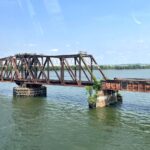
While the report states that 80 percent of the city’s bridges will need to be replaced or rehabilitated in the next decade, D.C.’s bridges still received one of the highest scores, a B-, because the city has made “significant strides to reduce the number of structurally deficient bridges from 8 percent to 3 percent in just three years,” the report states.
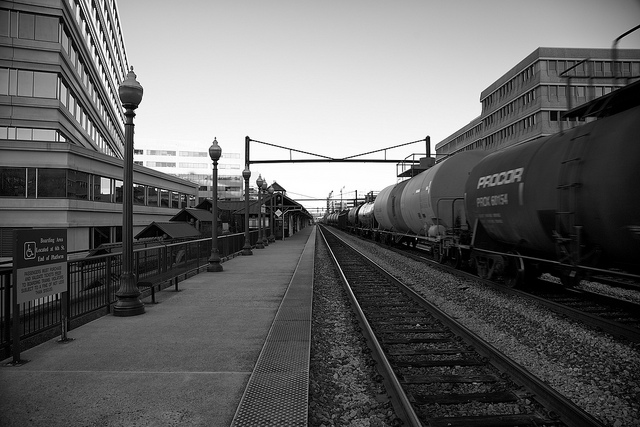
The city’s rails also graced the top with a B-, as Amtrak ticket sales to and from D.C. rank second in the country. Plus, in 2014, “more than 416,000 carloads of freight moved through the network and CSX (which co-owns the rails) invested $25.7 million in infrastructure within the D.C. rail network,” the report states.
The city received a C (+ or -) for its energy, drinking water, parks, solid waste, wastewater, and schools.
Now a look into what’s holding the District back: For one, congested roads received a grade of D. Although 47 percent of them are in good condition, 25 percent are in “poor or worse condition,” according to the report. While that percentage may not seem too bad, the D.C. Department of Transportation “needs four times its current maintenance budget to maintain the roads at fair condition levels,” the report continues.
Not shocking at all, is the grade for D.C.’s transit system: a D. Metro “is in need of significant modernizations and diligent maintenance,” the report reads.
With the lowest individual score, the District’s levee systems received a D- after continuously receiving “unacceptable” inspection ratings from the U.S. Army Corps of Engineers. While a great deal of work has been done to rectify issues with the District’s Potomac Park system, the Anacostia system “continues to be in poor condition,” the report states.
D.C.’s infrastructure is in a unique position, said Ranjit Sahai, Chair, D.C. Infrastructure Report Card in a release. “While most places have local, state, and federal funding that partner together to invest in infrastructure, the District only has two investment sources.” As the District’s infrastructure continues to age and the population booms, Sahai continues, “prioritizing ways to modernize the infrastructure of the nation’s capital needs to be a priority. No one entity can solve this challenge alone—it will take collaboration across levels of government and agencies.”