Rachel Kurzius
Updated with comment from Jenna Kaufmann of Nevadans for D.C. Statehood
D.C. statehood advocates are continuing their strategy of using presidential caucuses to bring attention to the District’s plight.
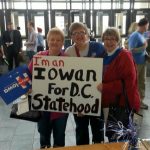
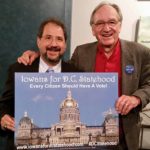
It began with “first in the nation” Iowa, where eight counties will deliberate on including a resolution in support of statehood in their party platforms. (While the Iowa caucuses happened on February 1, the party platform process continues through June.)
Now, just in time for the “second in the nation” Nevada caucuses, meet Nevadans for D.C. Statehood.
“A lot of people who have lived in D.C. and moved away are working on this,” says D.C. Shadow Senator Paul Strauss.
One of those people is Jenna Kaufmann, who worked as a legislative aide for Strauss before moving back to Nevada in 2010.
“What I was doing in D.C. statehood-wise was so important,” says Kaufmann. “That wasn’t out here, so when I heard what was going on in Iowa I thought, ‘Let’s try and start something up here.'”
Unlike primaries, caucuses allow for participants to consider topics beyond 2016 candidates. The plan, as it was in Iowa, is for folks to introduce a resolution in support of D.C. statehood at different precincts.
So who will be introducing these resolutions? “I am contacting personal friends and family—that’s how you have to start,” says Kaufmann. “Getting people I know who are strong supporters of social justice and building it from there.”
There are differences between the caucus process in the two states, though. In Nevada, folks do not discuss or vote on the resolutions at their precincts; they just submit them. “The goal is to get the resolution introduced,” says Strauss. “The real fight in Nevada will happen later in the year,” when Nevadans consider the resolutions.
Kaufmann says Nevadans for D.C. Statehood will start seeking support from local officials after the caucuses wrap up. Democrats and Republicans caucus on different days in the Silver State—Democrats on Saturday and Republicans on Tuesday.
The endgame for advocates is the inclusion of support for full D.C. representation on national party platforms and, ultimately, statehood. While the effort in Iowa began back in March 2015, this Nevada push is more spur-of-the-moment. “We had less time and resources for this, but felt like it was important,” says Strauss. “Hopefully this is the start of a broader movement.”
Kaufmann is ready to keep the flame burning in Nevada. “I think this is a long-term thing. You have to stay the course and try so many different avenues,” she says. Nevada only began caucusing in 2008, which she says is a good thing for statehood advocates. “Nevada is sort of new to the caucus process and there is a sense of emerging interest, so I believe this is a great place for this issue to take hold.”