Rachel Kurzius
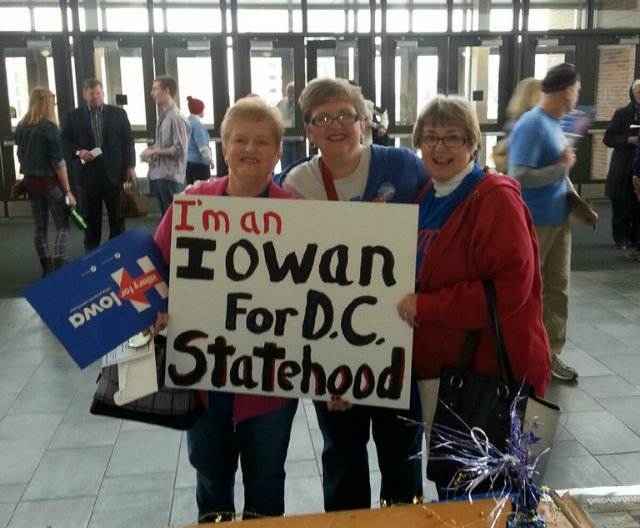 Photo courtesy of Iowans for D.C. Statehood.
While pundits are reeling from the results of the third Super Tuesday (Super Threesday?), D.C. advocates are still eying first-in-the-nation Iowa as they continue their bid to get statehood included in the party platform.
When Iowans caucused for presidential candidates on February 1, they also began the process of adopting the values and resolutions that govern their political parties known as party platforms. March 12 marked the county conventions—the second phase as the meetings expand to larger jurisdictions. Grassroots group Iowans for D.C. Statehood says that the counties of Buchanan, Buena Vista, Cass, Clinton, Keokuk, Linn, and Polk have passed resolutions in support of statehood. That means all four Iowa congressional districts will consider the resolution at the district conventions occurring on April 30, even as the group awaits results from more counties.
Tamyra Harrison of Iowans for D.C. Statehood explained the strategy to DCist in February. After counties include resolutions in support of D.C. statehood in the party platforms, “the next step is making sure it makes it then to each of the four congressional district platforms in April and ultimately the state platform in June.”
D.C. Shadow Senator Paul Strauss, who travelled to Iowa for the caucuses, says that getting statehood on other states’ party platforms will ultimately lead to its inclusion on national party platforms.
Statehood activists and grassroots group Nevadans for D.C. Statehood are also employing this strategy in the Silver State.
And in Hawaii, state senators introduced legislation urging the U.S. Congress to grant D.C. budget autonomy, legislative autonomy, and statehood—through either legislation or a constitutional amendment.
But while states from afar may be pitching in, there may be some opposition closer to home. President Barack Obama’s nominee to the Supreme Courtl Merrick Garland, wrote the Alexander v. Daley decision in 2000 that denied full voting rights to District residents, the Washington City Paper notes. Garland also worked on the drug case against Marion Barry.