Rachel Kurzius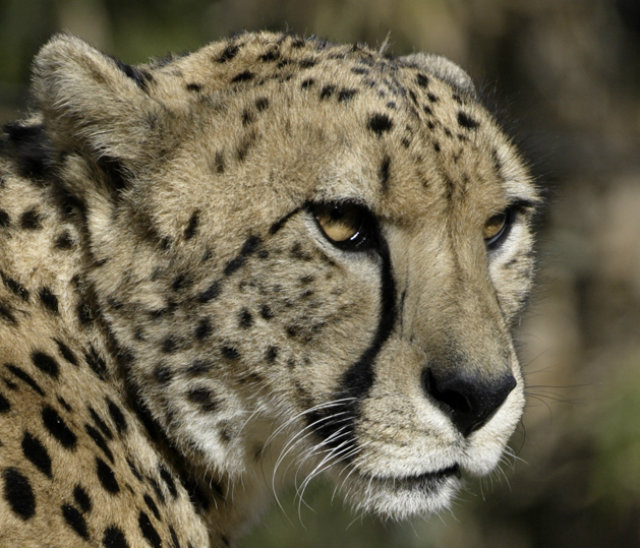
Updated with comment from Granger’s keeper.
The Smithsonian’s National Zoo euthanized one of its cheetahs yesterday, after animal care staff determined that kidney disease was quickly deteriorating his quality of life.
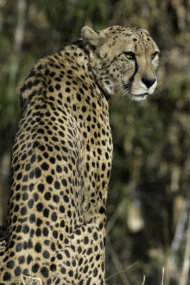 Granger. (Photo by Mehgan Murphy, Smithsonian’s National Zoo.)
Granger was 10-and-a-half years old, and spent the majority of his life in the Cheetah Conservation Center at the National Zoo. He arrived in April 2007 from the White Oak Conservation Center in Florida.
When veterinarians performed a full exam on Granger in February, after observing that he wasn’t eating regularly, they found worsening symptoms of renal disease. The zoo says it also discovered evidence of pancreatic disease in his abdomen during a preliminary necropsy.
“Granger had a laid-back temperament and would purr loudly throughout the day, letting us know he was content,” says Regina Bakely, an animal keeper at the Cheetah Conservation Station. “He was playful and pensive at the same time, rolling around in his sand pit one moment and then watching the clouds roll by the next.”
There are two remaining adult male cheetahs at the zoo—Justin (whose nickname is “Gat,” according to zoo spokesperson Jen Zoon) and Bakari.
Animal keepers aren’t concerned about the impact of Granger’s death on Gat or Bakari. “Adult cheetahs are generally solitary in the wild, unless they’re a coalition of brothers or a mother and her cubs,” Zoon says. “They’ve never had direct contact with him.”
Granger’s brother, Draco, was euthanized by the Zoo in January 2014 at the age of eight. Male cheetahs in the wild have an average life expectancy range of six and eight years.