Rachel Kurzius
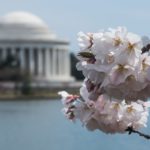
 Photo by LaTur.
Is it possible to come too soon?
Not if you’re a cherry blossom. When the National Park Service moved up its prediction for peak blossom by two weeks, it meant that the majority of cherry blossom buds may burst at the very beginning of the National Cherry Blossom Festival—or even precede the festival altogether.
The festival takes place March 20 through April 17. But NPS now says that peak bloom—when at least 70 percent of the trees surrounding the Tidal Basin are blossoming—will occur from March 18 to 23. They’ve already rescheduled the Tidal Basin Welcome Area to March 18 through April 3, which was previously slated for April 2 through 17.
“Every year, we just accept whatever Mother Nature brings us,” says Nora Strumpf, who handles media relations for the festival. She notes that they’ve got events scheduled throughout the nearly month-long festival. “We’re not worried about attendance.”
NPS says that around 1.5 million people come to D.C. for the festival annually, and even Metro works to accommodate them by holding off on track work for five consecutive weekends. A 2010 George Mason University study estimated that these tourists spend at least $126 million in the D.C. metro region over the course of the event.
One of the authors of that study, Professor Maggie Daniels, says that the early peak bloom “won’t hurt [the festival] at all. It may work to their benefit. If nothing else, it’ll be a wash.”
She agrees with Strumpf that people plan to attend the festival events regardless of when peak bloom occurs. “The way people look at the events, like the kite festival for example, is that they’re interesting unto themselves. The blossoms are just a plus,” Daniels says.
Daniels’ research estimates that about 60 percent of attendees are day trippers— visitors who are not staying overnight in the metropolitan area (this includes but is not limited to locals). Then the other 40 percent are the real cash cows—the overnight guests. These are the people who have planned their trips well in advance. “They’re coming no matter what,” she says.
Peak days matter more to locals because they have more flexibility, says Daniels. “The primary fluctuation is when locals come out en masse. By peak coming earlier, it will expand out the number of people attending” over a longer period That means you could potentially enjoy the Tidal Basin without constantly worrying about getting whacked with a selfie stick.
And from an economic standpoint, it doesn’t make much of a difference when locals decide to show up. “If they buy their hot dog from a street vendor in March or in April, it doesn’t matter for the economic impact,” says Daniels.