Rachel Kurzius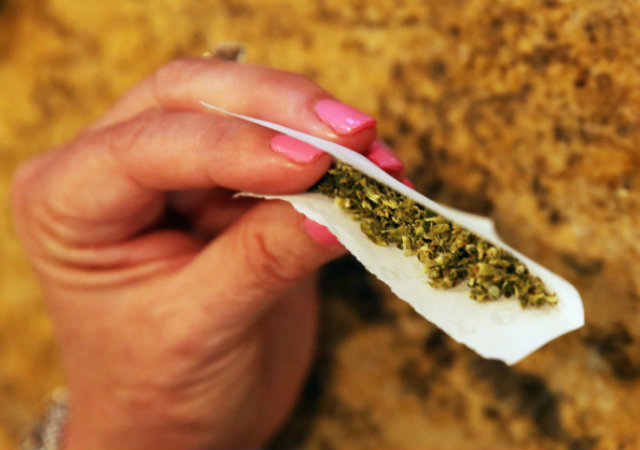
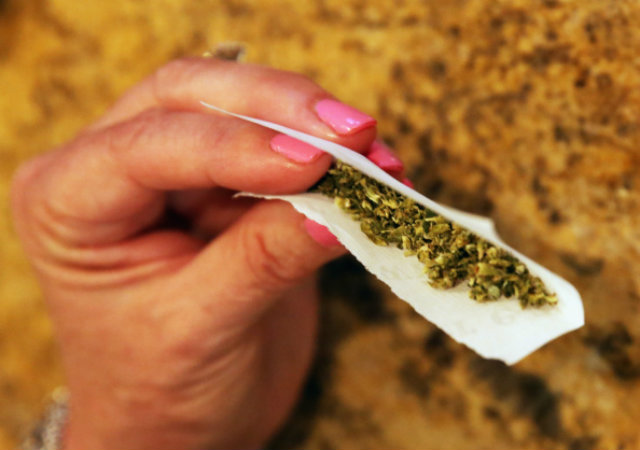 Photo by Bruce Bennett/Getty Images.
Thanks to Initiative 71, Washington D.C. is the land of marijuana legalization limbo.
“D.C. is really the only place in the country where cultivation, possession, and donation are legal, but legalized sales are not,” says John Kagia, director of industry analytics at New Frontier, a marijuana data firm. “It’s a less than ideal framework.”
And by not allowing for the legal sale of marijuana, the city might be leaving nearly $100 million on the table.
According to projections from a project co-produced by ArcView Market Research and New Frontier, if D.C. could allow the legal sale of marijuana by 2018, the recreational sales would reach $93.6 million in 2020. Because no taxation model has been established, it’s not clear how much revenue the city could collect from such a market.
Kagia attributes the figure to three things: D.C.’s status as a tourist destination, the large number of Maryland and Virginia residents who commute into the city as “an additional driver of demand,” and the fact that “D.C. has historically one of the highest cannabis consumption rates in the country.”
By comparison, the state of Colorado, which has a population of around 5.4 million people, surpassed $1 billion in marijuana sales last year, raising about $135 million in cannabis taxes and licensing fees alone in 2015.
A new report from the two companies called “The State of the Legal Marijuana Markets” says legal cannabis sales in the U.S. reached $5.7 billion, up from $4.6 billion in 2014. They expect market sales to pass $22 billion by 2020, with more than half comprised of recreational use, given the potential for more states to legalize use of the drug (11 states are voting to expand marijuana access in 2016, including seven states voting to allow recreational use).
Of course, D.C.’s lack of a legal market is more due to a meddling U.S. Congress than anything else. A 2014 appropriations bill prevented D.C. from using funds towards legalizing marijuana, and Congressional Republicans even threatened Mayor Muriel Bowser with arrest if she implemented legalization.
But the new ruling on budget autonomy, which allows D.C. to control locally raised tax dollars, “represents a turning point” for marijuana in the District, Kagia says.
D.C. lawyer and marijuana activist Paul Zukerberg agrees that the ruling is “a positive step for cannabis. The taxing and licensing of marijuana social clubs seems like the next logical step, and that would be based on budget autonomy.”
For a few brief minutes this January, the D.C. Council legalized pot clubs in the District, before last-minute lobbying kept in place legislation that prohibited restaurants, bars, and other venues from allowing pot smoking. Instead of passing a permanent ban in February, the council instead established a task force to make recommendations regarding the feasibility of pot clubs in the District.
“The activation of private clubs would be a good first step in increasing the ability to consume marijuana in a non-residential setting,” says Kagia of New Frontiers. “But it still doesn’t address legal sales, which is where the bulk of revenue comes from.”
Because possessing marijuana legally requires you to either receive it as a gift or grow it yourself, a bevy of growth consultants and educators have popped up in the District. While Kagia says that New Frontiers hasn’t analyzed this “support market,” he says it “makes sense that’s the area people have glommed onto. It’s an easy plant to grow, but a difficult one to grow well.”
Other weed entrepreneurs, like the Kush Gods edible business, have tried to get more creative with Initiative 71. Kush Gods operated using a “donation-based” system before the owner-operator ultimately pleaded guilty to distribution of marijuana last week.
“The lesson from the arrest of the Kush Gods is it put innovators on notice about the way the city was interpreting Initiative 71,” Kagia says. “It’s not surprising that other entrepreneurs have been less visible.”
Kagia sees the free seed giveaways as a better model than Kush Gods for innovation in the marijuana market moving forward.
Decriminalization and Initiative 71 have had one huge impact—on marijuana arrest rates (which makes a lot of sense).
The New Frontiers report details how the city’s marijuana arrest rates fell 93 percent from 2011 to 2015.
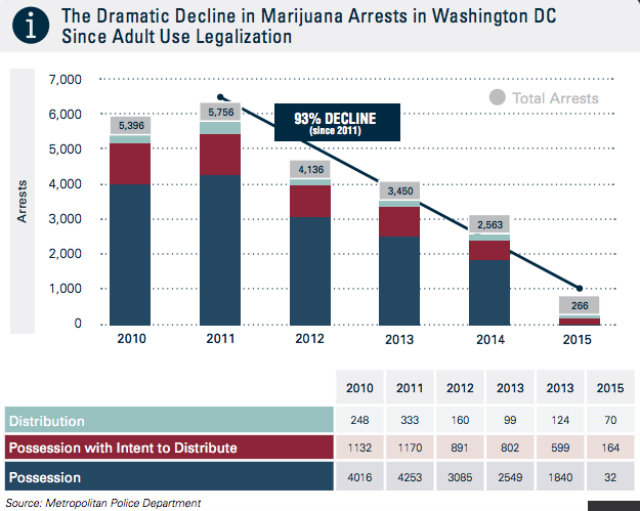 Image courtesy of New Frontier.
Back in 2010, the American Civil Liberties Union awarded D.C. the dubious distinction of leading the nation in its arrest rate for marijuana possession; police in D.C. made 836 arrests per 100,000 residents during 2010, whereas nationally, 256 people out of every 100,000 were arrested for possession.
The ACLU report also found that black residents were about eight times as likely to be arrested for marijuana possession in D.C., despite indiscernible usage rates across races. These findings “really helped galvanize support for the legalization initiative,” says Kagia.
He says it’s “too early to tell” whether the 266 D.C. marijuana arrests in 2015 reflect the same racial disparity exhibited in the ACLU report.