 Rachel Sadon
 Via iStockPhoto
A D.C. Council committee took a step today to blunt the impact of the mayor’s minimum wage legislation on the restaurant industry.
A hearing last week about Mayor Muriel Bowser’s proposal to raise the minimum wage to $15 an hour by 2020 featured almost no debate about that increase, but many heated opinions about a corresponding increase in the wage for tipped workers from $2.77 currently to $7.50 by 2022. Heeding the warnings of local restaurant owners who fear the impact on their businesses, the Committee on Business, Consumer and Regulatory Affairs unanimously revised the legislation today to a $5.55 rate for tipped workers (if they don’t make the full minimum wage through tips, businesses are obliged to compensate the difference).
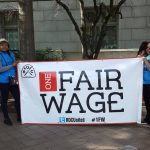
At the hearing, at-large Councilmember Vincent Orange, who chairs the committee, was deeply skeptical of requests from activists and some tipped workers who requested the mayor’s proposed legislation go further and eliminate what they call the “sub-minimum wage” entirely. A coalition of groups are working on a separate ballot initiative that would do just that, raising the minimum wage to $15 for all workers in the District of Columbia regardless of if they earn tips or not.
“Over one weekend, [the Council committee] decided an entire class of workers should be subjugated even further,” said Delvone Michael, the executive director of DC Working Families and a co-chair of DC for $15.
They plan to continue moving forward with the ballot initiative. “$5.55 is a non-starter. It’s not even worth considering” ending the effort, Michael said. He predicts they will have the required number of signatures to get it on the ballot by the end of the month (they have until July 11 to get around 21,500 valid signatures). “The city is awash cash and wealth. We should not stand for workers making less than anything less than they need to live on.”
But Orange wasn’t convinced. The $5.55 rate “is the right balance between providing financial stability as well as being a wage that can be absorbed by the smaller establishments,” he said at the committee meeting today. “At this point, we’re not willing to upset the entire [tipping] model in the District of Columbia.”
But even that didn’t satisfy some opponents, though. “This ‘compromise’ approach is still a catastrophe for the city’s less-skilled jobseekers,” Michael Saltsman, research director at the Employment Policies Institute (a think tank affiliated with a PR firm that represents the restaurant industry), said in a statement.
Though they voted in favor of moving the bill, committee members Brianne Nadeau (Ward 1) and Charles Allen (Ward 6) indicated they are still concerned the $5.55 rate is too high. “Doubling the tipped credit has a very significant impact on the bottom line. When we layer [the wage increase coupled with a proposed paid family leave law], we may be creating a harmful effect for these small businesses,” Allen said.