 Rachel Sadon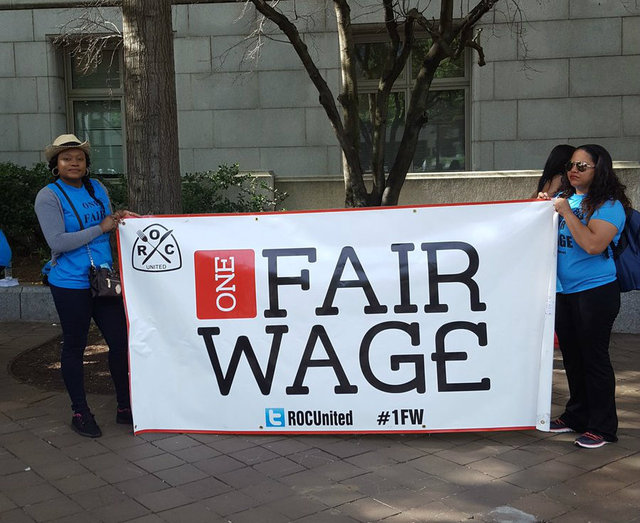
We’re in front of the Wilson Building in DC this morning demanding #OneFairWage #1FW @rocunited pic.twitter.com/hG6qG56Gzk
— Maya Praff (@mayapraff) June 14, 2016
In the District, there was almost no fight in the “Fight for $15.” Politicians, activists, and even many businesses came to a broad consensus that the minimum wage needs to increase to combat rising costs of living. But there was a subcategory—call it the Fight for $15 for Tipped Workers—that saw a fierce debate. And activists say it isn’t over.
After a ballot initiative picked up steam, Mayor Muriel Bowser introduced legislation that would raise the city’s wage to $15 by 2020. Last week, she stood with a diverse coalition to announce a deal that would do just that, and also raise the tipped minimum wage from $2.77 to $5. Most of the groups agreed to drop the ballot initiative, which would have equalized the tipped and general minimum wages.
While Bowser was able to bring on board several labor groups, at least one is calling the deal a “sell out.”
“This is not acceptable to us, and it’s an outrage that basically all of this would be achieved on the backs of thousands of poor women of color,” said Saru Jayaraman, the co-director of the Restaurant Opportunities Centers United, one of the forces behind the ballot initiative.
The group headed back to the Wilson Building today to announce that they have filed a new ballot initiative to get what they call “one fair wage” on the ballot in 2018.
“An increase from $2.77 to just $5 compared with an increase to $15 for the rest of D.C.’s workers—is a disrespectful drop in the bucket toward the equity and dignity they deserve for their hard and valuable work,” ROC-DC said in a release.
While raising the minimum wage to $15 had broad support with the electorate, it isn’t clear if that extends to the tipped wage. The Restaurant Association of Metropolitan Washington fought hard against the increase for tipped workers (Bowser originally proposed $7.50 and a Council committee lowered it to $5.55 before settling on $5) and they would likely do so again. Activists, meanwhile, point to evidence from several states that don’t have a separate tipped minimum that it would significantly lower poverty rates for tipped workers.
To get the initiative on the ballot, proponents would have to collect signatures from five percent of registered voters.