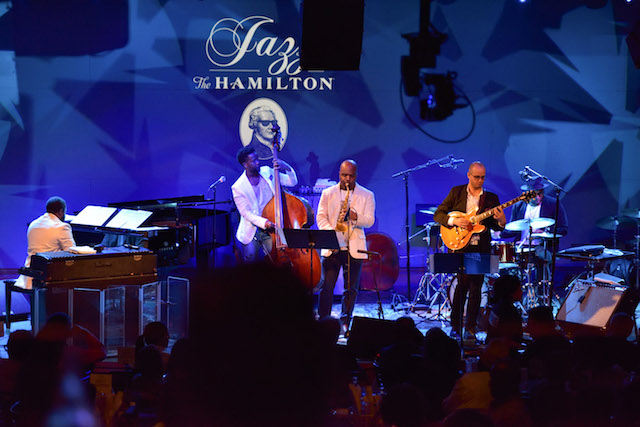
Kamasi Washington is the most discussed and praised jazz musician since the rise of artists such as Esperanza Spalding and Vijay Iyer. The notoriety is deserved. He got on the mainstream radar through his groundbreaking work with rapper Kendrick Lamar, but his own album, The Epic, lives up to its ambitious title.
For all these reasons, the saxophonist/composer was the perfect choice to headline the outdoor finale of the 2016 DC Jazz Festival on Sunday at Yards Park, capping a fantastic ten days’ worth of eclectic music that gave a little something for people of all tastes. Of course, it was impossible for DCist to go to all of the hundreds of shows that took place over the course of the festival, but here we share some highlights.
A three-way tie is the result for the best show of this year’s DCJF. In addition to Washington’s set, Steve Coleman & Five Elements gave a thought provoking performance at the Sixth & I Historic Synagogue. The audience was smaller than it should’ve been for a concert with so much depth. The reason might have been that, as festival Artistic Director Willard Jenkins noted, it was a show for the “true aficionados” because Coleman “takes no prisoners.” Sean “The Rick” Rickman, who was for many years a first-call drummer in the area, laid down a variety of complex grooves that provided a foundation for moody explorations from each of his gifted band mates. The result was a sound that could’ve been meditative, but the interaction among the artists gave each piece a shape that would draw in the active listener.
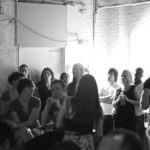
The third spot atop the figurative podium goes to pianist Orrin Evans, whose Capt. Black Big Band played CapitalBop‘s DC Jazz Loft series, which took place in an unfinished retail space near Yards Park. The music drew from traditional jazz influences, always maintaining a groove and swing, but the soul of Evans’ home town, Philadelphia, was ever present. Of Evans’ many talented collaborators, vocalist M’Balia and alto saxophonist Caleb Curtis stood out. The spotlight shined on them in a gorgeous arrangement of Stevie Wonder’s “Overjoyed”, and it was a revelation.
This is the sixth year that CapitalBop has curated a series for the DC Jazz Festival, always choosing alternative spaces that are off the beaten path. The organizers consistently present the festival’s most surprising artists. This year, Michele Rosewoman‘s New Yor-uba was an explosion of Latin rhythms, while a band featuring Chicagoans Makaya McCraven and Monk Competition winner Marquis Hill provided a benchmark for the best jazz from the up-and-coming generation. CapitalBop also makes it a point to feature artists that are locally based or have local roots. Grammy nominee Carolyn Malachi and Amadou Kouyate delightfully served that function this year.
That said, the producers might want to consider scaling back and refocusing their resources. While an audience might be willing to forego certain amenities for the experience of hearing music in unexpected places, they should not be subject to questionable sound or excessive delays, both of which occurred this year. By doing two-thirds as much, CapitalBop would be able to deliver a better experience and the customer would still get ample value out of the $20 ticket.
The festival’s most heartwarming event took place in the Kennedy Center’s concert hall, where the DCJF paid tribute to Professor Fred Irby and Dr. Art Dawkins, the founders of Howard University’s celebrated jazz program. A host of alumni, many of whom have gone on to achieve international recognition, came to D.C. in homage to these influential educators. The atmosphere was familial and the music was fantastic. Seeing drummer Savannah Harris, who graduated from Howard just this year, play along side Benny Golson, the 87-year old NEA Jazz Master, was the perfect illustration of how the music gets passed from one generation to the next.
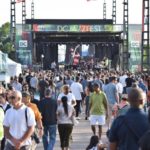
The outdoor concerts at Yards Park were the week’s marquis events. the DCJazzPrix was a first-time competition held on Saturday, and area pianist Mark Meadows was among the finalists. His band delivered a fine performance, but lost to the New Century Jazz Quintet, which included former D.C. resident Braxton Cook on saxophone.
A heavy dose of groove was also on the menu at the Yards. Chuck Brown’s tight knit band got people on their feet, as did the Revive Big Band on Sunday, which was under the direction of trumpeter Igmar Thomas. With help from saxophonist Ravi Coltrane, vocalist Bilal, and rapper Talib Kweli, the ensemble went on a journey through the past century of African American music. The set underscored the fact that jazz is a thriving, vital, and evolving art form, and that D.C. is one of its hubs.