 Rachel Sadon
 (Photo by John Sonderman)
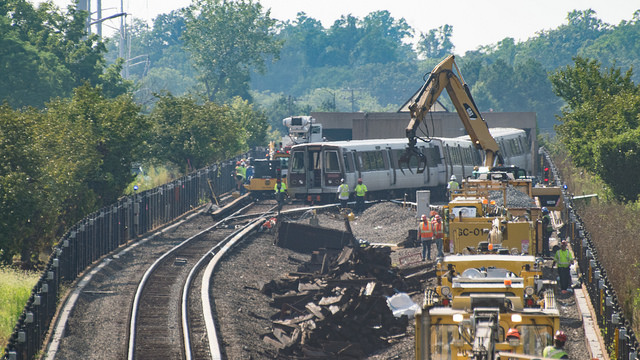
A Metro derailment last week that sent two railcars off the tracks and one passenger to the hospital on Friday was likely caused by failing track infrastructure in the area.
Rail ties near the East Falls Church station had deteriorated, causing the rails to be too far apart, according to a preliminary investigation by Metro.
A wide gauge issue was also behind a derailment near the Smithsonian stop last summer, though no passengers were involved that time. In that case, Metro knew about the problem a month ahead of time and failed to remove that portion of track from service immediately; interim general manager and CEO Jack Requa called it “totally unacceptable.”
Metro said that other factors could have contributed to last week’s derailment, and “car equipment, weather, temperature and other factors remain under review.” However, there’s no evidence that the train operator was at fault, and the incident didn’t occur in an area that SafeTrack had previously addressed.
The transit agency suspended service on parts of the Orange and Silver line over the weekend while they brought in special equipment to remove the railcars and fix the tracks.
The National Transportation Safety Board and Federal Transit Administration have been notified of the incident. While Metro and other experts do a review, Wiedefeld has ordered supervisors to do “a specialized track inspection” to seek out other similar conditions.
Metro also said it took additional steps before launching its sixth surge, including doing pre-inspections of interlockings used on the Red Line.
And as that surge got underway—bringing SafeTrack-induced delays to the Red Line for the first time—ridership on the line was down 30-40 percent this morning.
“Thanks to everyone on the Red Line who adjusted their schedule or their commute to avoid Surge #6,” Wiedefeld said in a release. “Now we need everyone to keep this up for the rest of the week.”
With single tracking between Takoma and Silver Spring, capacity on the Red Line is down by more than 50 percent during rush hour.