 Rachel Sadon
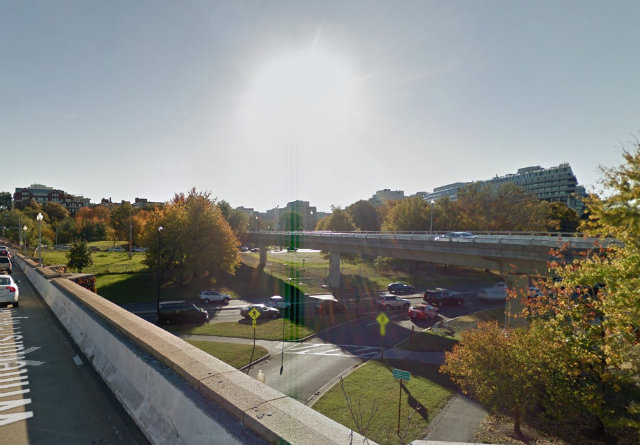 Homeless encampments have repeatedly been erected underneath the Whitehurst Freeway, near K Street NW. (Via Google Streetview)
Within a day of its demolition, a homeless camp underneath the Whitehurst Freeway has already returned.
It was the tenth time since hypothermia season began that the city cleared a homeless encampment, according the Bowser administration, and officials plan to return tomorrow morning to repeat the actions they took on Monday.
Hours after @MayorBowser administration removed homeless encampments near Whitehurst Frwy. Tents and homeless have returned pic.twitter.com/Vnd41iJVcj
— Mark Segraves (@SegravesNBC4) February 15, 2017
DDOT is planning to erect another fence on the site. “Given that this will limit the amount of open space at this location, we do not anticipate individuals to return after the fence is installed,” a spokesperson for Bowser said in an emailed statement.
In 2015, the city cleared dozens of people from the same site and fenced it off. One homeless man was so distressed about having to find a new place to sleep at night that he was checked into a hospital. Months later, officials demolished another encampment that sprang up on an adjacent patch of land. The cycle has continued in this particular area and at sites around town.
The city “is playing a game of whack-a-mole—but it’s with real people,” says Jesse Rabinowitz, an advocacy co-coordinator at the non-profit Miriam’s Kitchen. “People will just move their encampments somewhere else. It’s not a sustainable solution.”
The Whitehurst site is near Miriam’s and other service providers, as well as the George Washington University Hospital. “It’s likely that people will keep moving down the block or down the street and come back,” Rabinowitz says, noting that Ward 2 has the highest unsheltered homeless population in the city.
Although the city guarantees shelter on freezing nights, many in the homeless community are deeply fearful of them. “People are really scared of the shelters. There are bed bugs, scabies, violent attacks, substance abuse,” Rabinowitz says. “Many of our clients would rather stay on the streets, even in the snow and the rain, rather than go into a shelter.”
D.C. saw the largest spike in per capita homelessness in the country last year, recording a 14.4 percent increase. That has been driven by a huge rise in family homelessness, though. Chronic homelessness actually decreased, according to last year’s point-in-time count, which advocates say is largely due to historic investments in permanent supportive housing and rapid re-housing.
“The sustainable solution to encampments and people staying in shelters is housing, which is why we’re asking for $17.4 million to house 1,300 individuals,” Rabinowitz says. On the same day as the encampment’s demolition, the non-profit organized a call-in campaign to the mayor’s office to push for its inclusion in the budget.