 Rachel Sadon
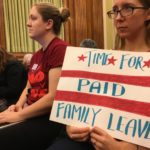
 (Photo by Eric Spiegel)
Paid family leave is back on the legislative table at the D.C. Council.
The exhaustive debate over a proposal to enact one of the most generous paid family and medical leave laws in the country had seemingly closed last week. By sending the legislation back to the Council without issuing a veto, Mayor Muriel Bowser cleared the biggest hurdle for the bill. But in recent days, even supporters on the Council have signaled a willingness to revisit some aspects of the legislation. Today, two of its most vocal critics introduced a bill that would radically revise the system to pay for and administer the benefits.
The Universal Paid Leave Amendment Act passed on a 9-4 vote in December, entitling nearly all D.C. workers to eight weeks of parental leave, six weeks to care for an ailing family member, and two weeks in the event of a personal illness. As enacted (like all D.C. legislation, it must still pass a 30-day congressional review period), it will be paid for by a .62 percent payroll tax, and the program will be implemented by the local government.
But the mayor and several councilmembers issued dire warnings about the tax and the addition of a new city bureaucracy, pushing for an alternative right up until the day of the final vote. An “employer mandate” plan fell shy by two votes.
A coalition of activists that had been advocating for paid family leave tentatively cheered the vote, but then waited to see if Bowser would put the kibosh on the bill. Facing the likelihood that the Council would override a veto, the mayor instead returned the bill unsigned—allowing it to become law and disappointing people on both sides of the debate.
She sent it back with a letter detailing “grave concerns,” and pledged to work with legislators to “overcome the very sufficient deficiencies.”
Ward 3 Councilmember Mary Cheh (who called the passed bill “ill considered” but voted in favor of it, saying “I also feel even more strongly that we need a path to get people paid leave and if this is the only path left open to me, I’m going to take it”) and Ward 2’s Jack Evans introduced one alternative today. It has the same guarantees for time off, but lowers the payroll tax to 0.2 percent for employers with 50 employees or more and 0.4 percent for smaller businesses. The larger businesses would be required to administer the benefits on their own, while the city would run the program for small businesses.
In tweeting about the bill, Ward 3 Councilmember Mary Cheh described it as a “hybrid.” “The benefits are the essentially the same but with a new funding mechanism, with no government bureaucracy.”
According to WAMU, councilmembers are also considering drafting bills to create a private insurance system or mandate that the program be administered by a contractor.
The current legislation has a long lead time for implementation. District employers aren’t set to start paying the 0.62 percent payroll tax until 2019. Council Chairman Phil Mendelson said a hearing on the new proposal (or proposals) may not be held until June.