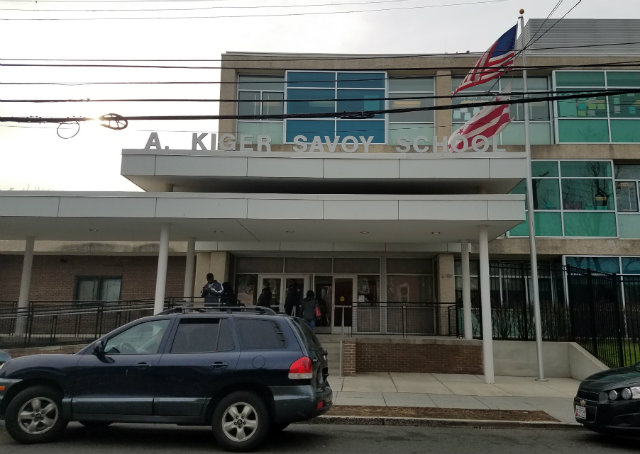
D.C. Public Schools reopened Savoy Elementary School today following a nearly three week closure due to a bed bug and rodent problem.
“We’re excited to have the students back here at Savoy Elementary School so they can get back to their teaching and learning with the great work they do,” said Eugene Pinkard, the system’s deputy chief of school turnaround and performance.
Officials at Savoy began battling the pest problem in December, and it continued for months. Because this was considered a “high level” case, Pinkard said, DCPS closed the school in February “to make sure that we could do a deep cleaning and replace soft materials like carpets to make sure, out of an abundance of caution, that there’s no more of the unwanted pests in the building.”
Crews sealed up areas that were of concern inside of the building and cleaned places “immediately adjacent to the building,” Pinkard added.
Before the school closed and the nearly 350 students were relocated to nearby Ferebee Hope Elementary School, many parents expressed displeasure in school officials’ handling of the issue at Savoy.
“There was a breakdown in communication here,” Pinkard told reporters this morning. “We didn’t get everybody on the same page fast enough and the concern escalated.”
Now, he said, the challenge is making sure “that our families feel comfortable and that our teachers feel comfortable and our students feel comfortable and we’ve done all that we can to make sure this building is ready to get them back to work.”
Before reopening today, the school underwent a “thorough inspection” by numerous city agencies, he continued.
And while another DCPS elementary school has recently experienced a bed bug problem as well, “it’s nothing like we had here,” DCPS spokesperson Michelle Lerner said this morning alongside Pinkard at Savoy.
Going forward, Pinkard said, “we’re going to have routine cleaning at all of our schools to make sure there’s no more disruptions to student learning.”