Rachel Kurzius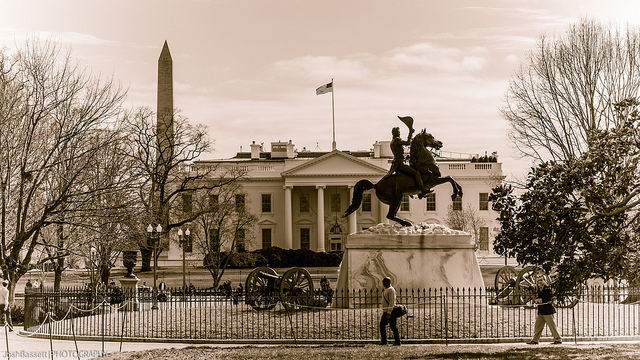
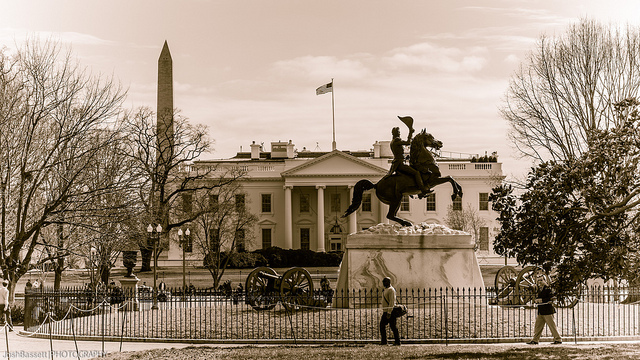 Photo by Josh Bassett.
Lafayette Park, which has some of the hottest real estate for protests in D.C., will undergo temporary closures through the end of the year.
A third of the park will be fenced off at any given time as the National Park Service conducts the closure in three phases. The plan is to replace the aging irrigation system, upgrade the park’s lawns, improve storm water drainage, and repair the fountains. The work began on May 1.
In a release, NPS describes the “high-tech, water-saving irrigation system that includes intelligent sensors that adjust to evaporation rates and weather conditions like rain or freezing temperatures.” The current irrigation system isn’t working because of broken pipes and sprinkler heads.
The seven-acre park’s prime location across from the White House and a bunch of other tourist destinations makes it a hot spot for demonstrations. Activists will still be able to get permits to protest at Lafayette, says NPS spokesperson Jeremy Barnum, though the work “will limit the size of the demonstrations and the numbers of demonstrators allowed under permits.”
During the closure, sidewalks along Pennsylvania Avenue, H Street, Madison Place, and Jackson Place will all be available for pedestrians, according to an email to Treasury Department staffers posted by Popville. NPS cautions people to pay attention to signage as the work zones change.
In late April, the Secret Service announced it was permanently closing off public access to the sidewalk next to the south fence of the White House to stymie potential fence-jumpers and otherwise keep the area secure. There’s also a plan underway for a new perimeter fence and gates around 1600 Pennsylvania Avenue.
But the changes to Lafayette Square are less about security and more about upkeep of the park. “We’re purposefully doing it in three different phases to make sure we maintain access to the public,” says Barnum.