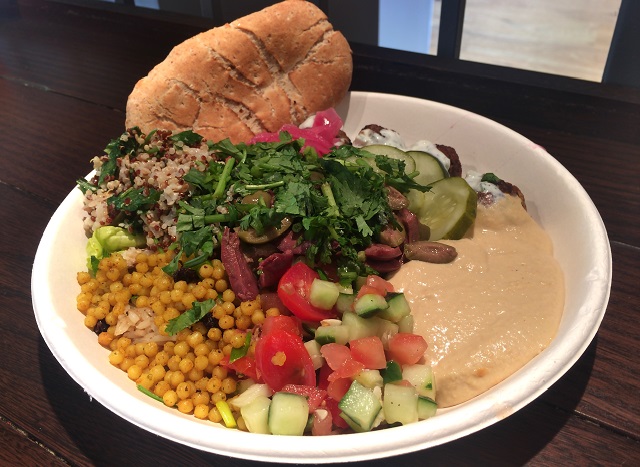
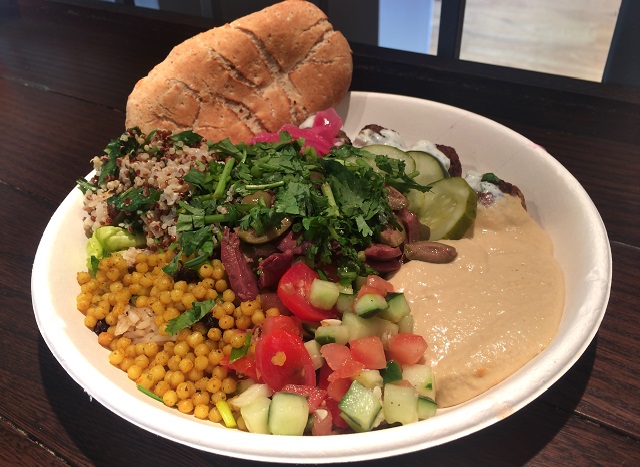
 Roti is just one of many build-your-own meal locations in D.C. (Photo by Carmen Drahl)
Washington D.C. is the capital of American democracy, so perhaps it’s only natural that the city is home to so many “build your own” meal fast-casual eateries. The choices entice eaters with what can feel like overwhelming freedom. The model, most often attributed to Chipotle, has spread to just about every genre of cooking. Some, like Sweetgreen and Cava Grill, even got their start in D.C. It seems like new restaurants open all the time claiming to be “The Chipotle of [fill in the blank].”
As popular as they are, these models get their share of scrutiny. After all, not everyone wants to be forced into choosing their own ingredients from seemingly endless combinations. Not everything tastes good together. And just because it’s on the menu doesn’t mean it should be on your plate.
DCist asked some local chefs for some advice on pairing flavors and navigating these do-it-yourself restaurants without turning your $12 quinoa bowl into an inedible mess.
DO play to the strengths of the restaurant
The majority of these concepts are anchored in a specific cuisine, like Mexican or Greek. So use that inspiration as a starting point for making decisions and pairing like ingredients.
“Stick within the genre and type of cuisine you’re trying to go for. For example, don’t put refried beans on your tuna tartare,” says Austin Fausett, executive chef at Proof (775 G St. NW).
It sounds obvious, but menus have so many ingredients these days that it’s easy to get off track. At &pizza you can walk away with a pesto sauce pizza topped with jalapeños, eggs, and fig balsamic drizzle. Or you could get into the danger zone at Half Smoke with a beef bratwurst covered with chili and tahini dressing.
DON’T overdo it with the toppings
Speaking of sticking with a genre, learn to practice restraint and simplicity. They’ll both go a long way when building a custom bowl. Fight the urge to fill that salad or burrito bowl to the brim with food.
“If you think you’re putting too much, you probably are,” says Vinoteca (1940 11th St. NW) executive chef Anna Miller. “Once it’s done, it almost always cannot be undone.”
It might not be the best bang for your buck, but this self-editing will likely produce a better tasting result.
“When you add too many ingredients, you’re no longer tasting each ingredient for what it is and being fresh. You’re tasting a muddled dish,” Fausett says.
He recommends around four components: a protein, sauce, and a few vegetables—ideally one that gives the dish a flare or twist you wouldn’t initially think might work.
DO remember that good flavor is built in layers
As with any dish, the best fast-casual bowls are all about creating contrast and keying in on different parts of the palate. Be open to diversity, but be keep some rules in mind.
“Think about flavor friends, such as basil and apples with Parmesan cheese,” says Gravitas (coming soon to 1401 Okie St. NE) chef Matt Baker. “Try to build the bowl with flavors that will play off well with each other.”
There are endless combinations of flavors that work (and don’t work), but chefs agree that there’s one pair in particular that’s most important to keep in mind. “People should balance acid and fat as a basic guideline to creating the bowls,” says Ripple (3417 Connecticut Ave. NW) executive chef Ryan Ratino.
Other components to consider include salty, umami, sweet, acidic, fatty, spicy, bitter, and crunchy ingredients. It sounds complicated, but it might come more naturally than you think.
“You probably don’t even realize you’re following these rules already,” says Vinoteca executive chef Anna Miller. “Putting cream in your coffee is bitter and fat. Eating a wedge of pickle with your burger is fat and acid. Putting granola in your yogurt is crunchy and soft). Canadian bacon and pineapple pizza is sweet and salty.”
Sauces are equally important, says Hazel (808 V St. NW) executive chef Rob Rubba. “If your main protein or vegetables are spicy, contrast with a herbaceous or creamy sauce. And vice versa. Plain veggies or meats get spicy or acid-based vinaigrettes.”
Don’t neglect toppings or garnishes, either. They can add an interesting kick of spice or crunch.
“No one likes to eat monotone, one textures dishes,” says Baker.
DO be willing to taste and experiment to become more familiar with ingredients
The key to success is a balance of flavors, and that requires getting familiar with different ingredients and how they taste in various recipes.
“Start small,” Rubba, of Hazel, advises. “If you like cheese-based sauce you will probably like a white miso-based one It’s really about finding an alternative ingredient for the same flavor synergy.”
His other examples include swapping out something like fish sauce in place of anchovies or using flax seeds instead of nuts. Chefs recommend making a point to continue this education at home, even when you’re away from the restaurant.
“As a rule of thumb for beginners, taste everything in its raw form before using it in a recipe: produce, spices, wine or marinades, bread, cheeses, everything,” Miller says. “If it’s done the right way, you can combine anything. Things you wouldn’t ever think to put together can be manipulated in a way that works.”
DON’T be too proud to defer to restaurant recommendations
Finally, whether you’re pressed for time or just too hungry or overwhelmed to think, there’s always the option to defer to a restaurant’s preselected combinations. And even chefs agree there is no shame in leaving it to the experts.
“My tip is to order what the people have already created for you so you don’t mess it up,” Ratino says.
Rubba agrees, saying that these options “tend to be tried and tested, and, in my opinion, are the best bet.”