 Rachel Sadon
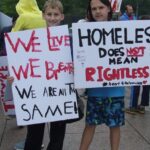
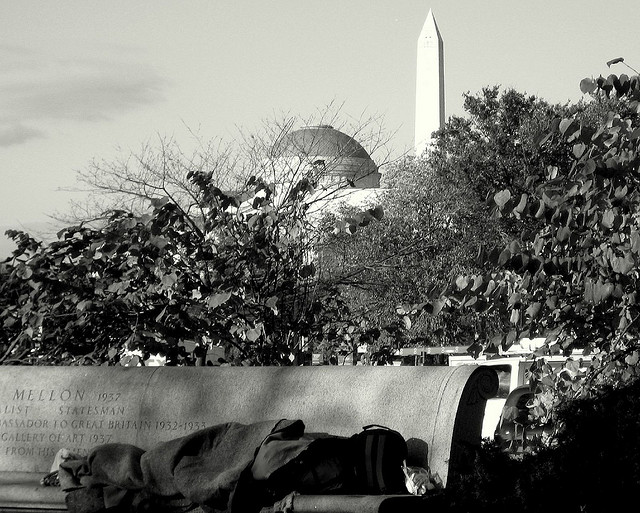 Photo by rjs1322.
D.C.’s Human Rights Act is one of the most expansive in the country, making discrimination illegal for 19 different protected classes. At-large Councilmember David Grosso moved yesterday to add a 20th: homelessness.
“Discrimination against people experiencing homelessness perpetuates the very problem of homelessness,” Grosso said in a statement. “If we want to put people on the path to stable housing, we must end discrimination that creates another barrier in the way of people seeking to improve their situation.”
The bill, named for longtime advocate Michael A. Stoops, would make homelessness a protected class for the purposes of employment, places of public accommodation, educational institutions, public service, and housing and commercial space. It would allow the homeless to file a complaint with the Office of Human Rights that could result in fines or penalties.
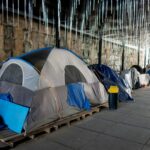
Homelessness fell 10.5 percent from last year after a large increase the year prior. Still, the population hasn’t even returned to 2015 levels, and homelessness is up 9 percent over the past five years. For every 1,000 Washington residents, 11 are homeless.
The crisis is reflected in even longer views of the data. D.C. was third behind New York and Massachusetts in terms of the absolute increase in the homeless population between 2007 and 2016—and far and away the highest in terms of percentage (191 percent; Massachusetts was second at 92 percent), according to a report from the Department of Housing and Urban Development.
As the city has seen steady progress toward ending chronic homelessness, thanks to a dramatic shift in approach, and made a concerted push to end veteran homelessness, the increase is largely attributable to a rise in family homelessness.
Advocates say that even when they are able to match a homeless person or family with a housing voucher, securing a rental is often difficult. Affordable apartments are increasingly scarce, and landlords can easily choose to rent to someone else. “Place of residence” is already a protected class in terms of housing, though social workers say they regularly see people with vouchers discriminated against.
The city is aware of the issue and actively working to bring landlords on board, according to Department of Human Services Director Laura Zeilinger.
“We’re doing a lot of work to partner and engage landlords to help them understand the services and supports we offer, to hear what concerns they have and what challenges they face, and have a targeted strategy to address those challenges,” she says. “We’re trying to create as many reasons as possible to open their doors.”
Grosso’s law would explicitly protect the homeless, and extend the protection to employment and education.
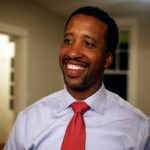
At-large Councilmember Robert White, Ward 1’s Brianne Nadeau, and Ward 3’s Mary Cheh co-introduced the bill; it was also co-sponsored by At-large Councilmember Anita Bonds, Ward 4’s Brandon Todd, and Ward 8’s Trayon White.