Rachel Kurzius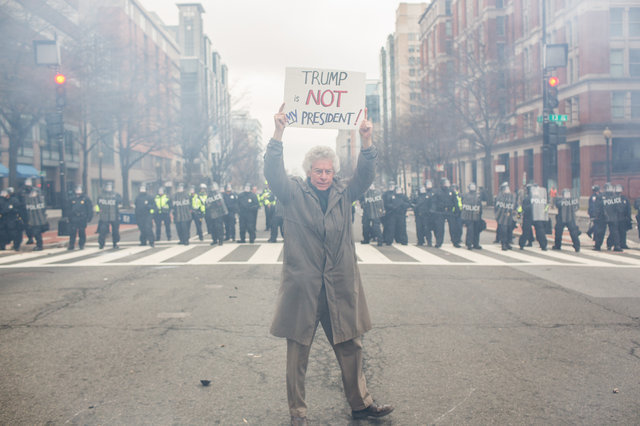
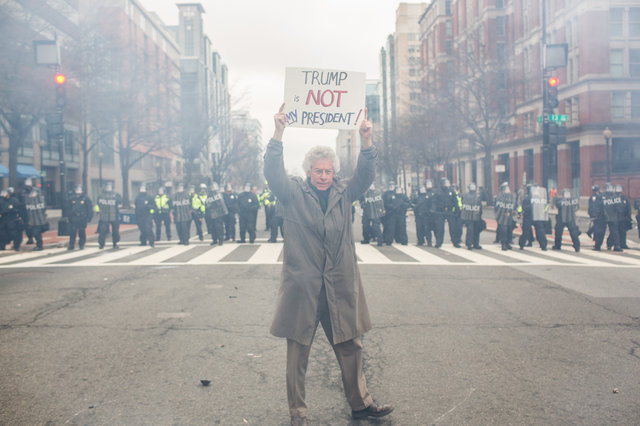 A protester in downtown D.C. on Inauguration Day. (Photo by Scott Heins)
An online service provider is fighting a request to provide Department of Justice prosecutors with information about more than 1.3 million visitors to an anti-Trump website.
Protesters demonstrating President Donald Trump’s inauguration created the website DisruptJ20.org to help in organization efforts. Now, as nearly 200 people face decades in prison over the destruction in downtown D.C. that day, the U.S. Attorney’s Office of D.C. wants to know who visited the website.
A search warrant issued July 12 from the Superior Court of the District of Columbia calls for Dreamhost, which hosts the website, to provide the IP addresses for more than 1.3 million visitors, along with addresses, phone numbers, bank accounts, and other personal information for thousands of subscribers.
Dreamhost calls the DOJ request “a highly untargeted demand that chills free association and the right of free speech afforded by the Constitution” in a blog post published Monday evening announcing the ongoing legal battle “to protect the identities of thousands of unwitting internet users.”
In a filing to compel the California-based company to comply with the search warrant, Assistant U.S. Attorney John Borchert writes that the website “was used in the development, planning, advertisement, and organization of a violent riot that occurred in Washington, D.C. on January 20.”
But Dreamhost says in legal filings that the request is too broad. “Because the Search Warrant allows the government to obtain large amounts of information, including the content of e-mail communications, initiated by innocent third parties, fails to identify with sufficient specificity what will be seized, and does not explain to DreamHost what will happen to the large quantities of un-seized information, the Search Warrant is not reasonable under the Fourth Amendment.”
There will be a hearing on the matter this Friday in front of Judge Lynn Leibovitz, who is presiding over the felony riot cases stemming from Inauguration Day. So far, one person pleaded guilty to felony rioting and felony assault on a police officer, and was sentenced in early July to four months in prison. More than a dozen others pleaded to misdemeanors and were ordered to pay fines.
Digital privacy has become a big part of the debate over these cases. When 230 people were arrested on Inauguration Day, including some journalists and legal observers, their phones were confiscated and prosecutors have been mining them for data. As trials for some of the defendants begin in November, Leibovitz has heard arguments from defense lawyers about how to set up an online portal with evidence gleaned from the phones in a way that best protects the defendants’ privacy.
Dreamhost is not the only technology company fighting against how to comply with the government’s requests for information about these defendants. Facebook is fighting in court against a gag order that prevents it from telling users about search warrants.
Lawyers for the defendants argued in late July that the en masse felony charges should be dropped, and are waiting to hear Leibovitz’s rulings on their motions.
Previously:
Inauguration Day Protester Sentenced To Four Months Behind Bars
ACLU Is Suing D.C. Police For Excessive Force, Unlawful Arrests On Inauguration Day
D.C. Budget Includes $150,000 For Review Of Police During Inauguration
Even More Felony Charges For Inauguration Day Protesters
Prosecutors Are Mining Data From The Cellphones Of Inauguration Day Arrestees
Police Complaints Board Wants Independent Investigation Of Inauguration Day Conduct
Journalists, Legal Observers Among Those With ‘Unprecedented’ Felony Charges For Inauguration Day Protests
Activists Plan To Block A Dozen Inaugural Security Checkpoints
‘We Can Do A Lot With Few People’: DisruptJ20 Plans To Wreak Havoc On Inauguration
DH Opposition Motion by Rachel Kurzius on Scribd