 Rachel Sadon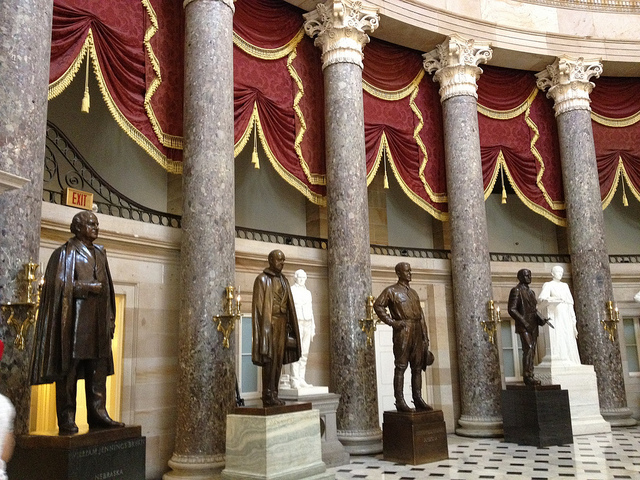
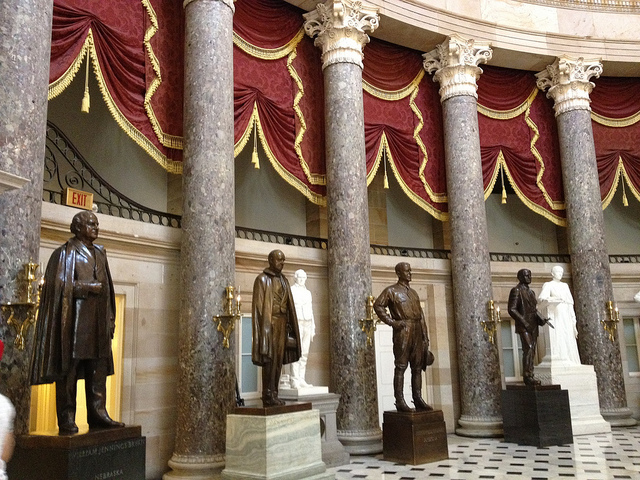 There are 12 statues on display in the National Statuary Hall Collection in United States Capitol that honor Confederates. (Photo by Sue Waters)
The responses to the violence and terror in Charlottesville have run the gamut: protesters in Durham toppling a monument to Confederate veterans, Baltimore’s mayor having several statues removed overnight, and the creation of a commission consider removing statues from Richmond’s Monument Avenue, calls to put Houston’s memorials in context rather than removing them and the president’s defense of “beautiful statues and monuments.”
So where exactly are the rest of these monuments?
Quartz has put together a tool to search by zip code for the closest monuments, streets, and buildings that honor Confederate generals.
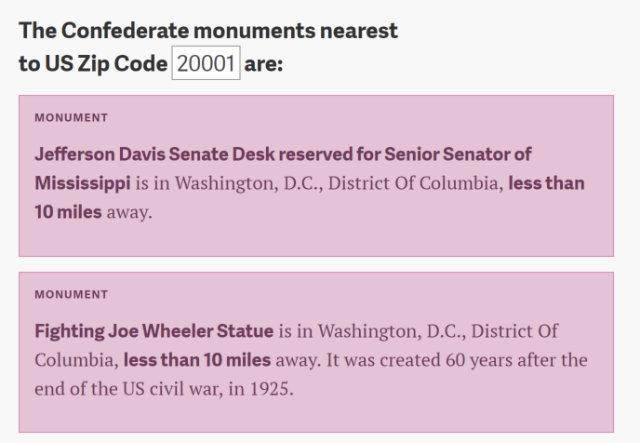 Search the tool on Quartz.
It uses 2015 data from the Southern Poverty Law Center, which found more than 1,500 sites in public spaces. There are gaps in the data, and some are already out of date, but it is still a good guide to the breadth of symbols of the Confederacy.
Locally, for example, it highlights more than a dozen streets in Alexandria, which had a law on the books until 2014 requiring all north-south streets be named for Confederate military generals.
Meanwhile, other sites have already been removed, renamed, or are in the process. The Fairfax County School Board voted last month to rename J.E.B. Stuart High School after a two-year community debate. The the Alexandria City Council is also soliciting suggestions for alternative names to the Jefferson Davis Highway.
The Quartz tool only mentions one statue in the National Statuary Hall Collection in the U.S. Capitol, but there are actually twelve depicting Confederate soldiers and politicians. Nancy Pelosi and other Democratic leaders have called for them to be removed.
There are other gaps; it doesn’t note, for example, the only outdoor statue in D.C. featuring a Confederate general. The monument to Albert Pike honors his work with the Freemasons rather than his particularly unusuccessful tenure as a Confederate military leader. Sill, the mayor and more than half the D.C. Council are calling for its removal.
“Albert Pike was a strong proponent of slavery and fought to try to preserve that in this country. Regardless of what he did in other parts of his life, it’s inappropriate to honor him,” says At-large Councilmember David Grosso, who sent a letter on Tuesday to the acting director of the National Park Service calling for the statue at 3rd and D streets NW to be taken down.
Search the Quartz tool here.