Rachel Kurzius
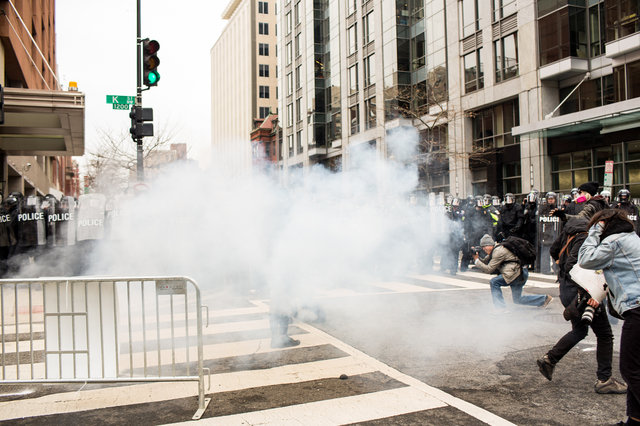 The scene in downtown D.C. on Inauguration Day. (Photo by Scott Heins)
A D.C. Superior Court judge ruled that an online service provider must provide federal prosecutors with information on people who visited a website used to organize protests on Inauguration Day.
Dreamhost, the L.A.-based company that hosts the DisruptJ20.org website, met the U.S. Attorney’s Office in D.C. in court on Thursday, and Judge Robert Morin granted the government’s request, though said he would be overseeing their search.
The U.S. Attorney’s Office of D.C. is currently prosecuting almost 200 people, who face decades in prison for the destruction in downtown D.C. on Inauguration Day, and narrowed the scope of their original search warrant, which called for the IP addresses for more than 1.3 million visitors to the site, along with addresses, phone numbers, bank accounts, and other personal information for thousands of subscribers.
Dreamhost balked at the initial request and publicized it, calling it “a highly untargeted demand that chills free association and the right of free speech afforded by the Constitution.” They argued that people would be less likely to visit political websites if they thought the government would gain access to their viewing habits.
In the government’s modified reply, Assistant U.S. Attorney Jennifer Kerkoff wrote that, “The Warrant—like the criminal investigation—is singularly focused on criminal activity. It will not be used for any other purpose. Contrary to DreamHost’s claims, the Warrant was not intended to be used, and will not be used, to ‘identify the political dissidents of the current
administration.'”
The data release ordered by Morin only applies to information from a specific date range: October 2016 through Inauguration Day, and the government must provide a plan to the court about how and who will review the data from Dreamhost, and prove why any of the information is relevant to its search warrant. The court will seal irrelevant data.
Generally, computer search warrants are executed in two stages. As The Volokh Conspiracy explains,, “First, the government gets access to all the electronic records. Next, the government searches through the records for the particularly described evidence.” In this case, the judge is presiding over that first stage with particular stringency.
“We’re pleased that the court further limited the government’s access to this data,” Dreamhost wrote in a blog post. “While we’ve been compelled by the court to share this (still) large cache of data (and will do so in the next few days), the DOJ will not gain access to it immediately. We are considering an appeal which would deny the government the ability to access that data temporarily and potentially forever if our appeal is found to have merit.”
The U.S. Attorney’s Office of D.C. does not comment on ongoing lawsuits.
Previously:
DOJ Demands Info On More Than A Million Visitors To Anti-Trump Website
Inauguration Day Protester Sentenced To Four Months Behind Bars
ACLU Is Suing D.C. Police For Excessive Force, Unlawful Arrests On Inauguration Day
D.C. Budget Includes $150,000 For Review Of Police During Inauguration
Even More Felony Charges For Inauguration Day Protesters
Prosecutors Are Mining Data From The Cellphones Of Inauguration Day Arrestees
Police Complaints Board Wants Independent Investigation Of Inauguration Day Conduct
Journalists, Legal Observers Among Those With ‘Unprecedented’ Felony Charges For Inauguration Day Protests
Activists Plan To Block A Dozen Inaugural Security Checkpoints
‘We Can Do A Lot With Few People’: DisruptJ20 Plans To Wreak Havoc On Inauguration