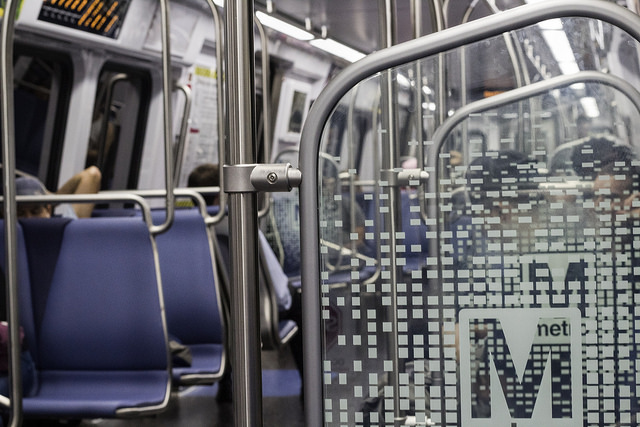
 Photo by Daniel Kelly
While some folks may not consider taking Metrorail because of delays and station closures, among other issues, the public transit system can be worth the time and cost when compared to fetching ridehailing service Uber.
New data collected by the Office of Revenue Analysis’ District, Measured blog puts into perspective when commuters might choose either transportation option based on circumstances like the time it takes to walk to a Metro station, how long they would have to wait for a car or train, and if there are Metro delays or Uber detours.
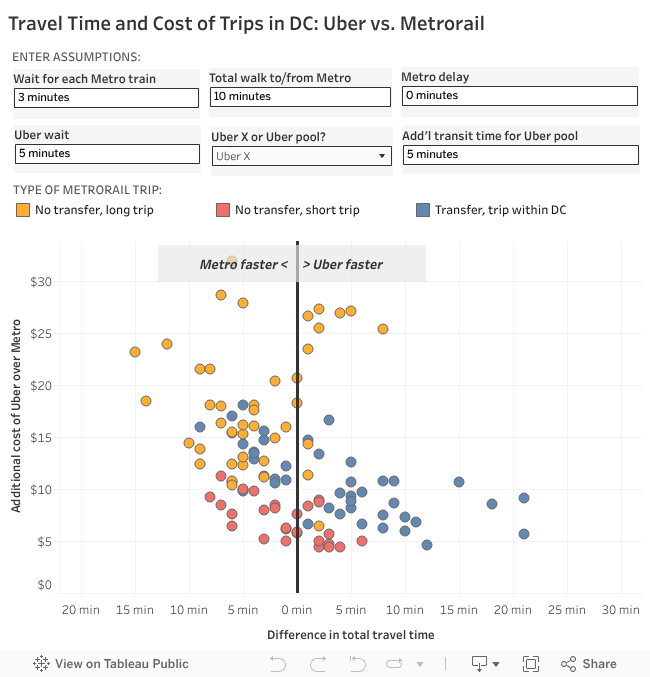
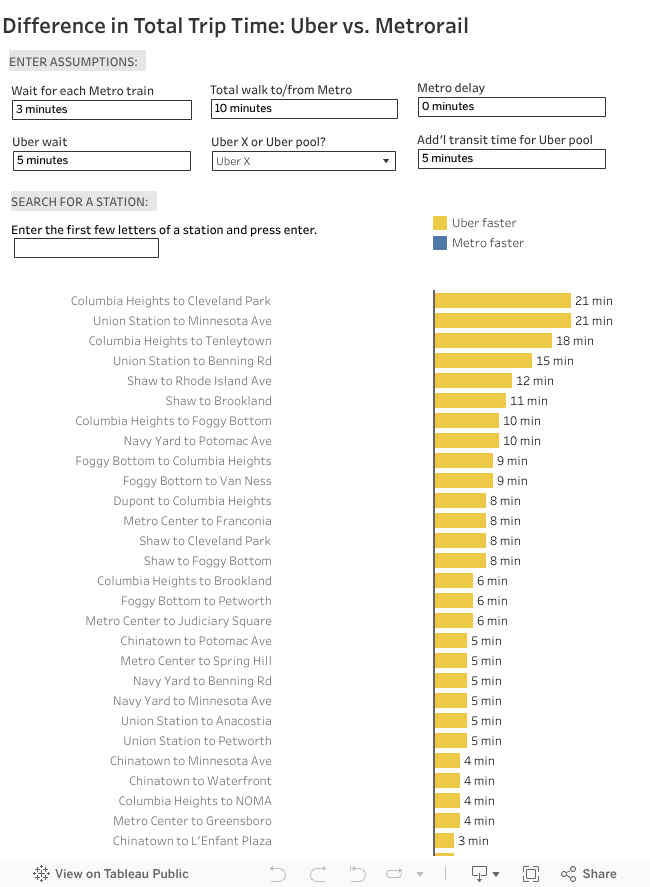
The blog’s analysts created two interactive graphs that let people predict these factors to figure out which means of transportation may be less time consuming and more cost-effective.
To test out varying situations, the analysts mapped out 114 different trips between Metro stations. For the record, this is a small sampling as there are over 4,000 possible trips a person could take on Metrorail, according to the blog post.
The 114 trips are separated into two categories: those from either Metro Center or Chinatown to other stations that don’t require a transfer and trips within D.C. proper that require riders to switch trains and end up at stations that are heavily-frequented for things like work and entertainment.
When there are no transfers required, they found that even longer Metrorail trips (which for this study means more than five stops) between D.C. and the suburbs are often faster than taking an Uber. Out of the 114 trips analyzed, 67 of them on Metrorail were quicker than an Uber, according to the data.
But when trains have longer headways, like on weeknights or when there are Metrorail delays like during weekend maintenance projects, Uber tends to get people to their destinations faster. In this case, Uber was the faster option in 99 out of the 114 trips.
The study also found that Uber can be a faster option if people have to transfer trains, even during rush hour and if there are no delays. For example, a trip from Union Station to Minnesota Avenue would be about 20 minutes quicker in an Uber.
Aside from time, the data also takes money into account.
While a person can save nine minutes taking an Uber from let’s say Columbia Heights to Eastern Market when trains are running every 10 minutes, the car ride is $10 more, according to the data. The blog points out though that Uber’s “pool” option, which lets people share rides with others for a cheaper cost, makes some trips as affordable as taking the Metro. However, the carpooling option may delay trips a bit.
Below, you can use the first interactive graph to make assumptions based on timing to see which option may be faster and more affordable. The second graph lays out the 114 sample trips to show which trip is quicker based on certain factors.