Rachel Kurzius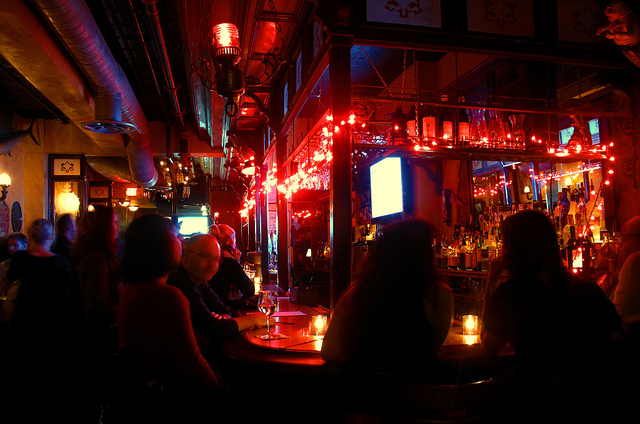
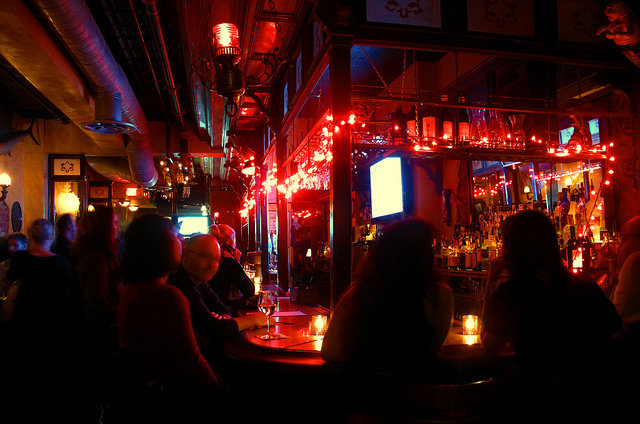 Photo by LaTur.
New York City has a new city official called the “Night Mayor.” London has a similar “Night Czar,” Pittsburgh has a “nighttime economy coordinator,” and over in Amsterdam, the role originated as the “Nachtburgemeester.”
And now D.C. might have its very nocturnal official, termed the “Director of the Office of Nightlife.” Ward 4 Councilmember Brandon Todd, who introduced a bill that would establish an Office of Nightlife and a related commission, says he’s open to a name change, though.
Whatever the title ends up being, the idea is to have a person working during evening hours as a liaison between the government and the nightlife industry. The role focuses on the after-hours economy, defined as an economic activity happening on the weekends or between 5 p.m and 5 a.m. on weekdays.
It’s tough to quantify the size of D.C.’s after-hours economy (a task that, Todd’s office notes, could be addressed by the Office of Nightlife), but here’s what we do know: since 2008, the number of liquor licenses for bars, restaurants, and clubs has increased by almost 50 percent, per the D.C. Policy Center. The Restaurant Association of Metropolitan Washington projects $2 billion in D.C. restaurant sales in 2017, and the says that restaurant and foodservice jobs represent about 8 percent of total employment. (Restaurants, of course, don’t represent the entire after-hours economy.)
Plus there’s an element that cannot be calculated through revenue, says Mark Lee, a Washington Blade columnist, small business advocate, and former executive director of the D.C. Nightlife Hospitality Association. The nightlife economy is “the heart and soul of the cultural amenities and vibrancy of the city, for residents and visitors alike,” says Lee.
Todd says the bill will give the nightlife community a central point of contact. “I think it’s going to be game changing,” he says. “Nightlife is coming to areas in our city that have quite frankly been devoid of activity in a long time—certainly nighttime activity.”
In his own ward, Todd points to Upshur Street NW, which The Washington Post recently called “the best place to eat in D.C. right now.”
“We’re seeing growth—good growth but growth nonetheless,” says Todd “There are lots of things that come along with growth … parking, noise, trash, public safety concerns, a number of issues, and just general ‘I don’t want that in my backyard.'”
The Director of the Office of Nightlife would deal with those concerns, ideally acting as a bridge between businesses and their neighbors, and would be available when most other government officials are sleeping.
The person would also work with D.C. police, the Alcoholic Beverage Regulation Administration, the Department of Consumer and Regulatory Affairs, community associations, Advisory Neighborhood Commissions, and more.
Lee says that, in other cities, the role also focuses on protecting creative spaces. “One of the things that’s motivating New York to set this up is gentrification and the cost of occupancy doesn’t just affect residents—it affects business as well,” he says. “Creative spaces where artists of all types meet and collaborate are disappearing and New York is becoming a more sterile city.”
Dail Doucette, who sits on the board of the Dupont Circle Main Street, which has been studying the implementation of night mayors in Europe, Australia, and Canada, says that a night mayor would also help expand the hours for other kinds of businesses. Because many people work during regular business hours, “if they want to participate in commercial services, they have to do that outside of their regular work day, and that means they have to do it on evenings and weekends,” Ducette says.
Todd’s bill, co-introduced by At-large Councilmember David Grosso earlier this month, establishes an Office of Nightlife as part of the executive office of the mayor, which would be overseen by a director who the mayor appoints.
He says that details about the director’s salary or other staffers for the Office of Nightlife have yet to be determined, and would ultimately be at the mayor’s discretion.
In addition, there’d be a five-person volunteer Commission of Nightlife, which must include an Events DC executive, a business owner with a liquor license, someone from a creative industry, someone from the board of a business improvement district, and a D.C.-based college or university administrator.
While Lee, the business advocate, is grateful to see the bill recognize “the significance of the nighttime economy here in the District as the largest independent hometown private sector,” he has some qualms about the way that Todd’s bill sets up the Office of Nightlife.
“D.C. has as many boards and commissions as General Mills has brands of cereal,” Lee says. “It would better serve all if it wasn’t attached to a politician in office—if it was an independent, autonomous office that would be able to make important recommendations to the mayor and council about how to streamline the licensing process and reduce the barriers to entry for small businesses.”
He’d like to see a larger board than the five-person commission outlined in the legislation, perhaps with some of them appointed by the council rather than the mayor. New York’s version, for instance, has 12 people.
The Office and Commission of Nightlife Establishment Act was referred to the Committee on Government Operations, which Todd chairs. He’s hosting a public hearing on the bill on November 8.
Office and Commission of Nightlife Establishment Act of 2017 by Rachel Kurzius on Scribd