Bartenders central to the cocktail movement are at odds with the new American culinary tradition that bombards our palates with ever-expanding offerings of pumpkin spice every autumn. Oreo cookies, protein powder, butter, and body spray are among this year’s mediums for the flavor.
So while there’s pressure to meet consumers’ demand for pumpkin martinis, smart mixologists are limiting their use of pumpkin spice in cocktails, or avoiding it altogether. Instead, you’ll find one or more spices mixed with fall fruits in drinks that are both familiar and striking—never going “full-on pumpkin.”
The overuse of pumpkin spice is truly an American invention, a product of the colonial spice trade in the 1700s. Spices like clove, cardamom, nutmeg, cinnamon, ginger, and allspice were expensive, used sparingly to flavor desserts and drinks on special occasions for those who could afford it. These days, the pumpkin spice blend is so prevalent it’s become an oft-maligned lifestyle.
But this group of spices is far from ordinary. It originates from the world’s tropical regions—none of them are local—and when using as raw ingredients, they’re not basic either.
Cinnamon, a spice originating from Sri Lanka, appears in three of Ambar Clarendon’s (2901 Wilson Blvd.) fall cocktails. Cinnamon syrup spices up the Mandarin Smash at the Balkan restaurant. It is a muddle of whole pomegranate (an oft neglected fall fruit) and mandarin orange to give a novel flavor to the light-tasting vodka base. Cinnamon also appears in the Skoplje Cocktail, a smoky mezcal cocktail named after the capital of Macedonia. It is backed with pear rakia, the spirit of the Balkan states, and zlatna pear puree. A dried lime garnishes this smoky and spicy drink.
Beverage director Danilo “Daca” Simic says that “a lot of pears are produced in this country,” so its namesake cocktail had to include the fall and winter fruit.
Allspice, a critical pumpkin spice ingredient can be found in Espita Mezcaleria’s (1250 9th St. NW) Los Olvidados.
“Allspice dram, our house El Buho espadin mezcal, and Avua amburam wood-aged cachaça give it a barrel aged flavor,” says bartender James Simpson.
This boozy cocktail is also fortified with sweet plum wine and Corazón bitters that contain coffee, chili, cocoa nib, and cubeb (similar to pepper) flavors.
“It reminds me of baked apple pie,” says Simpson.
Allspice is native to Jamaica and the Caribbean islands, and it is used in allspice dram, the rum-based liquor found in Los Olvidados.
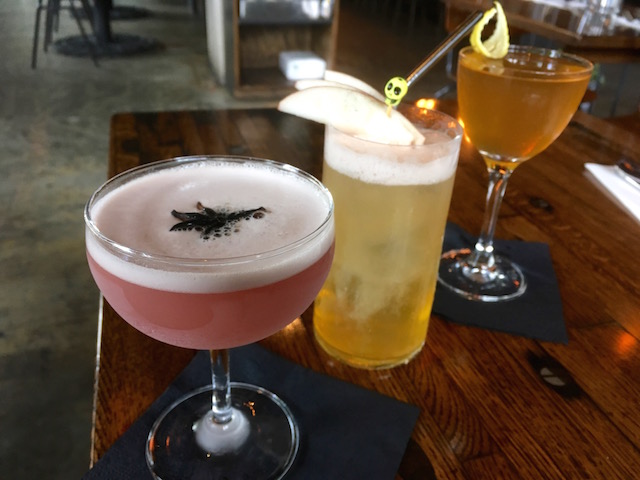
The raw spice appears in Espita Mezcaleria’s Al Diablo con los Guapos. This foamy cocktail is a mix of the house mezcal and Copper and Kings apple brandy and flavored with an anise, allspice, and clove-spiced grenadine. A torched star anise adds an aroma to the vegan-friendly soy protein foam.
Cardamom, an Indian subcontinent spice often used to flavor apple pie, is fitting in Espita’s Apples to Apples. Local Cotton and Reed rum, as well as a funky aged Oxacan rum and the house mezcal, punch up Witches’ Brew cider in this long drink. Loaded with apple flavor, there’s also a cider tonic in there and a foamy Manzanilla sherry and berry cider espuma beneath the garnish of pepper-dusted apples.
Bastille (606 N Fayette St. Alexandria) Beverage Director Casey Chapman is known for going down the seasonal cocktail rabbit hole. This year, he’s come up with a complete cocktail menu inspired by different kinds of pies. But pumpkin is one you won’t find on the list.
“We got to thinking about what fall reminds us of. The way things go right now is pumpkin spice,” says Chapman. “I always think of it as the smell of pies cooling in the window,“ he says.
Take the Bundevara, for example. As Chapman explains, it’s a Serbo-Croatian pie very similar to a strudel made with a pastry crust around a fall squash and seasoned with spices. Its namesake drink is made from Ancient Age bourbon with a strong vanilla presence, spiced sweet potato syrup, Mandarinetto (an Italian citrus liqueur similar to limoncello), and Tuaca vanilla liqueur. It hits all the right pie notes down to the vanilla crust.
Tarte Tatin au Gingembre is another pie cocktail that lives up to its sweet name. This one is made from house apple butter, dark rum, ginger liqueur, and sparkling water. Finally, the 3.14 is a pi-pie joke cocktail that plays on the spherical shape and flavor of an orange. Its ingredients—rum, La Belle Orange citrus cognac, lime juice, and simple syrup—add up to exactly 3.14 ounces.
Ginger, which originated from the rainforests of southern Asia, features prominently in Japanese cuisine. It’s prominent in the Himitsu’s (828 Upshur St. NW) drink Mixed Bag. Bartender and co-owner Carly Steiner says, “I’ve always put some variation of this cocktail on my menu.”
It’s lime juice and cold pressed ginger syrup make it refreshingly spicy, and Amaro Vecchio del Campo and Amaro Montenegro add bittersweet and alcoholic presence. It’s light and foamy, yet richly spiced.
“I honestly think this is the one cocktail that is perfect in any season,” says Steiner.
Clove comes from Indonesia and south Asia, and it is usually used in flavoring meats, fruits, and curries. It shows up in the Rock and Rye cocktail. Rock and Rye is a century-old recipe that combines rock candy, orange zest, and spices in an infusion that is enjoyed on ice. It is making a comeback at Ardeo + Bardeo (3311 Connecticut Ave., NW), where they are experimenting with their own batched Rock and Rye. This one is so piquant that it will entice any spice lover—so fiery and boozy that you might want to let that ice melt a little before sipping.
The Big Apple is a pleasant fall cocktail you can make at home in the blender. Fresh apples, apple sauce, and apple brandy need only a touch of cinnamon to cap this fall drink.
• 2 oz. apple brandy
• 1/2 oz. amaretto
• 1 tbsp. apple sauce
• 3 oz. apple cider
• pinch of cinnamon
Combine all ingredients except cinnamon in a blender with ice. Blend until smooth and pour into a parfait glass or highball. Add pinch of cinnamon on top.