Martin Austermuhle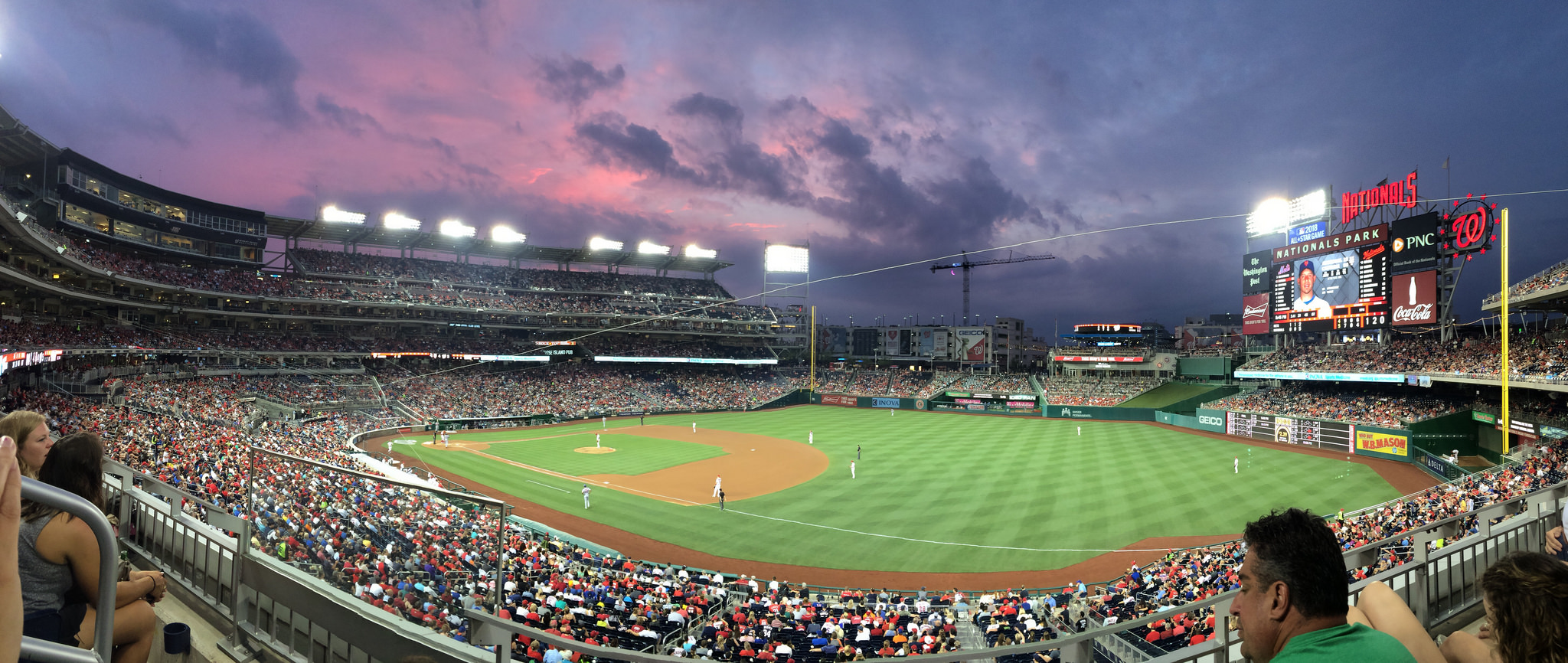
The D.C. Council on Tuesday cast a first vote in favor of bringing legal sports betting to the nation’s capital, pushing the city one step closer to becoming the first place in the Washington region to capitalize on the increasingly lucrative market.
The bill would allow private businesses to apply for licenses to operate sports betting facilities throughout D.C. One class of licenses would be set aside for facilities located at the four of the city’s stadiums and arenas: Nationals Park, Audi Field, Capital One Arena, and the new St. Elizabeths East Entertainment and Sports Arena. Another class of licenses would allow sports betting at other facilities, like bars and restaurants.
It would also give the D.C. Lottery a monopoly to operate a citywide app-based sports betting platform, brushing aside requests from private operators like DraftKings and FanDuel that the Council instead allow multiple apps. Under the Council’s bill, private operators could provide sports betting apps within their brick and mortar facilities, but only D.C. Lottery would be able to offer bettors an app that could be used anywhere in the city.
The monopoly for the D.C. Lottery is favored by D.C. Chief Financial Officer Jeffrey DeWitt, who told legislators during a breakfast discussion that as states look to enter the new market of legal and regulated sports betting, there is uncertainty as to what the best model is. But he said he was focused on finding a way to get the most money for the city.
“No one knows what sports gaming will be. I will openly admit that,” he said. “What the bill is today brings in the maximum revenue for the District of Columbia.”
DeWitt estimates that the model offered in the Council’s bill—which would levy a 10 percent tax on whatever a betting facility makes minus what it pays out—would bring $92 million over the next four years. By opening up the market to multiple apps provided by private operators, he estimated the city’s take would drop to $26 million over the same period.
But private operators disagree, saying that they can offer better mobile and app-based sports betting options that would attract more users.
“We think a competitive mobile marketplace would be best for D.C. residents,” said Cory Fox, the director of policy and government affairs with FanDuel, which recently entered the sports betting market. “The apps we’re seeing in New Jersey are really innovative great products that consumers like, and we’d like to bring those to D.C.”
Fox says that while D.C. would probably take in more money from each bet on an app run by the D.C. Lottery, the overall amount of money bet would be higher on apps run by private operators.
“There will be a lot more dollars bet if there is a competitive mobile market. [D.C.’s] piece of the pie may be somewhat smaller, but it will be a bigger pie which will lead to more dollars for the District,” Fox said.
That argument dovetailed with another interest for some D.C. councilmembers: to ensure that minority-owned local businesses have a chance to enter the sports betting market once it becomes reality.
At-large Councilmember Robert White proposed an amendment to the bill to allow five licenses for private operators to offer app-based sports betting. Four of those licenses would go to operators with 35 percent participation of local partners, while the fifth would go to an operator whose ownership was more than half minorities or women.
“We have a chance to create opportunities in this market to create our own homegrown FanDuel and DraftKings,” said White.
But Council Chairman Phil Mendelson came out against White’s amendment, saying he’d rather heed DeWitt’s guidance. He also echoed what DeWitt told legislators: if it becomes clear that the D.C. Lottery app isn’t attracting a big enough market, the Council could quickly pivot and open the market to private operators.
“It sounds great to do the private market and competition, but the CFO is very clear that that actually will not be as great a benefit,” Mendelson said. “We’ve got to stick with him. If he’s wrong, we can leave him a year from now.”
White’s amendment ultimately failed, although Ward 2 Councilmember Jack Evans pledged to address the issue of minority business participation before a second vote scheduled for Dec. 18. On the overall bill, only Ward 1 Councilmember Brianne Nadeau and At-large Councilmember David Grosso voted against it.
“I don’t agree we should be supporting gambling in the District in this form. Even though people say they’re going to be attracting wealthy gamblers, the fact of the matter is that this has a severe impact on people who are most unable to afford this,” said Grosso.
As the bill moves to its second and final vote, D.C. will be getting closer to joining the eight states that currently have legal sports betting—and will likely beat many others to getting into the market. That includes Maryland and Virginia, which are expected to consider bills at their respective legislative sessions next year. D.C. officials say they want to get ahead of those two states.
And even though many legislators admitted they were jumping into a new and ever-evolving world of sports betting, they said they would remain as flexible as possible to adapt to it.
“However this goes, we’ll figure this out,” said Evans, who wrote the bill.
This story was originally published on WAMU.