Rachel Kurzius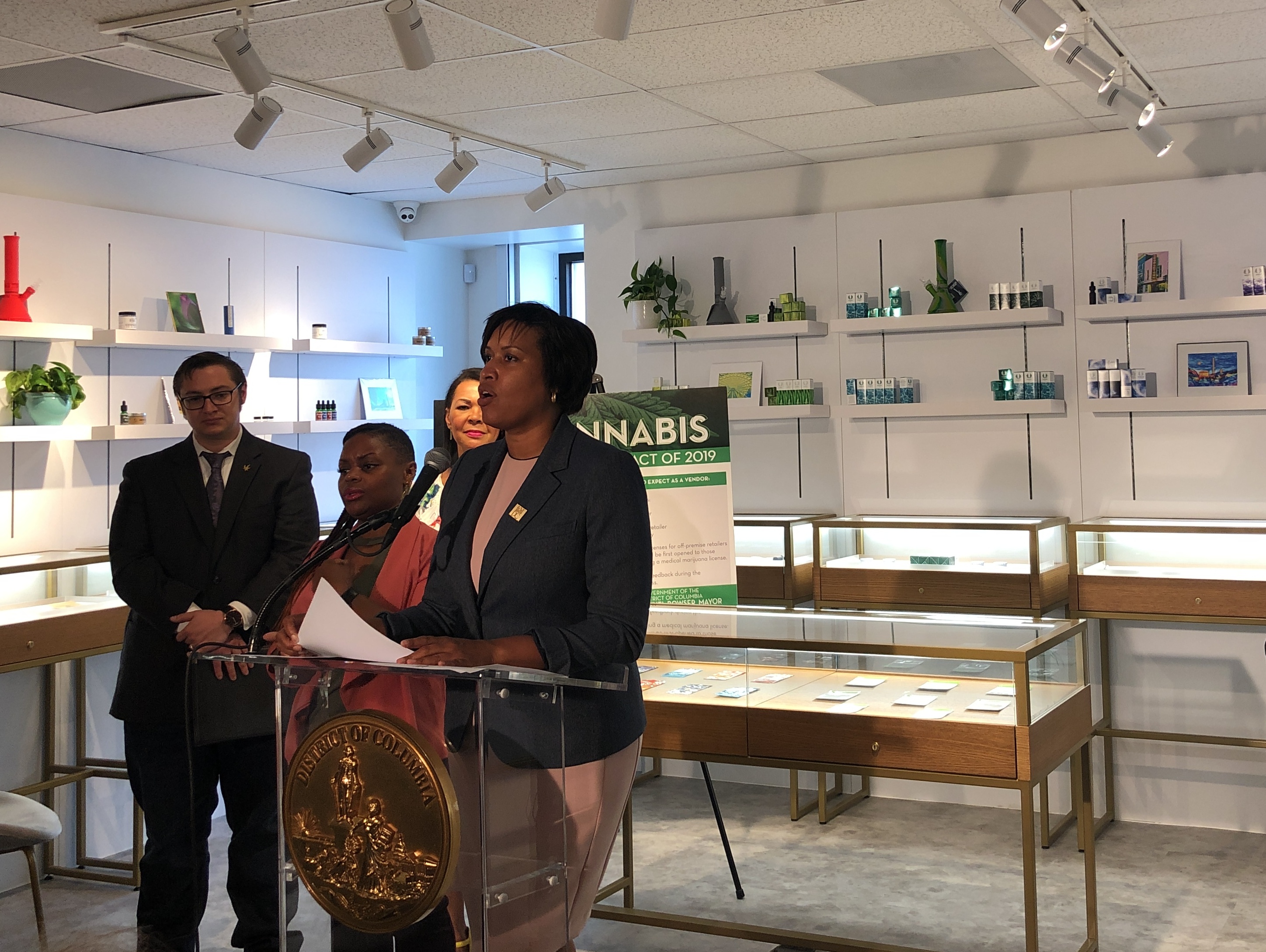
Update, 6/4/19: At-large Councilmember David Grosso withdrew his emergency legislation from the docket on Tuesday. He cited an “unfortunate” lack of support from his colleagues for the measure, which would have made it illegal for D.C. to discriminate against current or prospective government employees for being medical marijuana patients.
“To the current workers or those seeking employment, I’m sorry that we were not able to make things right by acting today,” Grosso said in a statement. The permanent version of the legislation has already been directed to the Labor Committee, and Grosso says he will continue to push for emergency and temporary versions of the bill in the coming weeks.
When Mayor Muriel Bowser was asked about city agencies’ differing policies about medical marijuana at a press conference on Monday, she said that “government and private sector employers can make decisions about employment.”
She said that she’s directed her team to look at how other jurisdictions are handling the issue. “Those policies are under review and, should they change, we will let our employees know,” Bowser said.
Original: When Mayor Muriel Bowser announced her plan to regulate recreational weed sales, she held the event in an Anacostia medical marijuana dispensary. Bowser had been on hand to cut the ribbon at the opening of Anacostia Organics months prior, saying that she was “committed to upholding the will of D.C. voters to make sure they can have not only medical cannabis, but adults can take advantage of recreational cannabis as well.”
But her willingness to stand beside cannabis users does not seem to extend to city government employees who are medical marijuana patients. Even though D.C. Department of Human Resources rules have allowed most D.C. workers to take part in the local medical marijuana program since 2016, multiple city agencies appear to have created separate policies that forbid any prospective or current employees from using cannabis prescribed by their doctors.
Indeed, the Bowser administration is not asking its agencies to comply with the D.C. human resources rule. Medical marijuana policy is “on an agency by agency basis,” says LaToya Foster, the mayor’s communications director, who added that “more information is coming in the coming weeks,” and declined to comment further for this story.
Legislation introduced this week at the D.C. Council, with the backing of nine councilmembers, would make it illegal for District agencies to discriminate in employment against individuals in the medical marijuana program. At-large Councilmember David Grosso is also moving emergency legislation on Tuesday which would do the same.
That measure can’t come soon enough for some District employees.
This week, multiple workers at the Department of Public Works received a memo with an ultimatum, according to longtime DPW employee Phillip Hedgeman, one of the employees who received it. The memo, which was provided to DCist, states that employees have 30 days to find an alternate treatment for their medical condition. It’s unclear, based on the letter, what would happen to these workers if they and their doctors cannot find alternative medication.
Hedgeman says that he’s expecting repercussions from his employer if he doesn’t leave the medical marijuana program. An employee of DPW for two decades, Hedgeman was prescribed medical marijuana in 2016.
The memo states that the agency was unable to process his request under the American Disabilities Act to use medical marijuana for his condition, because the ADA does not cover any employee who is “currently engaging in the illegal use of drugs,” as defined by federal law. “The District of Columbia laws allow for the use of medical marijuana, however, it is still an illegal drug under the Controlled Substances Act,” the memo says, adding that his job “prohibits impairment by any drug or alcohol while on duty.”
Hedgeman says he’s confused by DPW’s position, given “the way that the city is promoting medical marijuana and the benefit of it.” He characterizes the memo as the “ultimate trick pulled.”
At the beginning of May, he met with DPW managers, who provided him with papers they told him to sign to “help this whole process move forward,” he says. When Hedgeman asked for clarity about what the papers meant, “they ensured me that this was the recommendation that they would be using so we could move forward and that there wouldn’t be any penalties … They said these are the papers they would be able to use to ensure us as medical marijuana patients are accommodated.”
Additionally, Hedgeman notes that he doesn’t medicate while he’s at work, and therefore isn’t impaired on the job. (That’s difficult to prove—urine testing can pick up cannabinoids ingested two weeks prior, and popular field tests cannot differentiate between THC, which produces a high, and CBD, a different cannabis compound that is non-intoxicating.)
As DCist has previously reported, DPW employees have faced distress and confusion after they were told their department had a “zero tolerance” policy when it came to medical marijuana. Hedgeman learned about the human resources rule and presented his bosses with his medical marijuana card in the fall. Since then, he was taken off his regular duties as a motor vehicle operator.
But DPW isn’t the only city agency with prohibitive medical marijuana policies. The Department of Corrections “prohibits the use of marijuana by any of its employees,” director Quincy Booth wrote in a letter last week, citing the potential for liability and implying that medical marijuana patients are more likely to make mistakes.
The letter from DOC raises “serious concerns,” says Michael Perloff, an attorney with the American Civil Liberties Union of D.C. It “appears to be a blanket ban on any sort of marijuana use by any sort of employee, [which] seems illegal.” Under the D.C. Human Rights Act, “employers have an obligation to accomodate people who have disabilities,” and, unlike the ADA, there’s nothing in the law that would bar medical marijuana patients from inclusion, says Perloff. He declined to speak specifically about the situation at DPW, because the ACLU is considering getting involved with the case.
“The government is responsible for enforcing the Human Rights Act,” says Perloff. “So it’s particularly frustrating and disappointing that the entity we trust to protect the rights of people with disabilities is taking actions to undermine those rights.”
Grosso, himself a medical marijuana patient, tells DCist that the letter was “sidestepping the question we were trying to get to … When did it become the rule that somebody who uses medical marijuana can’t be trusted? Are they going to say that about someone who’s on Vicodin or pain medicine of some other sort? You have people on antidepressants, people on allergy medications that make you drowsy—this argument is stuck in the old days.”
“If somebody shows up under the influence, that’s a problem,” he says. “But if you’re penalizing them simply because they have a medical marijuana card, that’s a problem, too.”
Grosso says that prospective employees at DOC and the Department of Parks and Recreation had conditional offers rescinded after they were upfront about having medical marijuana cards. “These people are getting denied jobs left and right because our city can’t catch up,” says Grosso. “And then you are hiring somebody who was not just the first choice.”
D.C.’s medical marijuana program became available to residents in 2013, more than a decade after voters approved of the measure in a referendum. (The 15-year delay was mainly due to meddling on Capitol Hill, with a dash of bureaucratic slow-walking.) Since the first dispensary doors opened, the program has expanded to include more qualifying conditions and allow reciprocity with other jurisdictions that have medical marijuana programs. As of April 30, D.C.’s medical marijuana program has 5,990 registered patients, eight cultivation centers, and six dispensaries, according to the D.C. Department of Health. It’s unclear how many of the registered patients are city employees.
Grosso says that he has tried to work with agencies on the issue of D.C. employees in the medical marijuana program, and “they continue to push back. It’s just important to note that I’m [introducing this legislation] as a last resort.”
With a total of nine councilmembers in support of the Medical Marijuana Program Patient Employment Protection Amendment Act of 2019, the bill has the support of the vast majority of the D.C. Council. Nine votes are also required to pass emergency legislation, which would be enacted after one vote and last for 90 days. However, it’s unclear if all nine will also back the emergency measure.
Hedgeman, of DPW, uses medical marijuana to treat chronic back pain. His doctor prescribed cannabis after a slew of other prescription pain medications and muscle relaxers were ineffective or had debilitating side effects. He says he doesn’t want to return to these alternative treatments, and will be avidly watching Tuesday’s vote.
Previously:
These City Workers Were Told They’d Lose Their Jobs If They Used Medical Marijuana