Natalie Delgadillo
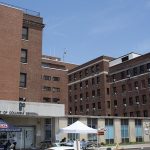
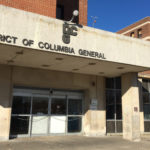
It’s been almost a year since the city closed down D.C. General, a dilapidated former hospital being used as a family homeless shelter.
The closure fulfilled one of Mayor Muriel Bowser’s campaign promises and was a major milestone that advocates had long sought. The sprawling building housed hundreds of families at a time, but suffered from serious structural and quality-of-life problems, including rat and other vermin infestations. It was also the site of tragedies and abuse: 8-year-old Relisha Rudd disappeared from the building in 2014, and there had been more than a dozen reports of sexual assault by shelter employees.
Bowser laid out a plan for closing the facility in 2016 that involved building a series of six new, smaller family shelters that would be staffed by non-profit agencies serving as contractors for the city. The D.C. Council reconfigured the original plan to ensure that all the sites were on city-owned land, rather than leased from developers. Administration officials said at the time that it would push the timeline for completion to the end of 2019.
But even as construction on those shelters lagged further due to neighborhood opposition and other problems, Bowser’s timeline remained firm: she planned to close the shelter in fall 2018, and close it she did. Her administration even started deconstruction and demolition of parts of the shelter while families were still living there, which advocates protested.
A year later, here’s where all the planned shelters stand:
Ward 4: Open, as of September 26, 2018
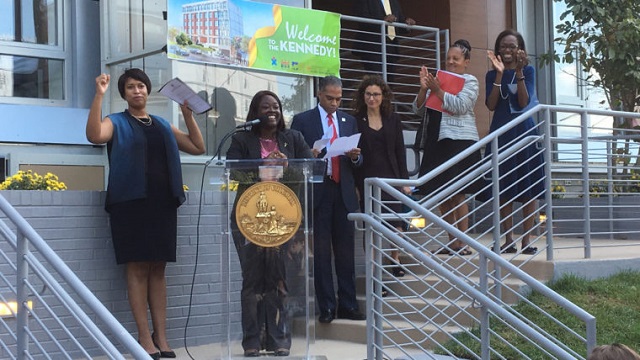
About a month before D.C. General closed for good, the city opened up the first of its new smaller family shelters: The Kennedy in Brightwood Park. The former medical facility can house as many as 45 families. It cost $14 million to renovate.
“The dignity of this place can’t even be compared to what it feels like to be in D.C. General,” Laura Zeilinger, the head of the Department of Human Services, told WAMU last year. “You walk in and you feel like this a place that is designed to provide this service and this support, and it’s a place where I can be safe, I can relax and also be about the thing that will help me get back on my feet. Because of that, families will have a much quicker, more successful transition to permanency.”
Ward 7: Open, as of October 9, 2018
The Horizon opened on October 9 in Benning Ridge after experiencing construction delays that prevented it from opening up in time for D.C. General’s closure. It houses up to 35 families, and it includes a computer lab, administrative office, recreational space, and a study lounge, per the city.
But it wasn’t exactly smooth sailing from there. The District would up terminating its contract with the original nonprofit that provided services for the shelter, after discovering that it had apparently falsified documents related to employee background checks and drug screenings.
Ward 8: Open, as of November 13, 2018
The Triumph in Ward 8 opened on November 13 of last year. It can host up to 50 families, has computer labs for residents, administrative offices, an outdoor playground, a community room, and a homework and study lounge, among other amenities. This was another shelter that experienced construction delays due to contracting issues, and it didn’t open in time to coincide with the closure of D.C. General.
Ward 5: Open, as of August 21, 2019
The Sterling in Ward 5 opened this month. It houses 46 families, and has similar amenities as the Triumph and the other two open shelters.
The city landed on this site on Rhode Island Avenue in Brookland after backlash against the initial planned location for the shelter, which was in an abandoned warehouse in an industrial neighborhood. It was near a waste management facility, a marijuana cultivation facility, auto body shops, and a strip club, but lacked nearby grocery stores, public transportation, and other amenities for families.
The new site wasn’t without controversy, either—a neighborhood group called Citizens for Responsible Options filed suit against the D.C. Board of Zoning Adjustment for approving the site. But they lost the fight: in July an appeals court upheld a zoning commission ruling that approved the building.
Ward 6: Not open, expected fall 2019
The Ward 6 shelter is slated to open this fall, likely close to Thanksgiving, Zeilinger tells DCist. It will be the next of the shelters in these plans to open.
The 50-unit building is at 850 Delaware Avenue SW, near the colorful church formerly known as Blind Whino. Its original site down the block was nixed because neighbors were concerned that it wouldn’t be located on District-owned land. In addition to similar amenities present at the other shelters, this shelter will also have a community health clinic on the garden level.
Ward 3: Not open, expected spring 2020
The construction of the shelter at 3320 Idaho Ave NW in McLean Gardens has been embroiled in a legal battle since 2017, when a neighborhood group in Ward 3—the wealthiest ward in the city—called Neighbors for Responsive Government filed suit against the D.C. Board of Zoning Adjustment for its decision to allow the shelter. A D.C. court dismissed the case in February 2017, but the group filed an appeal a few months later.
The neighborhood group’s complaint has been that they were not sufficiently included in decision-making around the location of the shelter, and also have problems with the height and density of the proposed shelter.
In October 2018, courts came down on the side of the city, and crews were finally free to begin construction. Back then, the city gave an estimated opening date of late 2019 or early 2020. Now, Zeilinger says this shelter is projected to be open in the spring of 2020.
Ward 1: Not open, expected July 2020
The original plans for the Ward 1 shelter called for using a site around the corner from the 9:30 Club. There was an immediate outcry, both over the process and the proposed cost to lease the land ($23 million over the 30-year period). When the D.C. Council reconfigured the overall shelter proposal, it required Bowser’s administration to purchase the plot instead. Negotiations stretched on for months.
Finally the city chose a new site altogether at 2500 14th Street NW, a few blocks south of the Columbia Heights Metro station, where it will share the site of the Rita Bright Community Center. The facility houses the Latin American Youth Center, which will be renovated as part of the work. The shelter will be built on the current site of a parking lot.
But the new plan hasn’t been without controversy either. When the city finally broke ground on a shelter in Ward 1 in July, residents of a neighboring condo building came out to protest. They accuse the city of playing “wordsmith whack-a-mole with zoning rules” that would require a 15-foot setback from their building (they say they are in favor of the shelter itself, but don’t want their property walled in).
The Columbia Heights shelter isn’t technically a replacement building for D.C. General, though the plan was approved as part of the same deal; instead it will replace a facility on Spring Road NW in Columbia Heights. Construction is expected to be complete by July of 2020.
In the three shelters that have been open long enough for DHS to collect data, families are averaging a 90-day stay before they’re placed into housing, a shorter amount of time than at D.C. General, according to Zeilinger.
That means fewer families being placed into overflow housing in hotels: the city is now only using two hotels as overflow shelter space for homeless families, down from eight, Zeilinger says. (The District plans to eliminate the use of hotels altogether by the end of next year.) There are currently 130 units available for homeless families in the District, with a total goal of 302 under current plans, per DHS.
The resources available at the new shelters—and its quality of life improvements—are helping families get out of the shelter system more quickly, according to Zeilinger.
“At D.C. General, when you have 70 families on one floor alone, and somebody misses a case management meeting, it might be another period of time before anybody follows up with them about the next step in the housing process,” Zeilinger says. She also believes that the smaller sites are fostering better relationships between staff and residents because there don’t have to be as many strict rules as there were at the sprawling and dangerous D.C. General.
“In a site [like D.C. General], with that many families sharing space, there were so many rules and regulations that we needed to put in place about being in your room, checking in, that it made it also really feel like you’re being controlled,” Zeilinger says.
For their part, advocates have expressed wariness with the city’s emphasis on getting families out of the shelters faster, especially because it’s often achieved via a program called rapid rehousing. The program helps struggling families pay their rent for a year, after which they become responsible for paying it themselves. Critics have argued this approach just puts people back out on the street when the year is up.
“Some families also have a hard time finding a place in the shelter’s neighborhood to accept rapid rehousing” even though it’s illegal for landlords to refuse, says Amber Harding, an advocate at the Washington Legal Clinic for the Homeless. “[The program] forces families into a submarket that exists entirely east of the river.”
But Harding says the new shelters already in operation are indeed having a positive impact for families.
“They’re beautiful sites. And I think it’s really something to praise that the government has decided that homeless families deserve quality shelter when they’re homeless,” she says. “Physical settings are important and can contribute to or reduce the trauma families are experiencing when they’re homeless.”
This article is part of our 2019 contribution to the DC Homeless Crisis Reporting Project in collaboration with other local newsrooms. The collective works will be published throughout the day at DCHomelessCrisis.press. You can also join the public Facebook group to discuss further.