Matt Blitz
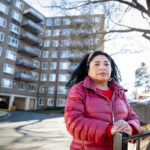
Upon walking into her new apartment in Arlington’s quiet, leafy Westover neighborhood this summer, Crystall was overcome with emotion. “I’m not a crier, but when I saw my apartment, I couldn’t speak,” says Crystall, who had been evicted from her previous home of 16 years and was living out of her truck. “Beautiful… isn’t a good enough word.”
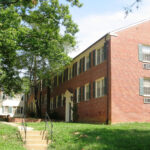
This eight-unit apartment building, originally built in the 1940s for Pentagon workers, looks modest. But it’s the centerpiece of an ambitious pilot program from the Arlington-based non-profit A-SPAN.
“This is for people who have too many housing barriers, [meaning] felonies, no credit, no rental history, immigration status,” says A-SPAN’s director of development Scott Miller. “This is an option for them.”
There are 215 individuals experiencing homelessness in Arlington County according to the annual point-in-time count that was conducted earlier this year (a slight decrease from 2018). Nearly all of them qualify for some sort of federal or state assistance and a large percentage utilize it in some form or another. But some don’t qualify due to evictions, convictions, or other barriers. There’s also individuals whose struggle with substance abuse or mental illness prevents them from staying in housing, which can cause them to lose their eligibility. And undocumented immigrants are disqualified from nearly all governmental housing assistance.
“If you’re not a U.S. citizen, you don’t fall into any federal or state program. You’re never gonna get housed permanently,” says Miller. “At least at this moment.”
The county doesn’t have an exact record of how many individuals fall into these categories, but A-SPAN says about four percent of the population of those experiencing homelessness in Arlington are blocked by these barriers.The hope is that A-SPAN’s new program, called “Streets to Stability,” will provide housing for that remaining four percent that have no other options and are falling through the gaps.
Arlington County’s Affordable Housing Master Plan makes the pledge to end homelessness in the county by 2040. County Board member Katie Cristol says that this A-SPAN program could go a long way to helping achieve that lofty goal. “If you can’t get folks into housing that they can afford to stay in, the risk of recidivism for homelessness is pretty great,” says Cristol. Plus, A-Span is “able to do this totally independent of county support and tax dollars, which I love to see.”
Crystall, who we are identifying by her first name for privacy reasons, lost her apartment of 16 years earlier this year. She was living in her truck when A-SPAN representatives guided her to the Homeless Services Center on 14th Street in Courthouse. Crystall had originally moved to the D.C. area in the wake of the September 11 attacks to work as a respiratory therapist and care practitioner. She was on disaster teams and worked at several different hospitals, but mental illness took all of that way.
“Mental illness is a monster,” says Crystall. “And I found myself losing everything… even my identity.” She lost the ability to read and speak to people, so she took to drawing and painting, creating images that helped others understand her thoughts.
She had attempted to secure help with housing before, but several factors—including not having kids, being able to present well at times, and previous years’ tax returns—prevented her from being accepted. “My last tax return made it look like I had what I no longer had,” Crystall says. She had fallen through the kinds of gaps that “Streets to Stability” was designed to help knock down.
A-SPAN purchased the Westover building In March from a local developer for $1.56 million dollars. That was about $735,000 under market value at the time, according to Redfin. “[The seller was] very motivated to keep [this property] affordable and available to the people in the community,” says Miller.
While A-SPAN has partnered with other organizations on housing units, they’ve never been the landlord. This allows the organization to be the sole decision-maker in selecting which residents will live in the building. The emphasis will be on the most vulnerable and those are in need of extra support. Miller points out: “Who knows our clients better than we do?”
What sets the program even further apart is that there’s a life skills coach on site 16 hours a day helping residents with whatever may crop up.
For a majority of the time, that’s Kenny Kluttz. He’s worked for A-SPAN for 19 years in a variety of roles, most notably at the front desk of the Homeless Services Center in Courthouse. Talking to him, his voice exudes calm, patience, and gentleness (something Crystall also commented on). Kluttz understands what it means to these individuals to have a home. “It proves that no matter how far down you are, there’s a way to come back,” says Kluttz. “They have a place to call their own.”
Kluttz’s job here is help however is needed. Sometimes that’s as simple as a cup of coffee and good conversation. It can be figuring out the bus schedule or assisting someone with issues with their EBT card. And, sometimes, it can be a lot more serious. He described a recent incident where a resident had medication issues and asked him for help calling 911. Kluttz says that, often times, his job is simply to be here and care.
It’s about turning a house into a welcoming home. To help with that, A-SPAN contracted HomeAid to make updates to the nearly eight-decade-old property, including painting, landscaping, updating electrical wiring, and widening pathways for wheelchair and walker access. There will also be a garden plot to grow flowers and vegetables and a computer lab in the basement. Each approximately 600 square foot unit is a one bedroom, complete with basic furniture. Residents will also receive gift cards to fill up their new homes with all the goods and appliances that others take for granted. “Think of everything in your linen closet or under your kitchen cabinet. Everything there, our clients need. They have nothing,” says Miller. And, yes, dogs and cats are welcome.
The whole point is to create a personal, private space to call home. “When our clients are signing the lease, the furniture is being delivered and set up,” says Miller. “So, when they come to the apartment for the first time, it feels like home.”
Crystall says she was touched by how much A-SPAN invested. Upon hearing that she was planning on going back to school, the non-profit gave the new apartment a personalized touch. “Instead of a kitchen table, they found me a desk and put me in the unit closest to the WiFi,” says Ms Crystall. ”That was just so thoughtful.”
The complex already has several residents, but it will officially open later in 2019 with a ribbon cutting and a continuation of the capital campaign to help A-SPAN to pay off the mortgage. Rent varies depending on residents’ income, in accordance with Arlington County’s affordable housing plan. Market rate is $1,429, but residents pay no more than 30 percent of that in accordance with federal guidelines from HUD. If they have little or no income due to under or lack of employment, A-SPAN covers 100 percent of their rent.
Miller says if this complex proves to be a success, this eight-unit complex in Westover will become the model for A-SPAN helping those in Arlington who have significant housing barriers find homes. “Our goal has always been to end homelessness in Arlington,” says Miller. “We think that ‘Streets to Stability’ will help those most vulnerable and do just that.”
Crystall can often be found drawing in the nearby park or the courtyard of her Westover home. Her artwork today is full of color and dream-like images, depicting a hope that wasn’t there before. “When I thought of the future, it was just black,” says Crystall standing next to a few pieces of her work. “Now, when I think of the future, there’s so much color. There’s so much possibility.”