Tucked just across the Potomac from Washington, Ronald Reagan National Airport is hub of activity — especially with a $1 billion construction initiative currently underway. But it’s home to more than just the regular whine of jet engine noise and jackhammers; the airport and the land it sits on have a rich history. Here are 10 facts you may not have known about DCA.
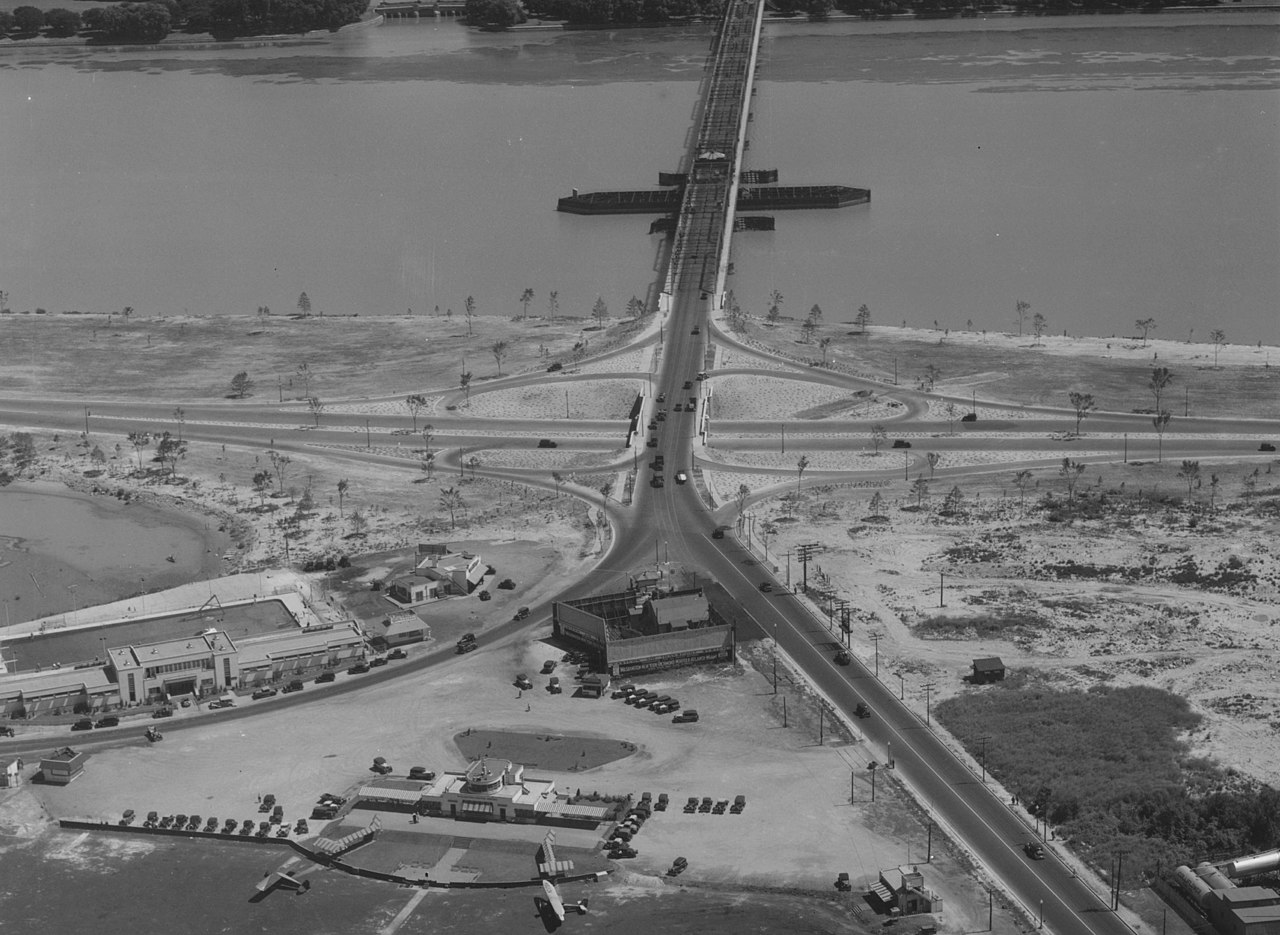
1. DCA’s predecessor, Hoover Field, was such a dangerous airfield that it lost its local airmail contract in 1927. Passenger service, however, still continued.
Washington welcomed its first commercial airfield in 1926, a grassy strip on the south side of the Potomac River (where the Pentagon now sits). It was named “Hoover Field” in honor of then-Secretary of Commerce Herbert Hoover, whose responsibilities included developing the country’s fledgling aviation industry. It was a sorry site for the nation’s capital. In addition to being treacherous for pilots because of its close proximity to a major road, power lines, antennas, and smoke from landfill fires added to the riskiness. In 1927, Hoover Field lost its local airmail contract because it was deemed so unsafe – but somehow passenger service continued uninterrupted, according to Hoover Heads, a National Archives blog. That year, a second airfield, dubbed Washington Airport, opened adjacent to Hoover Field. They merged into Hoover-Washington Airport in 1933, but it wasn’t much of an improvement.
Even Amelia Earhart blasted Washington’s air facilities as “deplorable,” in testimony to a Senate subcommittee, according to a Washington Post article on May 2, 1936. “Washington is far behind other cities in the matter of good landing fields,” she is quoted as saying. “I think it is a shame that the Capital of this great country should maintain air fields that are actually hazardous to fliers.”

2. FDR got sick of congressional waffling for more than a decade over the site of the new airport and chose the new National Airport’s home.
For 12 years, Congress was embroiled in a back and forth over where to put the new airport. Debate centered primarily around two sites: Gravelly Point on Alexander’s Island and Camp Springs (which later became home to Andrews Air Force Base) in Maryland. With war brewing, President Franklin Delano Roosevelt sidestepped the debate and declared in 1938 that “he had become tired of waiting for Congress to solve the airport problem for the National Capital and had taken the matter into his own hands because ‘human lives were at stake,’ an Evening Star article from Sept. 28, 1938, reported. Roosevelt selected the Gravelly Point location, then secured the $15 million in funding for the project and authorized construction while Congress was in recess.

3. FDR’s plans put most of the new airport in the Potomac River.
There was one significant difficulty with Gravelly Point: It was smack dab in the mudflats of the Potomac River, meaning two-thirds of the land needed to be built up, lest the airport be more of a harbor. “The area to be developed includes approximately 750 acres, of which 500 will be ‘made’ land, by use of dry fill and dredging,” the Evening Star reported in September 1938. The Army Corps of Engineers was then tasked with undertaking the massive dredging project, which began two months later with a ceremonial groundbreaking attended by President Roosevelt.
But Gravelly Point also had more metaphorically muddy issue: Which jurisdiction would claim the airport? Because the District owned the Potomac River up to Virginia’s coast, and the creation of the airport meant developing a new eastern shoreline, the airport was technically in the District. Or was it? As the Ghosts of DC blog explains, this also created a legal challenge: If a crime was committed at National, it wasn’t clear which jurisdiction could pursue justice. So in 1945, Congress approved a bill to establish the boundary between the two jurisdictions at the mean high-water mark. That means the airport officially belongs to Virginia.

4. A “perimeter rule” governs the maximum distance for nonstop for flights in and out of National.
After Dulles International Airport was built in the 1960s, Congress enacted a “perimeter rule” at National in 1966 in an effort to drive passenger traffic to the new, larger airport. The regulation limits the distance for nonstop service on flights into and out of National. The original perimeter rule held flights to 650 statute miles, according to MWAA. By the mid-1980s, Congress expanded the perimeter to 1,250 statute miles.
It’s been a contentious regulation, marked by a number of members of Congress proposing various (unsuccessful) adjustments to the perimeter over the years. Some lawmakers have pursued creative routes to change the rule — as Rep. Harry Cuellar (D-Texas) did in 2017, when he inserted it as an amendment to the National Defense Authorization Act, instead of a transportation spending bill. In 1999, Sen. John McCain (R-Ariz.) suggested removing it altogether — but instead, a set of exemptions have been made to allow for nonstop flights from National to such destinations as San Francisco and Los Angeles. In 2018, 18 members of Congress signed a letter urged their colleagues to leave the perimeter intact, so as not to overburden National with more flights. Previous legislation disrupted the balance between National and Dulles, leading to “significant congestion and stress” on the airport’s facilities, the letter says, and caused a decrease in commercial passenger traffic at Dulles, which was planned “as both the growth airport and the international gateway for the region’s aviation needs.” That sentiment has become fairly standard from the D.C.-area delegation when the FAA reauthorization bill rolls around. (Congress enacted a five-year authorization bill in 2018.)

5. The federal government ran National until President Ronald Reagan’s administration ceded its control to the newly formed Metropolitan Washington Airports Authority.
Built using federal funding, National was owned and controlled by the Federal Aviation Administration until 1987. That’s when Secretary of Transportation Elizabeth Dole recommended transferring the management to local officials “in recognition of a perceived limited need for a Federal role in the management” of the airport. (This applied also to Dulles International Airport — the two are the only commercial airports owned by the federal government.) The federal government would still hold the lease to the land, but Virginia and the District would now create an independent body to oversee and maintain the airport. That body is the Metropolitan Washington Airports Authority, and it’s funded by fees and rent — not taxpayer dollars.

6. Cesar Pelli designed the 1997 addition to the airport.
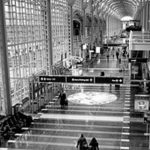
The facade of the original airport, Terminal A, pays homage to Mount Vernon in its blend of neoclassical and colonial styles, as designers aimed to honor the nation’s heritage (and the site’s colonial history) while also ushering in a chic, modern building, using two-story columns to evoke Washington’s distinctive home. Its main passenger area, with its massive curving wall of glass overlooking the runways, is now just a pass-through for passengers who choose to walk between Terminal A and the newer B and C terminals. Aesthetics aside, in creating the airport, architects strove to also set a new standard for air travel. Terminal A, the original airport facility — including its footprint, plan and control tower — “for many years served as a model for airport design,” according to its writeup on the National Historic Register of Places. The airport also innovated the passenger transit process, the Art Deco Society of Washington says, by separating the processing of baggage and passengers on different levels “in contrast to the experience at train stations.”
By the 1990s, National was overdue for an expansion. Renowned architect Cesar Pelli, who designed such iconic buildings as the Petronas Towers in Kuala Lumpur and the World Financial Center in New York, was selected to usher in a new era for the airport while again connecting the new B and C terminals back to the region’s historical roots. Pelli’s design did so by using sweeping windows that emphasize the views across the Potomac as well as 54 so-called Jeffersonian domes. His design was also marked with light, sunny tones. “I found that most airports, for some reason, are drab gray,” Pelli told The Washington Post in 1997. “This must have been decided at some architects convention that I did not go to.”

7. The site was originally home to a colonial-era plantation.
The property was once home to Abingdon Plantation, home of the Alexander clan (Alexandria’s namesake family). The property was sold several times over the years, and George Washington’s stepson, John Parke Custis, even lived there for a brief period after purchasing it in 1778. Union troops occupied Abingdon during the Civil War, and it slowly faded into disrepair by the 1930s, when a fire destroyed most of the home structure. The site later became subject to a “vigorous preservation campaign” in the late 1980s and early 1990s as airport expansion encroached on its ruins and MWAA proposed bulldozing the ruins to construct an additional parking garage, according to Atlas Obscura. In June 1990, an airport advisory committee recommended removing the remains and conducting an excavation of the site to build a “’museum quality’ exhibit at the airport,” the Washington Post article reported at the time. The efforts to preserve Abingdon won out: MWAA adjusted its plans in 1992, according to an article in the Fredericksburg Free Lance-Star. In 1998, MWAA opened an exhibit hall in Terminal A to showcase the history of the airport and Abingdon, which you can still walk through today, and opened a small park at the remains of the plantation site. It’s located between parking garage B/C and garage A.

8. After 9/11, the airport closed for 23 days, and some feared that it would be permanently shuttered.
After the September 11 attacks, National was the last airport to reopen to commercial traffic. It took three weeks — until October 4 — to do so, in large part because some experts worried whether an airport should be so close to so many important national institutions, NPR reported at the time. A 2010 WAMU piece explored just how close the airport was to being shut down. But local political leaders rallied to reopen the airport, as the closure was significantly hurting the local economy. “We finally got to the point where we threatened to enact legislation,” Virginia Rep. James Moran told WAMU, saying he made a “bald-faced bluff” by telling the Bush administration that he had the votes for a bill to force the airport to reopen. The next day,President George W. Bush announced that National would reopen for service that week, but with plenty of new security restrictions and requirements on flights coming into the airport.
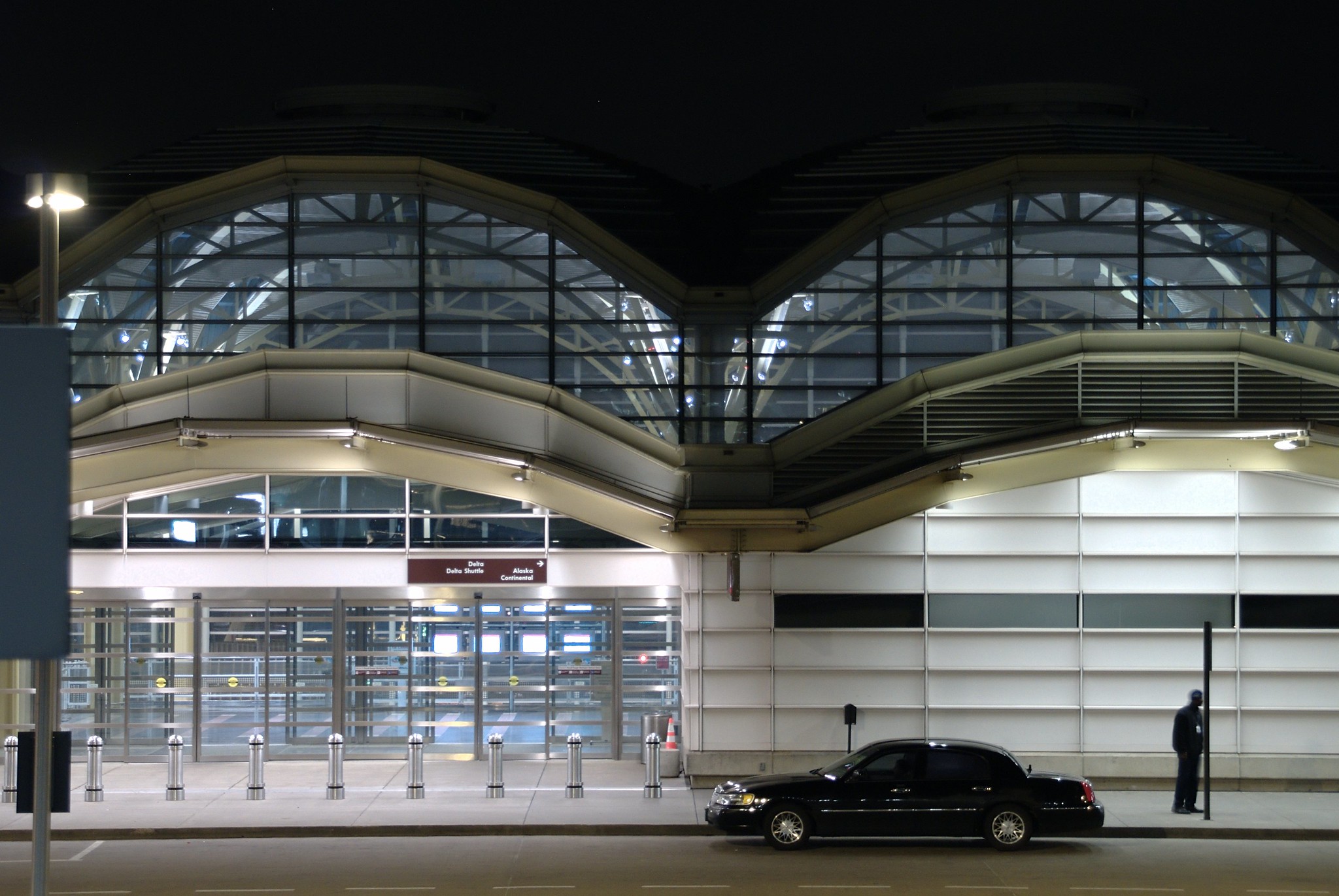
9. Members of Congress park for free (!) and lay claim to a reserved parking lot.
National has been beloved by Congress because it’s conveniently close, and lawmakers’ also get free, reserved parking spots that are also conveniently closer to the terminals than the other garages. (Of course, “free” isn’t truly free — those spots come at a cost to taxpayers.) Occasional, albeit so far unsuccessful, efforts have arisen to end those parking privileges, which have been the subject of wide-ranging criticism over the years (Take this 1979 Washington Post article, which details the parking privilege abuses by former elected officials and their families, for example).
In 2017, MWAA closed the 89-spot lot, which is across the street from the A parking garage, in for five years so contractors could use the space for equipment and supplies as the airport undertakes a massive construction effort. (The current $1 billion construction project will build a new 14-gate concourse and repositioning security check points for terminals B and C.) In the meantime, members of Congress still get free parking at National; they just have to trawl through the garages looking for an open spot like the rest of us.
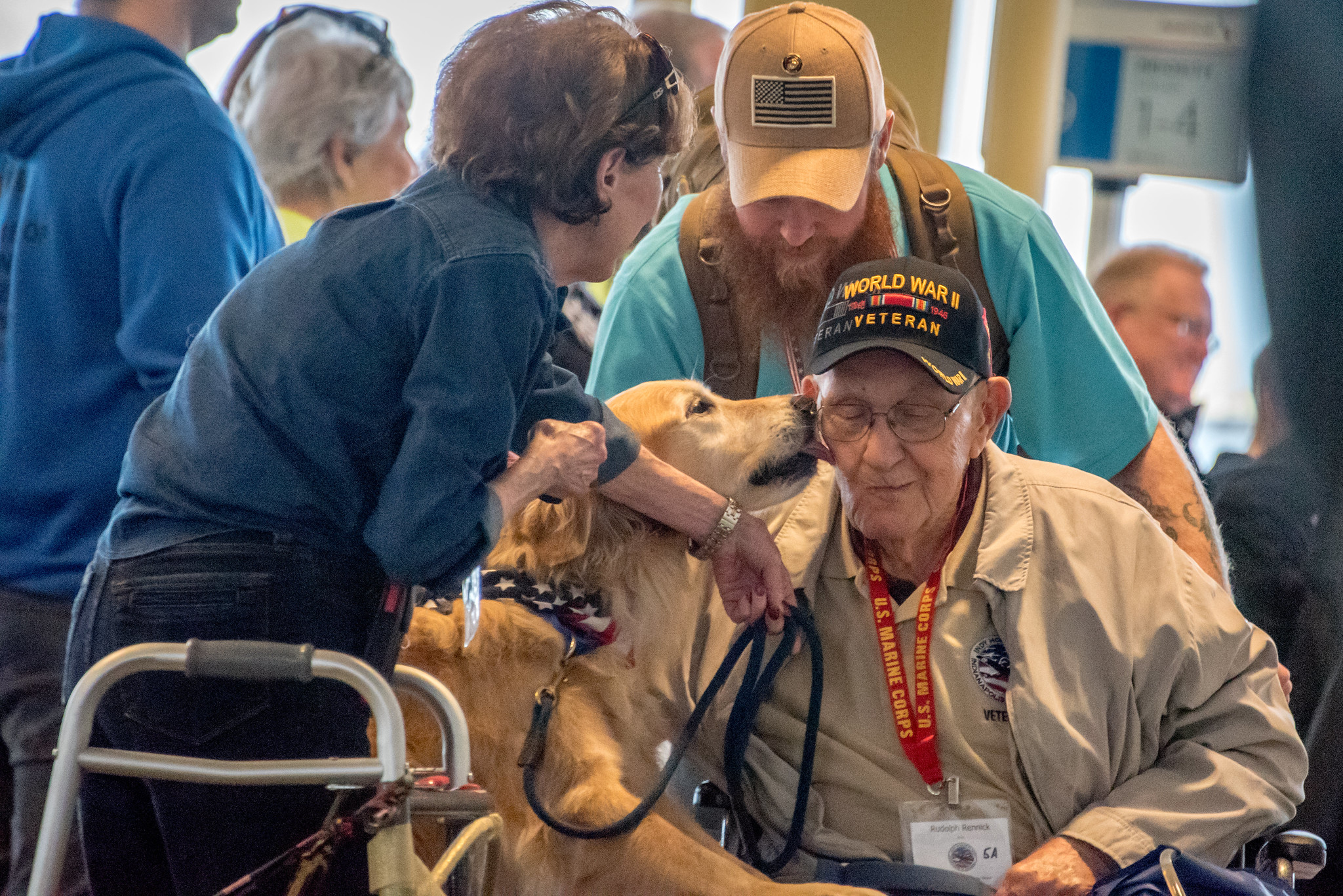
10. A volunteer-run organization publishes the schedule of Honor Flights and invites the public to volunteer to greet arriving veterans.
Every year, thousands of veterans transit through National through the Honor Flight Network, a group that organizes flights to Washington and tours of war memorials at no cost to the veterans. The volunteer-run DCA Honor Flight posts the schedules for all Honor Flights (including tour activities) and provides a portal for the public to request gate access passes to greet the arriving veterans. Passes must be requested at least 36 hours in advance, but even if they aren’t available, volunteers are invited to cheer and greet veterans outside the security checkpoints. (Standard security screening measures still apply to those holding passes, so leave your large containers full of liquids at home.)
Previously:
Ten Facts You May Not Know About Friendship Heights
Ten Facts You May Not Know About Takoma
10 Facts You May Not Know About Columbia Heights
Ten Facts You May Not Know About Petworth
Ten Facts You May Not Know About Chinatown
Ten Facts You May Not Know About Spring Valley
Ten Facts You May Not Know About Navy Yard
10 Facts You May Not Know About Brookland
Ten Facts You May Not Know About Anacostia
Ten Facts You May Not Know About Dupont Circle
Nine Facts You May Not Know About The Southwest Waterfront
There’s No Paywall Here
DCist is supported by a community of members … readers just like you. So if you love the local news and stories you find here, don’t let it disappear!