Matt Blitz
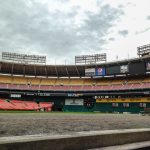
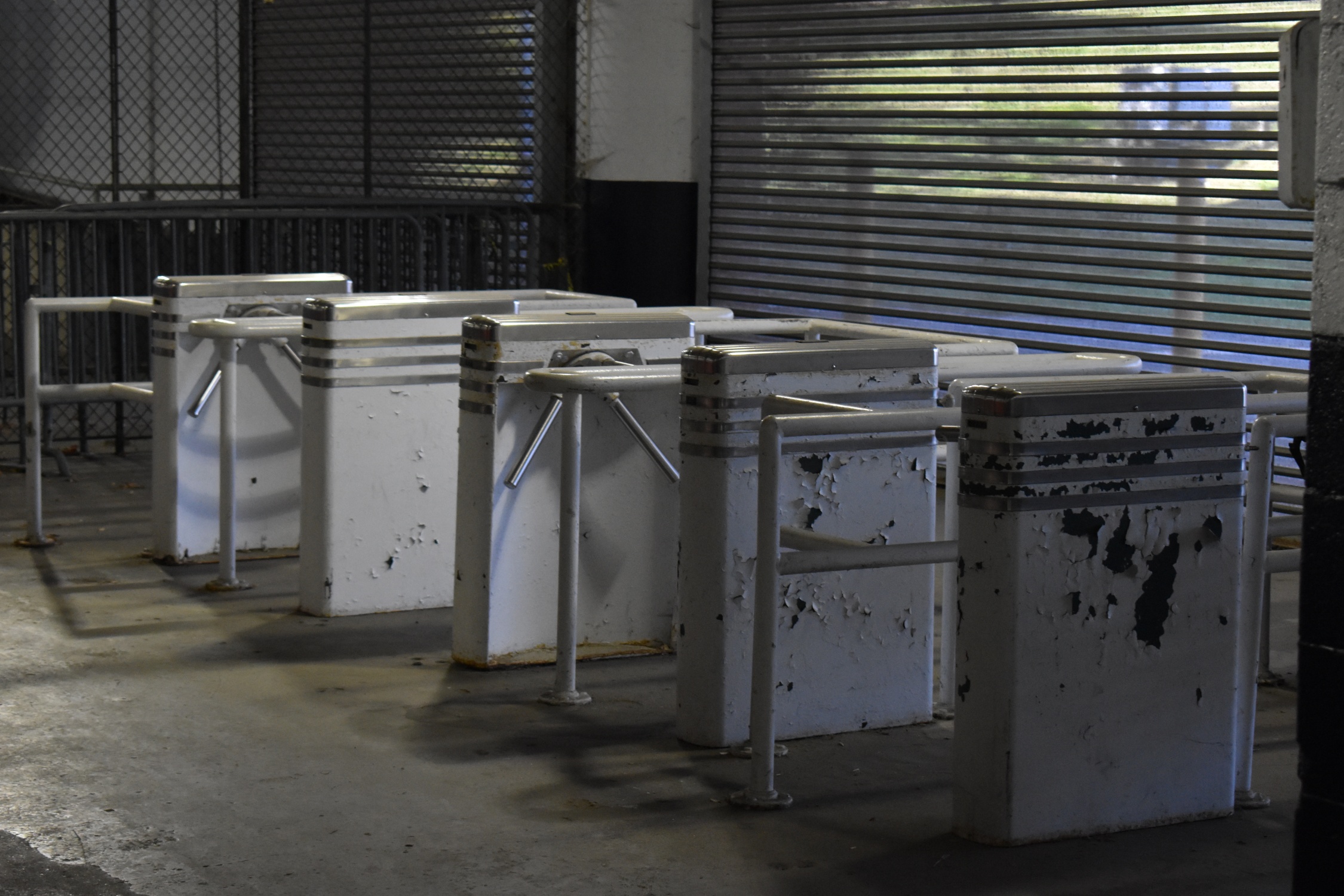
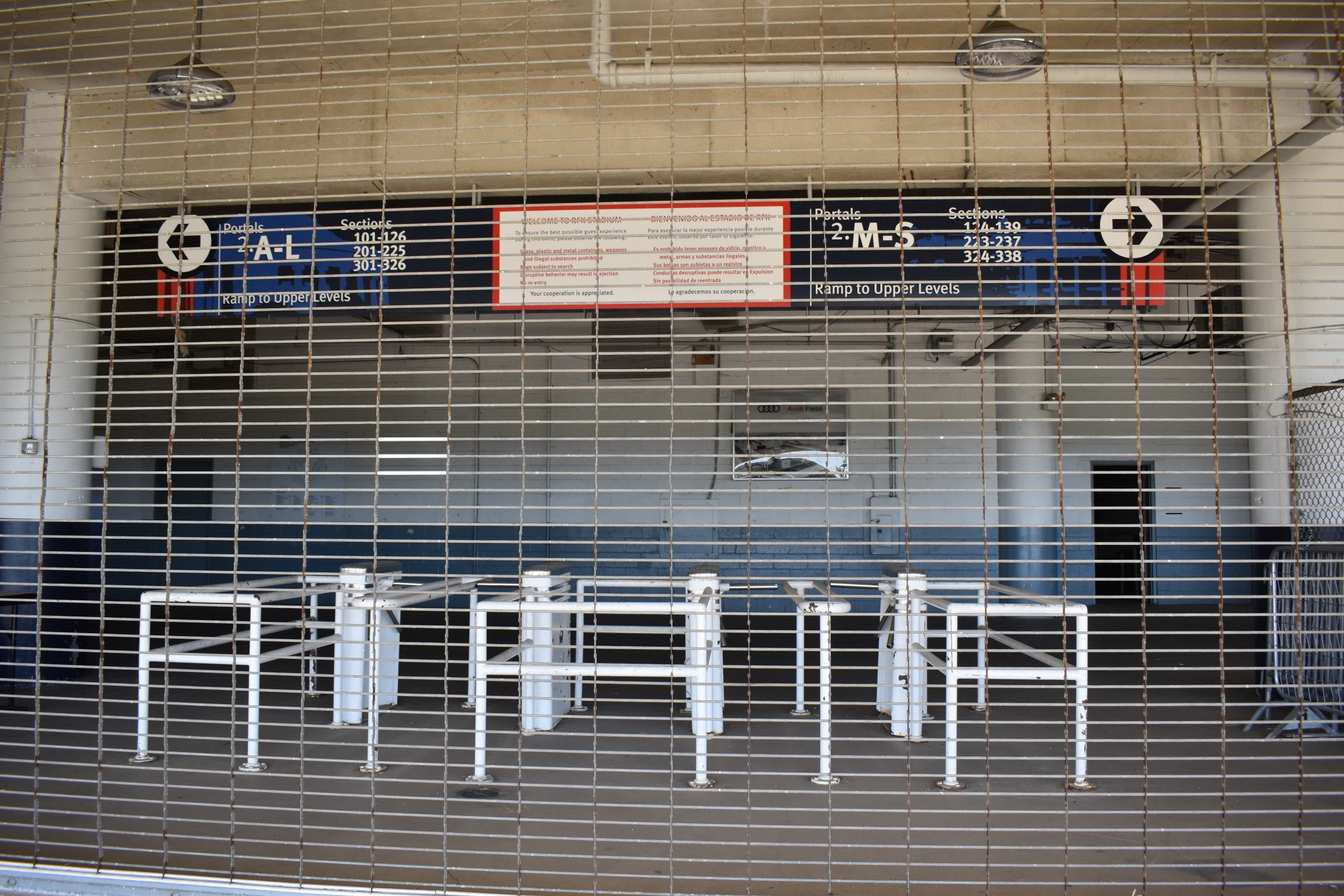
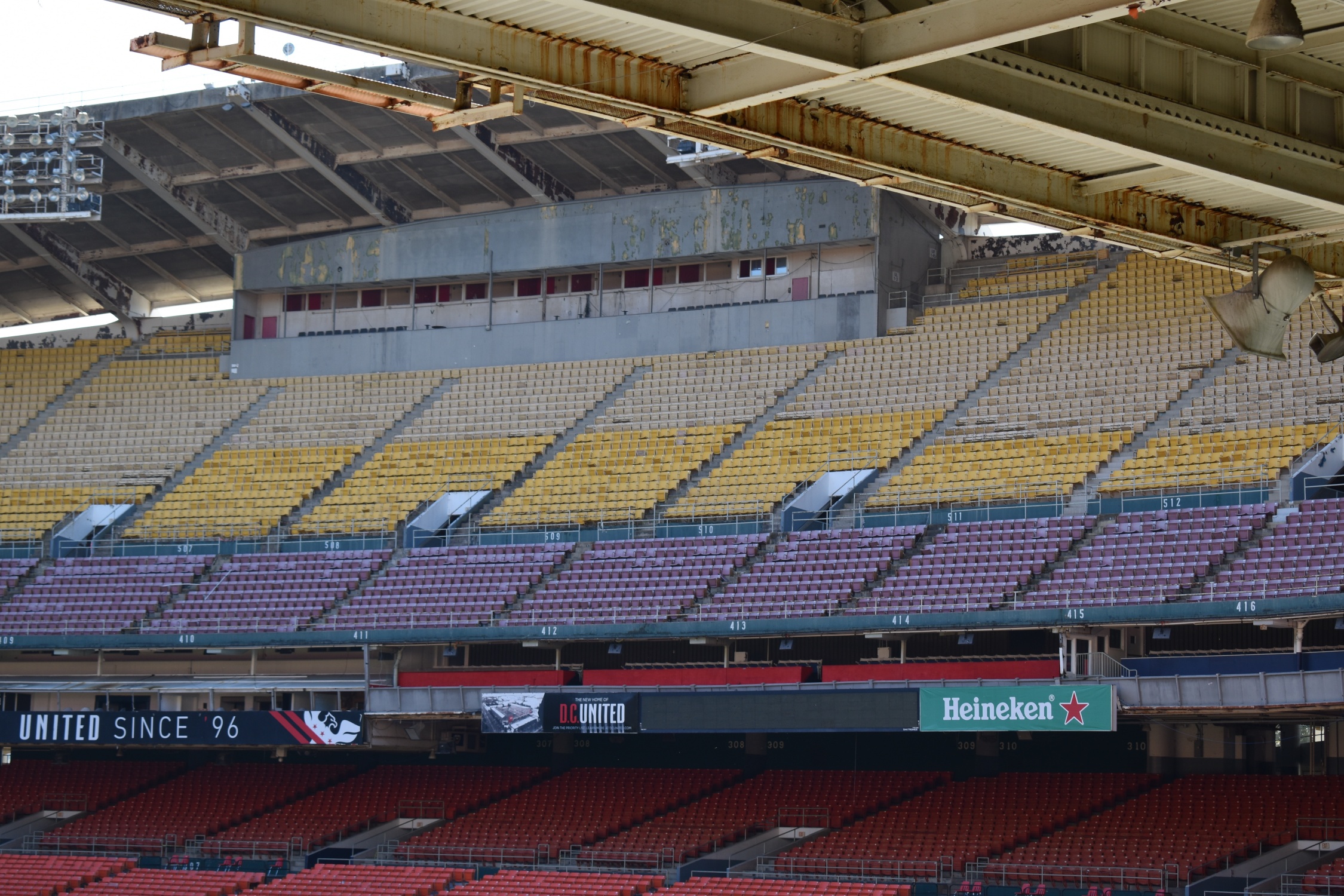
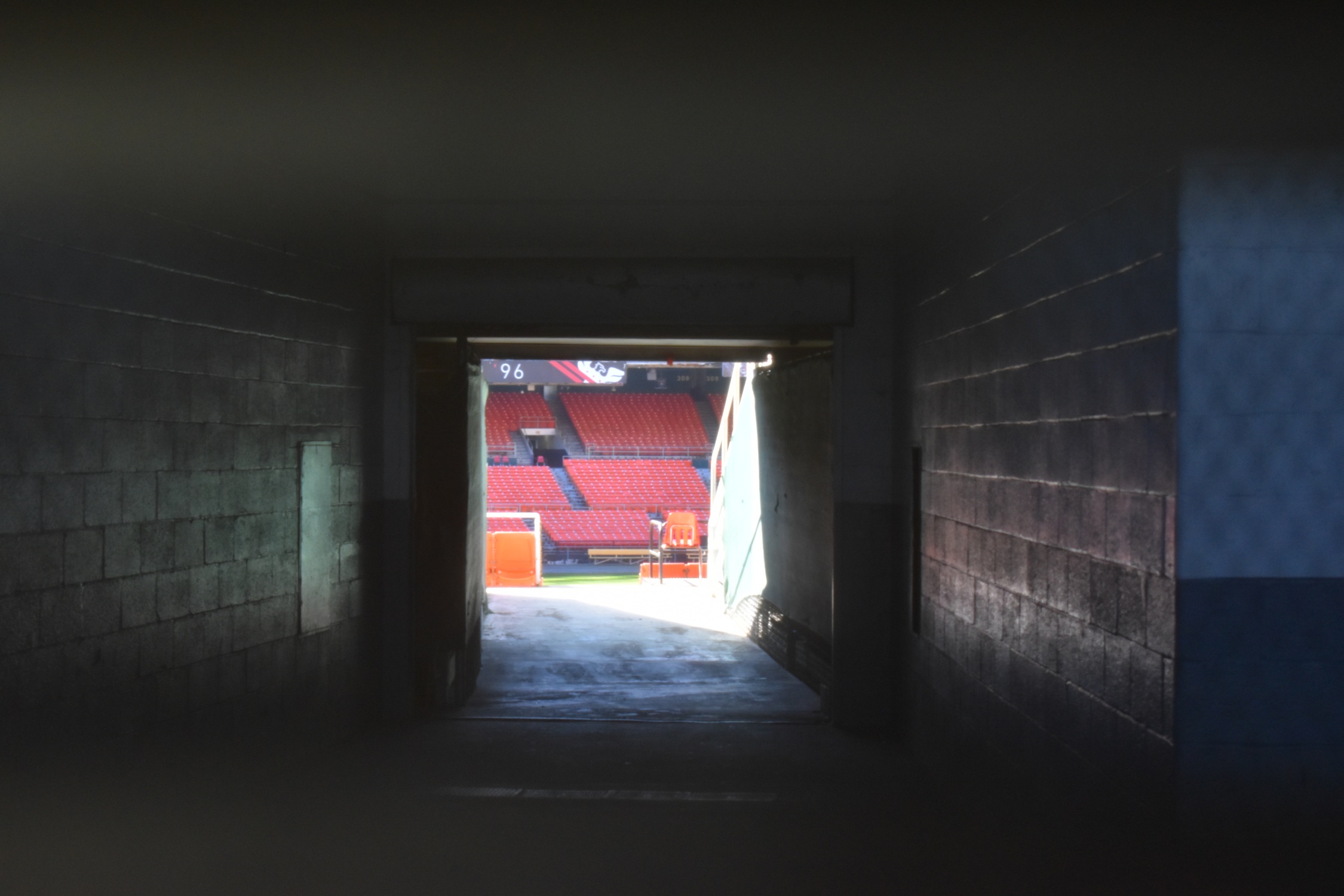
On a clear blue November day, Robert F. Kennedy Memorial Stadium still stands silently on the shores of the Anacostia. As paint peels away and rust threatens to become the dominant color, the one-time premier sports venue on East Capitol Street is very much showing its age.
Two years ago, DC United became the last professional team to play inside its friendly confines. Besides the occasional high school football game and music festival, RFK Stadium is rarely used anymore, and city officials intend to raze the place within the next two years.
But when it first opened in 1961, the gleaming multi-purpose stadium was where the District went to cheer.
“It could reach a level of hysteria,” says Washington football historian Mike Richman who started going to games here as a kid in 1970. “The stands shook with fans and it felt like sometimes there was a twelfth man on the field.”
Joe Theismann, the football team’s quarterback from 1974 to 1985, tells DCist that “55,000 fans could sound like a 100,000 … RFK Stadium was such a special place. It had a holy feel to it.”

Early days
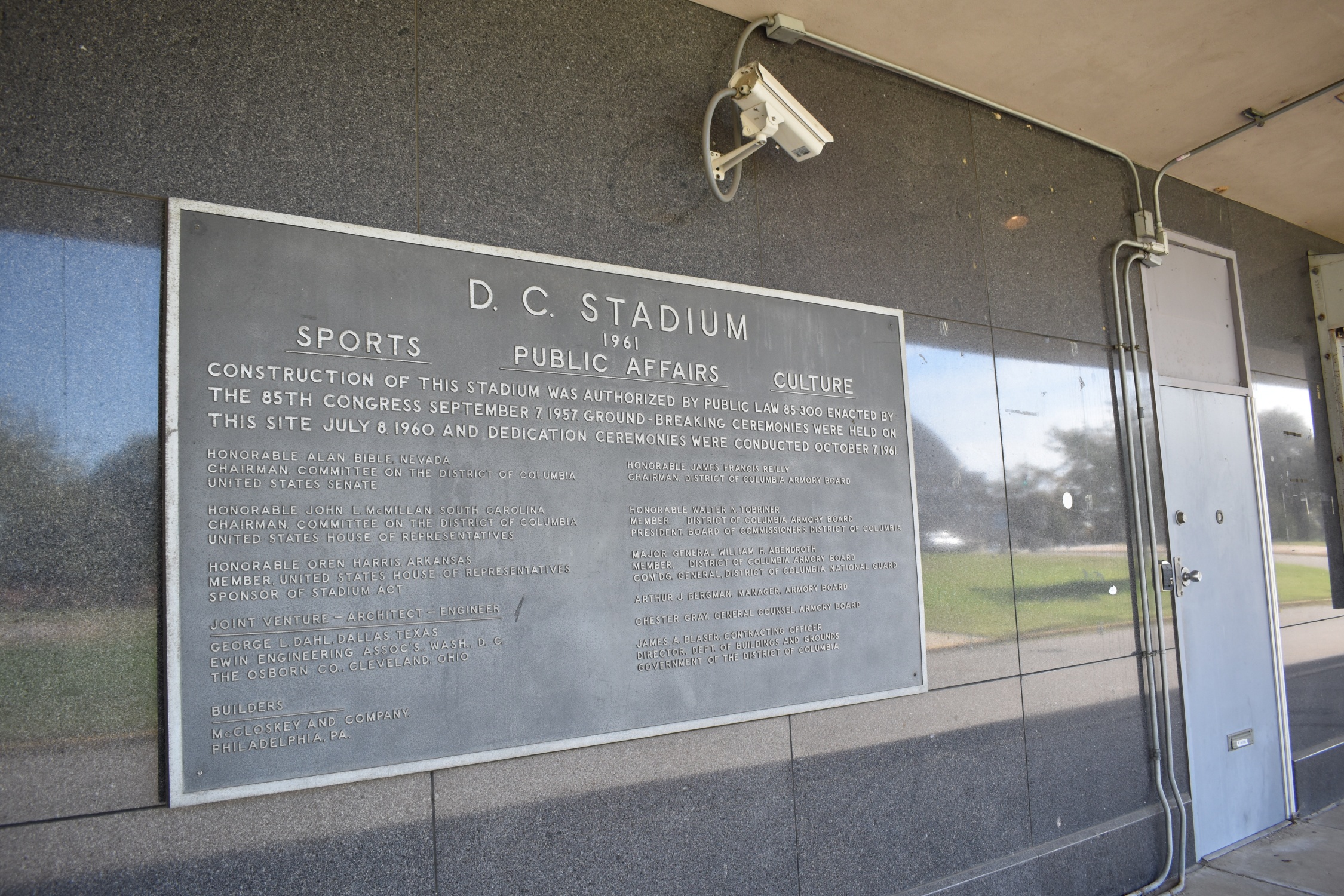
In the late 1950s, plans for a new stadium started to coalesce when it was deemed that Griffith Stadium on Georgia Avenue was no longer sufficient. Since D.C. wouldn’t have home rule for another 16 years, Congress held the authority to “provide the people of District of Columbia with a stadium suitable for holding athletic events.”
The District of Columbia Stadium Act of 1957 gave the previously appointed Armory Board the ability to construct, maintain, and operate a stadium on National Park Service land on East Capitol Street, which the Secretary of the Interior had been directed to acquire. The budget for this new stadium, so reads the act, was not to exceed $6 million.
Groundbreaking ceremonies were held on July 8, 1960, and construction was fast-tracked. Within 15 months, D.C. Stadium opened to the public for a game between Washington’s football team and the New York Giants.
As the Washington Post noted at the time, the stadium wasn’t quite finished for the 36,767 fans who attended that first game. Seats were missing, bathrooms had no water pressure, and the concession stands lacked power. “The hungry fan had to make all kinds of concessions at the concession stands,” read the October 2, 1961 story. “The hot dogs often were less than tepid.” All this despite the stadium coming in way over budget at $24 million (about $202 million today).
Still, D.C. Stadium had no equals; it was the first facility specifically built to house both a baseball and football team.
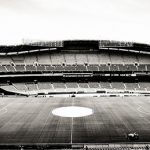
Designed by prominent Texan architect George Dahl, the stadium had a distinctly mid-century-meets-space-age feel. Its swooping roof, reminiscent of the one at Dulles Airport, which was being built at the same time, was a defining feature (to some it resembled an alien spaceship, others a roller coaster track.)
Civil Rights showdown
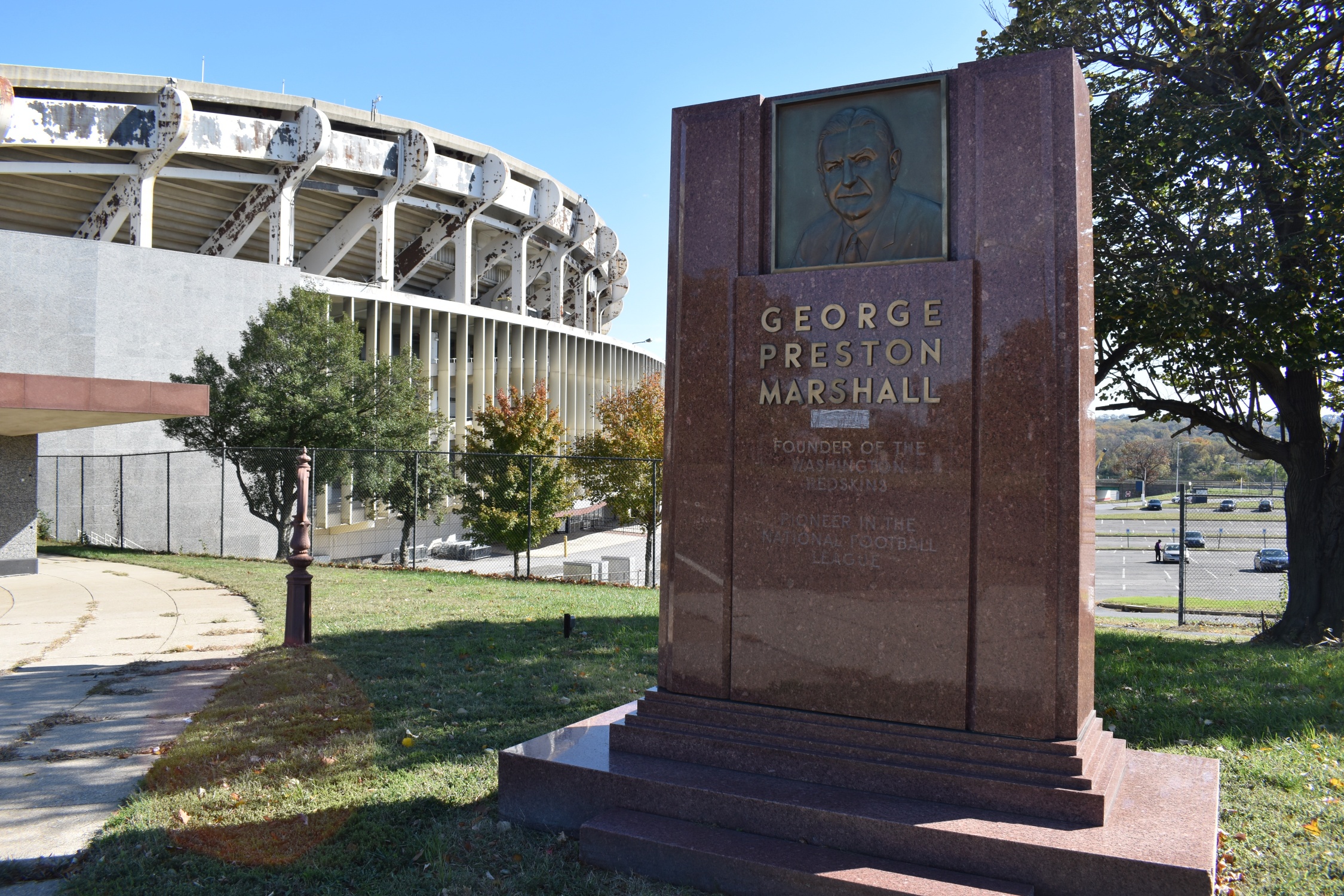
The stadium’s first tenants were the Washington Senators, which signed a 10-year lease to play there, and the Washington football team, which signed a 30-year lease. In prior seasons, both teams had struggled on the field and with attracting fans, but a new stadium provided high hopes for both. However, the longtime owner of the football team, George P. Marshall, had an adamant stance against desegregation that was going to make that very hard.
By 1952, every NFL team save two—the Detroit Lions and the Washington football team—had reintegrated. Nine years later, Marshall’s team was the only one left that refused to move forward with social progress. This left his team not only at a competitive disadvantage (refusing to employ good players due to their race will do that), but one at odds with federal law.
Secretary of the Interior Stewart L. Udall, with the backing of both President John Kennedy and his brother, Attorney General Robert Kennedy, informed Marshall in March of 1961 that it was against federal regulations to discriminate in hiring based on race, creed, color, or national origin. In accordance with a new policy enacted by Udall, this also applied to any party contracting with any public facility in a park area.
“As Interior Secretary, [Udall] was essentially the landlord over the land on which the stadium was going to be built,” says Thomas G. Smith, who has authored a book about the team’s integration. “So, he issued an ultimatum.” Udall threatened to void the team’s lease with the federal government to play at D.C. Stadium if he didn’t immediately start employing players of color. Marshall sarcastically told a reporter that he would obey the law by hiring “Eskimos or Chinese or Mongolians.”
Several prominent Washingtonians sided with the federal government. Washington Post sports reporter Shirley Povich (yes, the father of Maury) wrote numerous front pages appeals (he also seemed to enjoy jabbing the owner with comments like “the team’s colors were “burgundy, gold, and Caucasian” and how NFL Hall of Famer Jim Brown integrated “the end zone three times yesterday.”)
A number of civil rights organizations picketed in front of the stadium, asking fans not to give their money to Marshall. President Kennedy himself refused an invitation to a game.
“This really upset Kennedy,” says Smith. “As the seat of the federal government and the hub of democracy, it was embarrassing for him when foreign dignitaries visited D.C. and saw what was still in many ways a segregated and not an equal [city].”
Marshall continued to resist, but Udall and the federal government kept up the pressure. Finally, on the heels of mounting public pressure, the NFL’s new ground-breaking TV deal, and a horrendous one-win season, Marshall relented in December 1961. With the first pick of the NFL draft, he selected Syracuse University running back Ernie Davis. Later in the draft, the team selected two more talented black athletes, Joe Hernandez and Ron Hatcher. During the contract-signing press conference with Hatcher, Marshall once again revealed his true colors by refusing to take a picture with him.
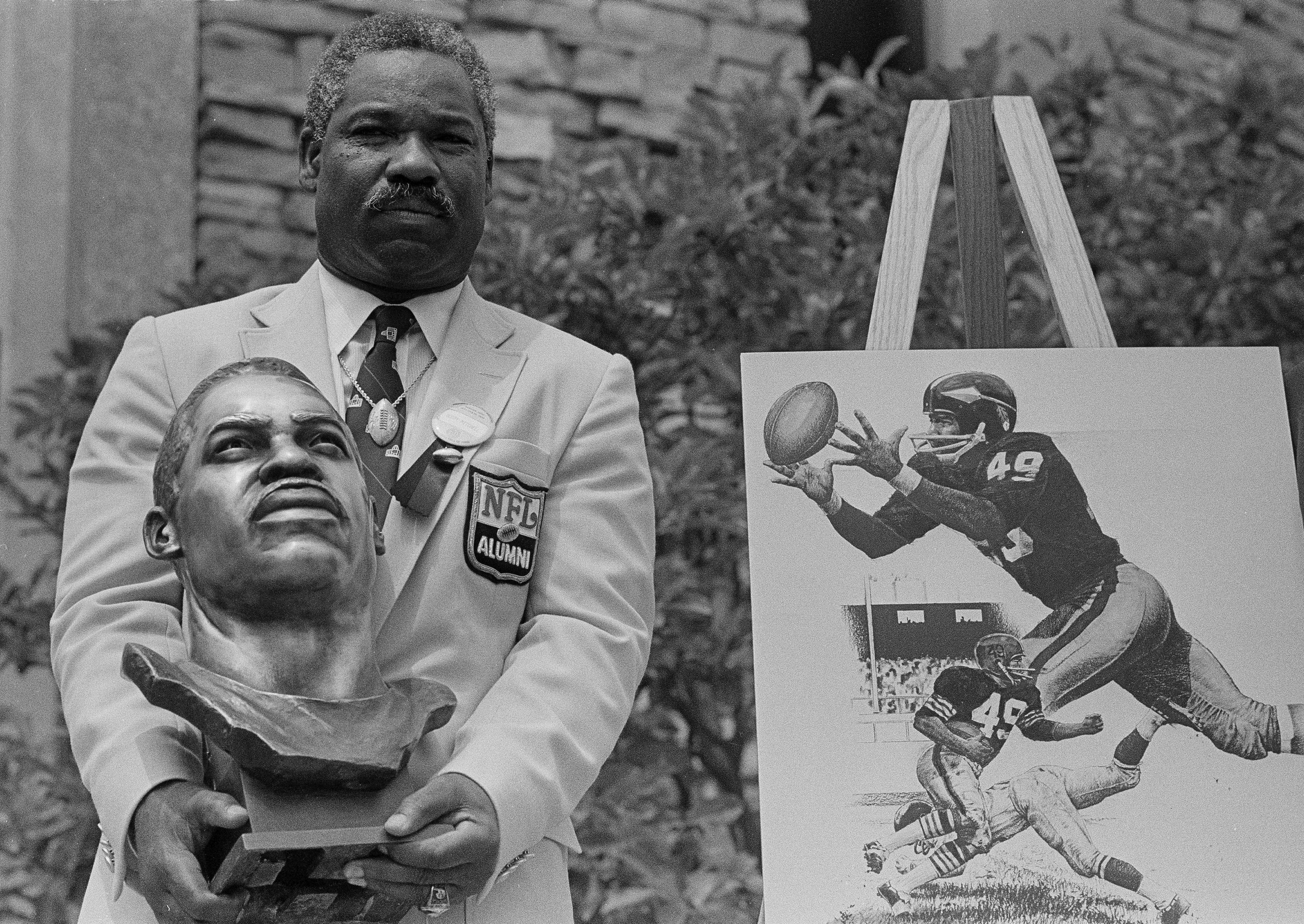
Marshall ended up trading Davis for Bobby Mitchell, who would go on to be a Washington football legend as not only a pioneer but a major football star (tragically, Davis never played a down in the NFL due to leukemia and died in May 1963.)
Even on his deathbed, which came only months after the stadium name change, Marshall remained extremely racist. As stipulated in his will, money from his estate would go to establish a foundation in the team’s name.” In its charter, the foundation was barred from spending money on “any purpose which supports or employs the principle of racial integration in any form.”
A memorial dedicated to Marshall remains outside of the stadium.
In 1969, in honor of the Kennedy administration’s role in bringing equality to D.C. sports and to honor the recently slain Robert F. Kennedy, the stadium was officially renamed “Robert F. Kennedy Memorial Stadium.”

Glory days
The Senators didn’t play long in the stadium, moving to Texas in 1971. But for the football team, the 1970s and 1980s were the glory years, racking up wins and memories at RFK Stadium. Starting in 1971, the team would make the playoffs in 11 out of the next 17 seasons, including two Super Bowl wins in four appearances. “There was this repeated winning in the 70s and 80s,” says Richman, “which the team really hasn’t had since.”
And they celebrated a good number of those victories at RFK Stadium.
“When we were winning … everyone was united under the burgundy and gold flag,” said George Allen, the former Virginia governor and senator and son of the team’s coach from 1971 until 1977 (who also was named George Allen).
Theismann also remembers the togetherness: “RFK was like going into a neighborhood ballpark and it was our neighborhood.”
The stadium had its quirks. Unlike today’s massive fan-centric venues, RFK was small, cramped, and more utilitarian than posh.
“[The stands] were very steep,” says Richman. “If you were walking to the seats on the upper level and you tripped on the concrete steps and fell, you could be in trouble.”
Because the stadium was also originally built for baseball, the walls were much lower than at other football stadiums. “We would sit on the walls [in the front row] and the players would come over and talk to us,” recalls Suan Gundling, long-time football fan and honorary Hogette, a group that used to attend games in floppy hats, dresses, and pig snouts.
According to Theismann, when the gates were left open, it created a sort of wind tunnel. “You got to know the winds, particularly when you threw the ball,” he recalls, “whether the wind was quartering from two o’clock or if it was a calm day.”
And, unlike today’s highly manicured fields, the playing surface was often in rough shape by mid-season. “By November, the field was torn up,” says Theismann. “They used to spray paint it so it would look green on television. It was just green dirt.”
Still, it was a joyous, raucous place to be.
“The place was packed all the time … It was always just a big party,” says Gundling.. “And the stands … they literally bounced up and down.”
Derrick Culler, a Southwest D.C. native who works in the District’s building management department and still has an office inside of RFK Stadium, says he played in a 1980s high school football title game here and saw his favorite go-go band Trouble Funk. “Everyone was dancing and rocking this place.”



Last days
Even by the late 1980s, the stadium was already considered outdated (at least by the team’s owner Jack Kent Cooke) for the ever-changing sports landscape. After years of negotiating with the District and nearly every surrounding jurisdiction, Cooke finally settled on putting his 78,000-seat stadium (now called FedEx Field) in Landover, Maryland. And, on December 22, 1996, the football team played its last game at RFK Stadium.
Over the next two decades, RFK survived as a temporary home for several of the area’s sports teams, including the Washington Nationals for three seasons and DC United. There were also concerts, events, and a mass wedding.
DC United played its final game there on October 22, 2017 before moving to its own more modern venue. Since then, the stadium on East Capitol Street has continued its slow crumble.
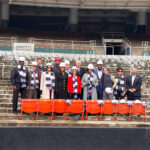
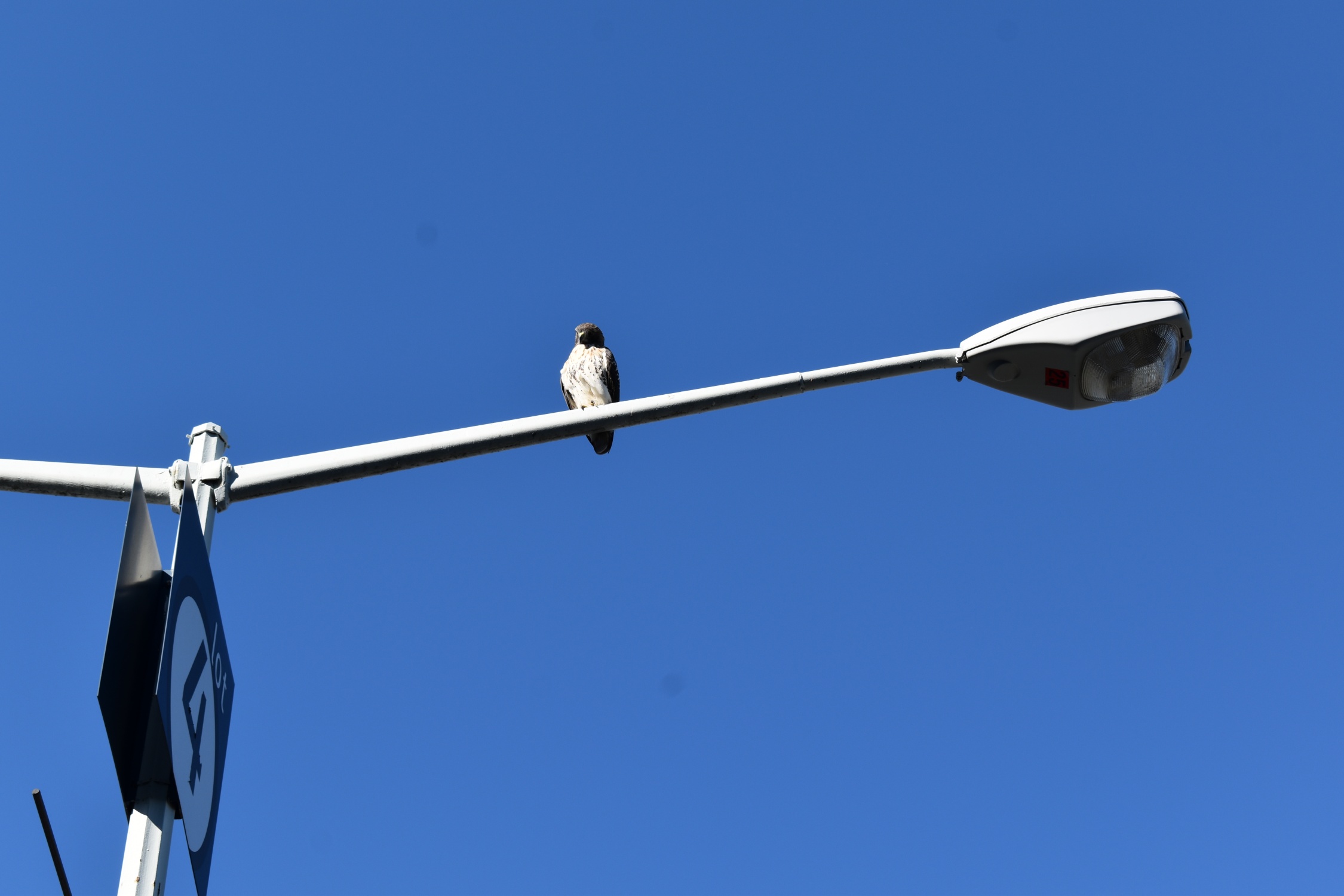
Two years later, RFK Stadium is typically quiet. The wind rattles the steel exterior. The sunlight reflects off the yellowing white paint. Rats scurry between the trash cans outside. A bird of prey watches the quick-moving critters hungrily from a parking lot lamp post. A few people mill around, since the District and Events DC maintain offices here.
Derrick Culler comes to RFK Stadium every morning for work and is disheartened by what he sees. “It’s falling apart, the roof is leaking, and rats are everywhere,” says Culler. “It’s just not what it used to be.”
Many city officials agree.
“We like to say it’s the only national park dedicated to asphalt,” John Falcicchio, the interim deputy mayor for planning and economic development, tells DCist.
The National Park Service still owns the 190-acres worth of land, with the current lease running until 2038. There’s a provision in the lease that the land must be used for either “stadium purposes” or “recreational facilities, open space, or public outdoor recreation opportunities.” Earlier this year, the city took advantage of this by turning a former parking lot into sports fields and a playground. But the mayor’s office and D.C. Delegate Eleanor Holmes Norton both believe the lease is too restrictive.
In March, Norton proposed a bill asking Congress to sell the land on which RFK Stadium sits to the District at “fair market value.” Mayor Muriel Bowser—who has made no secret of her desire to bring the Washington Football Team back to the RFK site—is supportive of the bill.
While there’s been no movement on the bill in recent months, the city has always had say over the stadium itself. Earlier this fall, officials announced that they intend to demolish RFK Stadium by 2021 (the X-Men have already done so once on film). It’s costing the city about $3.5 million a year in maintenance, pest control, security and utility bills.
“No matter what happens with the site, the stadium has outlived its useful life. “Demolition can happen regardless,” says Falcicchio. “It’s just dilapidated and standing in the way of progress.”

Future days
While the end of the old stadium seems to be a foregone conclusion, what will go in its place—be it housing, park land, mixed use developments, or a new NFL stadium—is a much more divided debate. So is changing the name of the football name, which is a racial slur. Team owner Daniel Synder has vowed in the past to never change it.
Events DC, the quasi-public sports and convention authority, revealed three sets of plans a few years ago that show how the site could be used for a 65,000 seat NFL stadium, a 20,000-seat arena, or other cultural uses without an anchor.
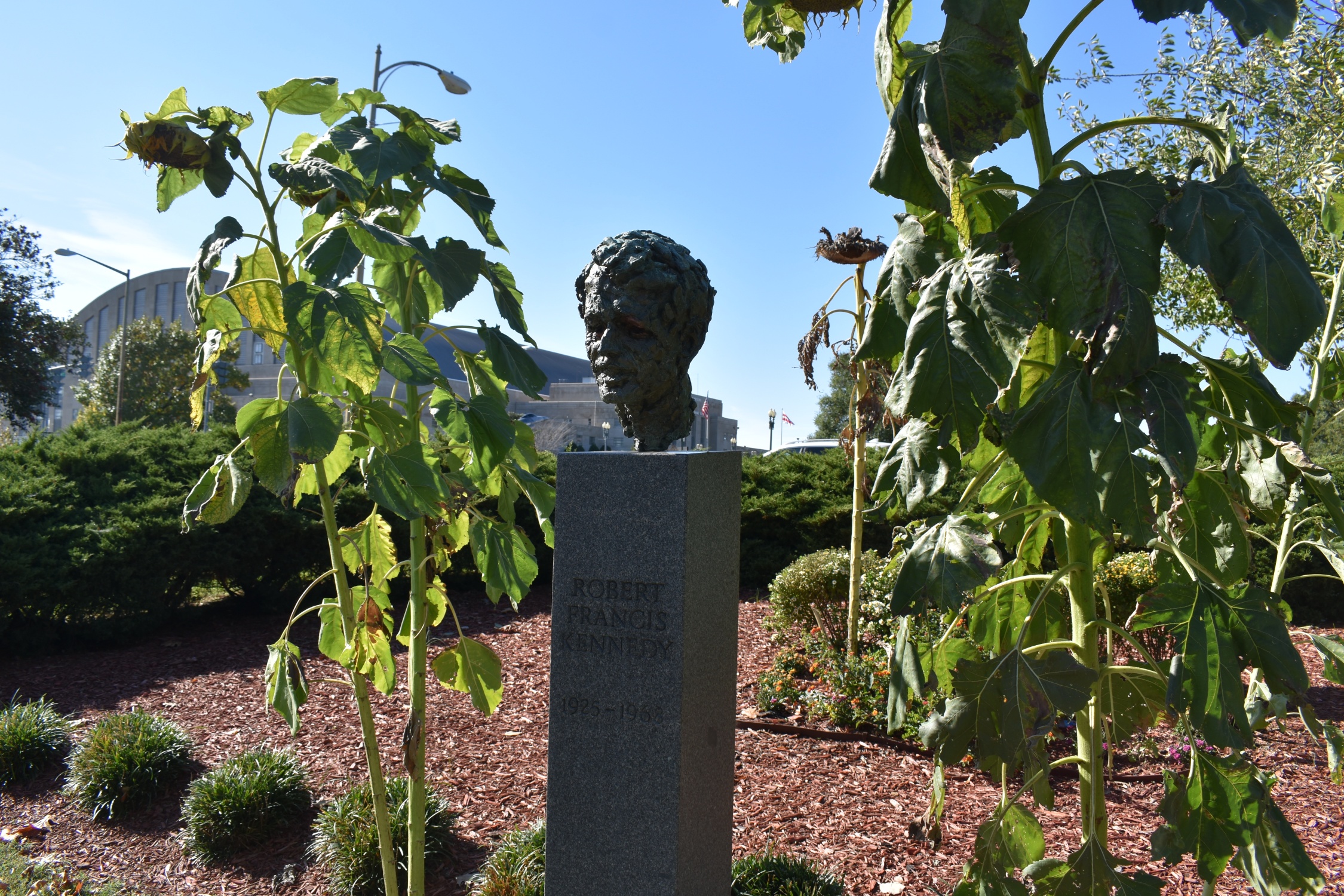
In the meantime, the sports and entertainment authority opened three multi purpose turf fields earlier this year to host recreational soccer leagues, kickball teams and school groups, among other events. The next steps proposed for the short-term include an indoor sports complex, a market for dining, pedestrian bridges across the Anacostia, and a memorial to Attorney General and former presidential candidate Robert F. Kennedy, who was assassinated in June 1968. The hope was to complete it in the next three to five years.
But there have been increasing calls to either renegotiate the lease to remove the recreational clause, or to buy the land outright.
“If there was an outright sale to the District, we would be able to do more like build housing and mixed-use development like hotels, office, retail,” Falciccio says.
While many immediate neighbors have been vocally opposed to a football stadium, one citywide poll taken in 2016 showed that more than half of D.C. voters would “definitely” or “probably” support the facility (though that support fell when asked about a stadium built with public funding).
In addition to Bowser, Ward 2 Councilmember Jack Evans and Ward 7 Councilmember Vincent Gray have also said they want the team to play in the District once again.
“They certainly should be back; they’re our home team. They should return home,” Gray told DCist last year.
But Ward 6 Councilmember Charles Allen, whose ward includes neighborhoods around the RFK Stadium site, is an outspoken critic of a new NFL stadium potentially coming back to the site. He thinks housing, green space, and businesses would be a better use of the acreage.
“If we decide to build an NFL stadium that gets used eight or 10 days a year, that’s a missed opportunity,” Allen tells DCist. “We should be replacing oceans of asphalt with an actual neighborhood.”
At-large Councilmembers Elissa Silverman and David Grosso and Ward 3 Councilmember Mary Cheh have also voiced opposition, particularly to any use of city funds to build a new stadium.
But whatever the future holds for the site by the Anacostia River, plenty of people relish its past.
Theismann says he drives by it on his way to football games in Laurel and got a chance a few years back to go back inside one last time. “You can almost hear the crowd, smell the smells, and see how close fans sat,” remembers Thiesmann. “When they do it tear it down, at least I have my memories.”
This story has been updated to correct the location of FedEx Field and RFK’s ward.
There’s No Paywall Here
DCist is supported by a community of members … readers just like you. So if you love the local news and stories you find here, don’t let it disappear!