 Mikaela Lefrak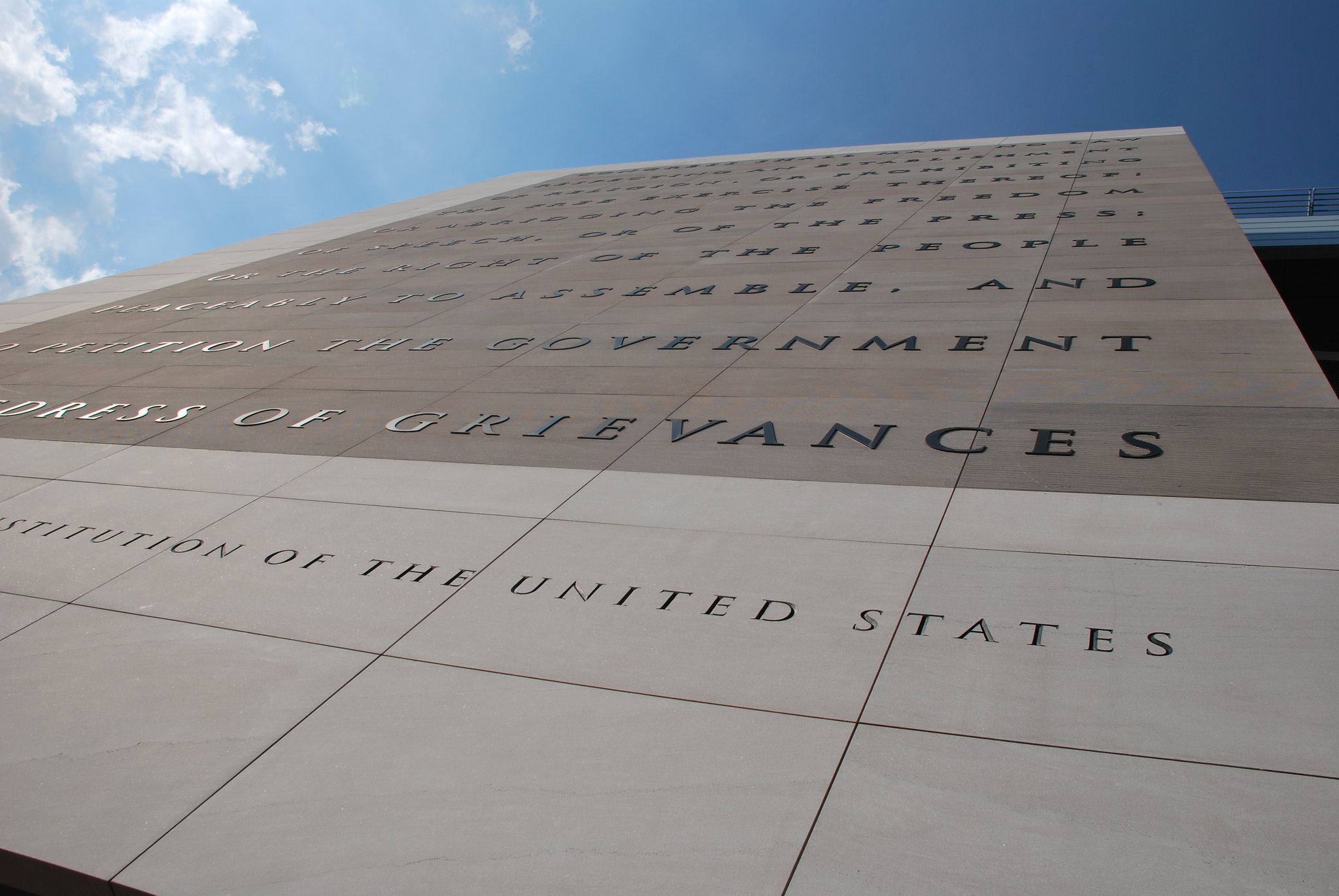
If you’re hungry for a pessimistic metaphor on the state of journalism today, look no further than the Newseum. The museum will shut down at the end of this month after years of financial struggles.
The First Amendment museum will host its final public event on Wednesday evening, focused on the amendment’s role in today’s news and political landscape.
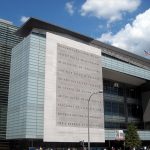
While the Newseum attracted a respectable 800,000 visitors a year and ran a fruitful after-hours business as an events venue, its leadership has not been able to keep its finances in the black. The gleaming Pennsylvania Avenue building that served as the Newseum’s home for 11 years is now the property of Johns Hopkins University.
So what happens next? Is this really the end?
Some of the museum’s artifacts will go into storage in Maryland, while others will be returned to their owners. Staffers with the Freedom Forum, the organization behind the Newseum, will move to a temporary office space early next year. “Of course I see the symbolism,” said Carrie Christofferson, the Newseum’s executive director. “But we’ve got to focus forward.”
There’s also no word yet on whether the museum will reopen in a new location. In the interest of ending the year on a hopeful note, we asked journalism and museum leaders from around the city what they’d like to see from a new Newseum, if and when it reopens.
Get Interactive
Lonnie G. Bunch III, Smithsonian Institution Secretary:The Smithsonian leader wants to see exhibits that explore how traditional media outlets cover the news and the way people on social media react. “I’d really love to see a much more engaging back-and-forth,” he said. To him, the Newseum will finally be a “modern museum” when it “changes every day through engaging people around the country.”
Deal With Controversial Issues Head-On
Robert McCartney, Washington Post Senior Regional Correspondent:The longtime local journalist didn’t conceal his frustration with the Newseum. “I was not a big fan,” he said. “It didn’t seem to deal with many of the hard-hitting issues that face the news.” McCartney wants to see more exhibits that deal with journalism’s myriad struggles, both from history, like so-called “Yellow journalism,” and today, including local news outlets’ financial travails. By confronting these issues head-on, the museum could better show the vital role of high-quality journalism in our democracy.
Keep The Front Page Displays
Tamara Christian, International Spy Museum President:Like the Newseum, the Spy Museum is a private institution that charges an entry fee for visitors, which can be a tough sell in a city full of free museums. Christian hopes the Newseum keeps its sidewalk display of front pages from major newspapers around the country. And, true to her brand, she wants to see more exhibitions about spies: “We particularly love seeing how different media outlets cover breaking intelligence/espionage stories,” she wrote in an email.
Host An Actual News Bureau
Amy Eisman, American University’s Journalism Division Director: Eisman wants to see the Newseum use its D.C. location to support real journalism. She envisions an incubator where student reporters from around the country could come to cover their legislators on Capitol Hill. As local news outlets struggling to stay afloat, the Newseum could be a life raft — or, in her words, “a living, breathing carnival of journalism.”
Focus On The Industry’s Future, Not Its Past
Doyle McManus, Georgetown University’s Journalism Program Director:“I don’t think anyone in journalism wants us to turn into museum objects,” said McManus, an educator and LA Times columnist. McManus and his fellow Georgetown professors take their introductory classes to the Newseum, but doesn’t find it as useful for students in advanced courses. He hopes the next version has fewer exhibits and more participatory activities. “It was designed for a bygone era, when journalism meant newspapers and televisions principally,” he said. “But how can journalism survive [today]? What experiments are out there that are working?”
Keep The Journalists’ Memorial
Lucy Dalglish, University Of Maryland’s Philip Merrill College Of Journalism Dean: Dalglish said it’s important for her students to see the Journalists Memorial, which pays tribute to men and women who died while reporting the news. “The students like the exhibitions on journalism, not the trendy stuff,” she said, citing the exhibitions on elections and Pulitzer Prize-winning photographs as two other favorites. Dalglish is also a member of the Newseum’s Freedom Forum’s board of advisors.
Rent A More Modest Building
Svetlana Legetic, Brightest Young Things Founder:The Newseum’s iconic building is a popular setting for parties and galas, but the founder of the events organization Brightest Young Things said its size made it challenging to host anything other than big, ticketed bashes. “It’s not cheap to do anything in that space. It didn’t lend itself to trying new stuff,” Legetic said. She hopes to see the Newseum move into a “less cumbersome” space and reallocate its resources towards more interactive exhibitions and programming.